


Kenya’s Uchumi Supermarkets has reported a modest profit of US$68,000 (Sh8.8 million) for the year ending June 2025. This marks a significant turnaround for the financially strained retailer, which has relied heavily on leasing its space to generate steady income. The supermarket chain moved from a loss of approximately US$382,000 (Sh49.7 million) in the previous year, although the profit still fell short of the target of US$98,000 (Sh12.85 million).
A Boost from Rental Income
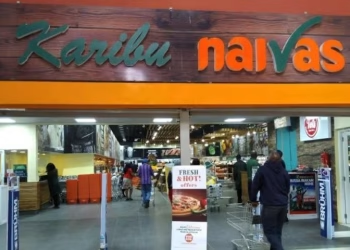
The latest report highlights the important role rental income has played in Uchumi’s recovery. The company’s rental earnings soared to US$482,000 (Sh62.7 million), up from US$104,000 (Sh13.5 million) in the previous year. This growth was largely due to the takeover of the Lang’ata Hyper branch by China Square in June 2024.
Despite retail activity improvements, rental income has become Uchumi’s primary driver of profitability. In contrast, sales revenue rose to US$946,000 (Sh123 million), a 88% increase from the previous year. Gross profit from these sales reached approximately US$213,000 (Sh27.7 million), though it still trails behind the profits generated from rental income.
Financial Performance and Challenges
The report, compiled by Owen Koimburi of Forvis Mazars Kenya, points to gradual improvement in Uchumi’s financial position. The company’s management, however, needs to narrow the gap between planned and actual performance. Uchumi continues to face challenges, including an ongoing legal dispute over a 17-acre land parcel in Kasarani, valued at US$18.31 million (Sh2.38 billion). The outcome of this court battle with the Kenya Defence Forces (KDF) could significantly impact the company’s recovery and future outlook.
CVA and Debt Repayment
Uchumi’s ongoing recovery is supported by a Company Voluntary Arrangement (CVA) that was initiated in March 2020. The CVA includes a six-year debt settlement plan, set to conclude in June 2026. According to the latest report, Uchumi has successfully repaid about 95% of its US$1.89 million (Sh245.86 million) target for the period under review.
Banks have received the largest share of repayments, with about US$1.13 million (Sh146.5 million) settled. Other creditors, including landlords and trade suppliers, have also been paid a total of nearly US$75,000 (Sh9.8 million), while the company has cleared staff salary arrears of approximately US$53,000 (Sh6.83 million).
Legal Concerns and Future Outlook
While Uchumi’s financial situation is improving, the company’s recovery is still tied to the outcome of its legal battle over the disputed land with the KDF. The High Court ruling in favor of the military could derail the CVA unless Uchumi is able to inject fresh capital or adopt a revised plan. Legal and preliminary costs related to the case are currently around US$480,000 (Sh62.36 million), with Mazars earning approximately US$38,000 (Sh5 million) for overseeing the CVA process.
Conclusion: A Long Road Ahead
Uchumi’s recovery is a work in progress, but the company’s ability to generate profit through rental income signals a potential path forward. However, the outcome of its legal disputes and the need for continued restructuring will play a major role in shaping the future of Kenya’s once-dominant supermarket chain. As the retailer continues to navigate these challenges, its success will depend on effective debt management, capital infusion, and the resolution of its legal battles.