The FIFA World Cup 2026 groups revealed at the December 5 draw has set the stage for what could be the most captivating tournament in football history. For the first time, 48 teams will compete in 12 groups across three host nations — the United States, Canada, and Mexico — and this article provides a detailed breakdown of the groups, key matchups, and what fans can expect as the tournament unfolds.
Overview: How the World Cup 2026 Group Stage Works
The 2026 FIFA World Cup expands the field to 48 teams, organized into 12 groups (A–L) of four teams each. Hosts Mexico, Canada, and the United States were pre-assigned to Groups A, B, and D, respectively, as part of FIFA’s scheduling and regional planning. The group draw followed seeding constraints to balance competitive integrity while ensuring geographic diversity across groups. :contentReference[oaicite:0]{index=0}
Each group consists of one team from four different seeding pots, determined by FIFA rankings and continental representation rules. Teams will compete in round-robin play, with the top two teams from each group and the eight best third-placed teams advancing to the Round of 32. The draw’s structure also impacts the knockout pathway, with top seeds positioned to avoid each other until the later stages. :contentReference[oaicite:1]{index=1}
Group-by-Group Breakdown
Group A: Mexico, South Africa, South Korea, UEFA Playoff D Winner
Group A opens the tournament with hosts Mexico leading a diverse group. Mexico will leverage home support at the Estadio Azteca, one of the most iconic venues in football. South Korea and South Africa bring contrasting styles — the former’s disciplined attack and the latter’s athleticism — while the UEFA Playoff D winner adds uncertainty until March 2026. :contentReference[oaicite:2]{index=2}
- Key Player to Watch: Mexico’s rising stars and seasoned campaigners will shape this group’s narrative.
- Prediction: Mexico and South Korea advance, with South Africa battling for a third-place knockout slot.
Group B: Canada, Switzerland, Qatar, UEFA Playoff A Winner
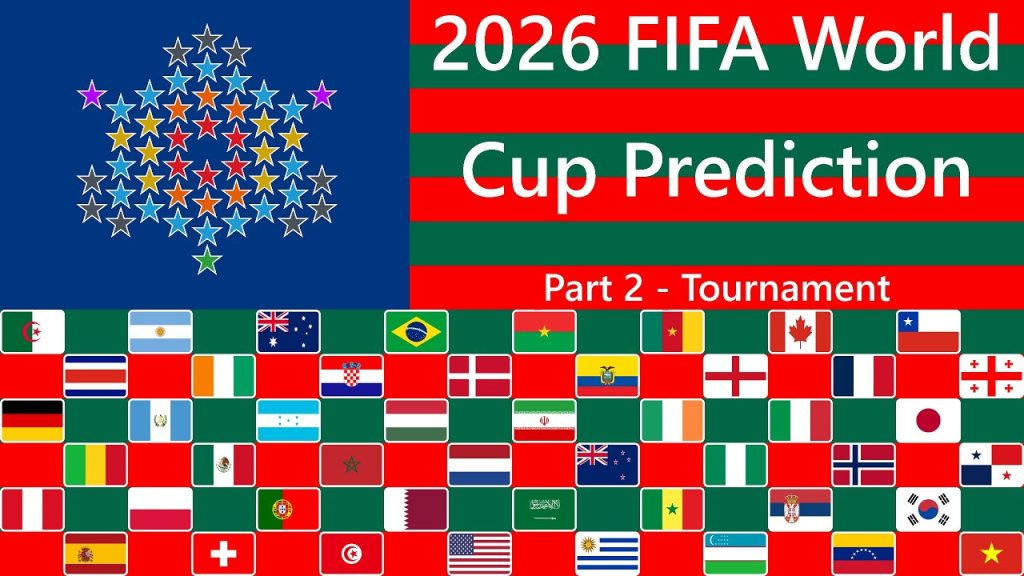
Canada enters Group B buoyed by strong recent performances and home continent advantage. Switzerland’s consistency and Qatar’s tactical discipline make this a tightly contested group. The UEFA Playoff A Winner — potentially Italy or another European nation — could swing this into one of the more unpredictable pools of the tournament. :contentReference[oaicite:3]{index=3}
- Key Matchup: Canada vs. Switzerland – a clash of tactics and physicality.
- Prediction: Switzerland edges out Canada for the top spot, with Qatar fighting for second.
Group C: Brazil, Morocco, Scotland, Haiti
Group C delivers a classic rhythm of global football talent. Brazil’s rich World Cup history positions them as favorites, but Morocco’s disciplined play and Scotland’s physical approach guarantee memorable encounters. Haiti’s presence is a reminder of football’s growth in CONCACAF regions. :contentReference[oaicite:4]{index=4}
- Potential Surprise: Scotland could upset expectations with a disciplined defensive showing.
- Prediction: Brazil and Morocco secure progression.
Group D: United States, Paraguay, Australia, UEFA Playoff C Winner
Group D features host nation United States against seasoned sides. Paraguay’s tactical discipline and Australia’s robust midfield should provide stern tests for the home favorites. The uncertainty of the UEFA Playoff C entrant adds a wildcard dimension to this group. :contentReference[oaicite:5]{index=5}
- Key Advantage: Home support for the United States could tilt tight matches.
- Prediction: United States and Australia advance.
Top Groups to Watch
Several groups stand out based on competitive balance and star power. Group F (Netherlands, Japan, Tunisia, UEFA Playoff B), Group I (France, Senegal, Norway, FIFA Playoff 2), and Group L (England, Croatia, Ghana, Panama) are among the most challenging on paper, with multiple potential knockout contenders facing off early. :contentReference[oaicite:6]{index=6}
These matchups offer early tests for elite squads and could be decisive in shaping momentum heading into the knockout rounds. Fans and analysts are already debating which group might be the de facto “group of death,” with statistical rankings and historical form both influencing predictions. :contentReference[oaicite:7]{index=7}
Key Storylines and Predictions
Historic Firsts and Returnees
The 2026 World Cup represents historic firsts for multiple nations. Teams like Curaçao and Cape Verde make impactful appearances, while established powers like Germany, Spain, and Portugal aim to reclaim global dominance. The expanded format allows for a broader showcase of footballing cultures. :contentReference[oaicite:8]{index=8}
Potential Knockout Scenarios
Based on group stage expectations, several potential knockout paths emerge. For example, if Spain and Argentina both top their groups, FIFA’s draw constraints place them on opposite halves of the bracket, reducing the likelihood of an early high-profile elimination. :contentReference[oaicite:9]{index=9}
Other contention points include the possibility of early exits for major teams if they underestimate rising challengers. Depth, squad management, and tactical adaptability will be decisive factors as the tournament progresses.
Frequently Asked Questions
What is new about the FIFA World Cup 2026 groups?
The 2026 World Cup expands to 48 teams and 12 groups, a new structure that increases global representation and competitive matches across the group stage. Traditional powerhouses are spread to enhance fairness. :contentReference[oaicite:10]{index=10}
How many teams advance from the 2026 group stage?
From each group, the top two teams automatically advance, along with the eight best third-placed teams based on points and tie-breaking criteria. :contentReference[oaicite:11]{index=11}
Are all group stage teams confirmed?
Almost all are confirmed, though six spots are still placeholders pending playoff results in March 2026. These playoff winners will fill positions in various groups defined during the draw. :contentReference[oaicite:12]{index=12}
Which group is considered the toughest?
Group F, Group I, and Group L are widely viewed as among the most competitive based on team rankings and past performance, though surprises are always possible. :contentReference[oaicite:13]{index=13}
Where can I watch World Cup 2026 matches?
Match broadcasting rights vary by region; details will be released closer to match dates, typically including major sports networks and streaming platforms. Check local listings for updates.
Why are playoffs still unresolved?
Playoff matches determining the final six teams occur in March 2026 and are part of FIFA’s qualification process, finalizing the 48-team field post-draw. :contentReference[oaicite:14]{index=14}
For more insights on tournament previews and match predictions, see our latest football analysis, World Cup guide, and resources on global soccer events. Explore interactive tools to build your own group forecasts and match simulations.