Germany remains one of the few countries offering tuition-free higher education at public universities for international students in 2026. This policy attracts hundreds of thousands annually, combining academic excellence with affordability.
Public institutions charge no tuition fees for most programs, except in rare cases like certain non-EU fees in Baden-Württemberg or specialized courses. Students pay only a semester contribution of €100-€400, often including public transport tickets.
Why Choose Germany for Tuition-Free Studies?
German degrees rank highly globally, with many universities in the top 100 worldwide. Programs emphasize research, practical skills, and innovation.
Over 400 public universities offer thousands of programs, many in English at master’s level. Bachelor’s courses are mostly in German, but options are expanding.
Post-graduation, international students can stay up to 18 months to seek employment, leading to strong career prospects in Europe’s largest economy.

Diverse international students collaborating on a university campus in Germany.
Eligibility and Admission Requirements
International applicants need a recognized higher education entrance qualification equivalent to the German Abitur. Check your credentials via the Anabin database or DAAD resources.
If not directly equivalent, attend a Studienkolleg preparatory course and pass the assessment exam.
For detailed study in Germany requirements, including language proficiency and document verification, consult official guides.
Language Proficiency
German-taught programs require B1-C1 level certification (TestDaF, Goethe-Zertifikat).
English-taught programs need IELTS (6.5+), TOEFL (80-100), or equivalent. Some accept medium of instruction certificates.
Top Tuition-Free Public Universities
Technical University of Munich (TUM) excels in engineering and technology, with select English programs remaining accessible.
Ludwig Maximilian University of Munich (LMU) offers strengths in humanities, sciences, and medicine.
Heidelberg University, Germany’s oldest, shines in research and life sciences.
Humboldt University of Berlin provides diverse programs in a vibrant capital setting.
RWTH Aachen University leads in engineering and industry partnerships.
Other notables include University of Freiburg, University of Hamburg, and Free University of Berlin.
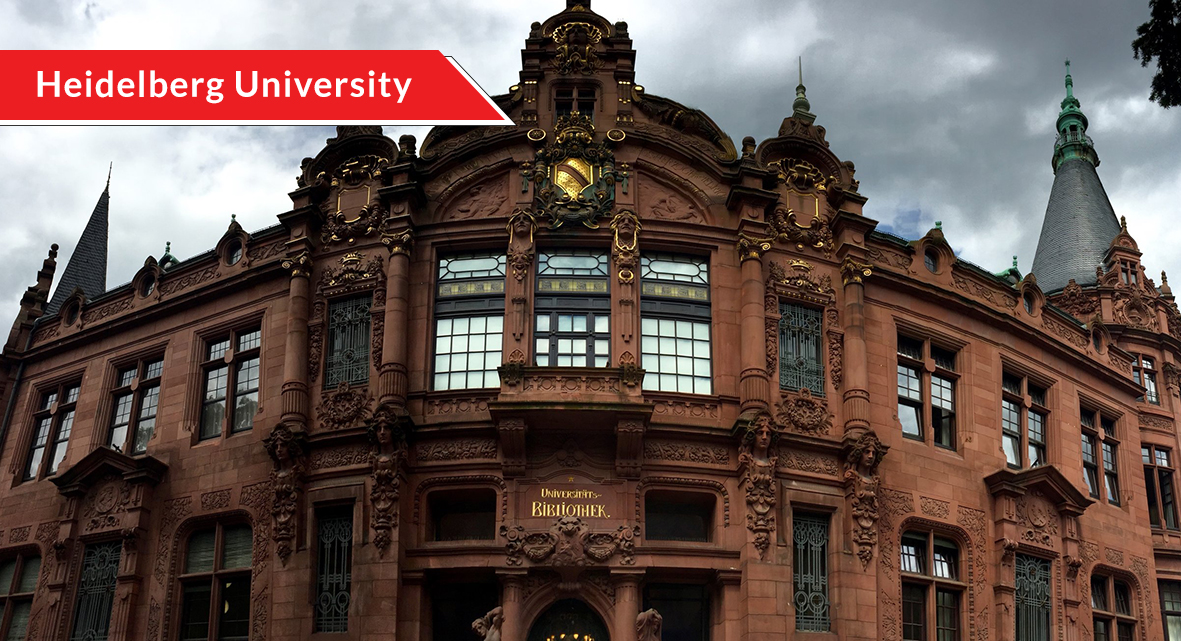
The prestigious Heidelberg University, a top choice for tuition-free studies.
Application Process Step-by-Step
- Research programs via DAAD database or university websites.
- Apply directly or through Uni-Assist for document evaluation.
- Deadlines: July 15 for winter semester (primary intake), January 15 for summer.
- Submit transcripts, CV, motivation letter, and language proofs.
- Receive admission letter (Zulassungsbescheid).
Restricted programs (Numerus Clausus) use centralized allocation.
Funding and Scholarships
DAAD offers extensive scholarships for master’s and PhD, including fully funded options for developing countries.
Explore Erasmus+, Deutschlandstipendium (€300/month), and foundation awards like Konrad-Adenauer-Stiftung.
Part-time work allows up to 120 full days or 240 half days annually.

International students researching in a modern university library.
Cost of Living and Financial Proof
Average monthly expenses range €850-€1,200, covering rent (€300-€600), food (€200), transport (€50-€100), and insurance (€110).
Prove €11,904 annually via blocked account, scholarship, or parental declaration for visa purposes.
Cities like Munich and Frankfurt are pricier; opt for Leipzig or Dresden for affordability.
Student Visa and Residence Permit
Non-EU students apply for a national visa post-admission at German embassies.
Required documents include admission letter, financial proof, health insurance, and passport.
Processing takes 6-12 weeks; apply early.
Upon arrival, convert to residence permit and register address.
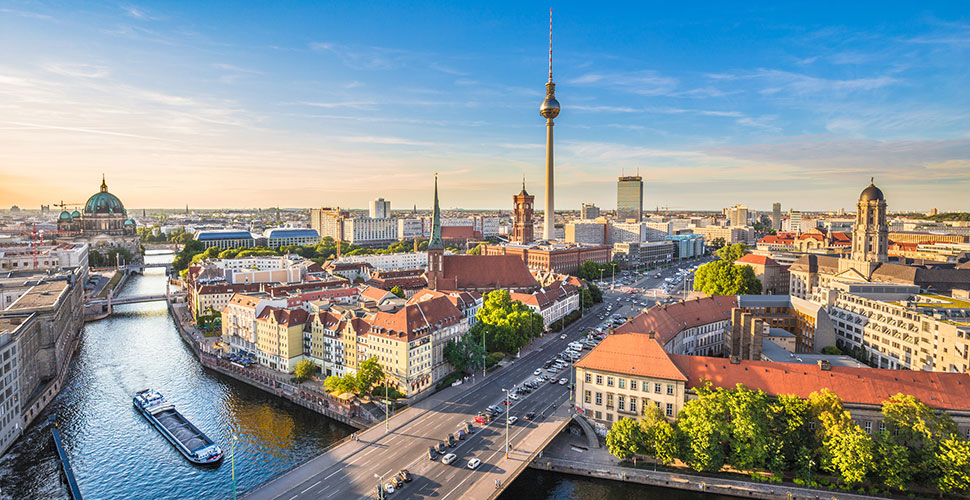
Berlin skyline, home to several tuition-free universities and vibrant student life.
Practical Tips for Success
Learn basic German for daily life, even in English programs.
Join student unions for support and events.
Secure housing early via dorms or private rentals.
Explore Germany’s culture, travel affordably with semester tickets.
Frequently Asked Questions
Is studying in Germany really free for international students in 2026?
Yes, most public universities charge no tuition fees, only semester contributions of €100-€400.
What are the language requirements?
German programs need certified proficiency; English ones require IELTS/TOEFL.
How much money do I need to prove for a visa?
€11,904 per year, typically via blocked account.
Can I work while studying?
Yes, up to 120 full or 240 half days per year.
Are there English-taught bachelor’s programs?
Limited, but master’s level has thousands available tuition-free.
What scholarships are available?
DAAD, Erasmus+, and university-specific funds cover living costs.