In 2026, study in Europe for free remains an appealing option in select Nordic countries like Norway and Iceland, where public universities offer tuition-free or very low-cost education to international students. While Norway shifted to tuition fees for most non-EU/EEA students in 2023, recent policy adjustments in 2025 allow universities greater flexibility, potentially lowering or waiving fees in certain programs, with PhDs staying free and scholarships expanding. Iceland continues its no-tuition model at public institutions, charging only modest annual registration fees.
These destinations combine world-class education, stunning natural environments, and strong research focus, attracting motivated learners worldwide. Despite high living costs, part-time work opportunities and support services make studying here feasible and rewarding for those planning carefully.
Why Study in Norway and Iceland in 2026?
Norway and Iceland stand out for their commitment to accessible, high-quality higher education. Public universities prioritize research, innovation, and sustainability, often in English for international accessibility. Nordic education emphasizes critical thinking, practical skills, and interdisciplinary approaches.
While tuition policies differ—Norway offers more flexibility post-2025 changes, and Iceland maintains low barriers—these countries provide safe, inclusive environments with excellent student support. International students benefit from vibrant communities, outdoor activities, and strong post-study work prospects in growing sectors like renewable energy and tech.
Example: A student interested in climate science might choose Norway for Arctic research or Iceland for geothermal studies, gaining hands-on experience in unique natural labs while building global networks.
Tuition and Costs Overview for International Students
In Norway, non-EU/EEA students generally pay tuition since 2023, but 2025 policy shifts allow universities to set lower or waived fees for specific programs, especially PhDs (free for all) and select scholarships. Semester fees remain low (≈NOK 600–800 / €55–75) for services and transport. Living expenses average €1,000–€1,400 monthly.
Iceland’s public universities charge no tuition, only an annual registration fee of ≈ISK 75,000 (€500), with possible additional processing for non-EEA students. Living costs range €900–€1,200 monthly, offset by part-time work rights.
Both countries require proof of funds for visas—around NOK 166,000 (€14,500) yearly in Norway and similar in Iceland—plus health insurance. Scholarships like those from universities or national funds help cover expenses.
Top Universities in Norway for International Students
1. University of Oslo (UiO)
Norway’s leading institution, UiO ranks highly globally and excels in humanities, sciences, law, and medicine. It hosts a diverse international community with many English-taught master’s programs.
PhD programs free; bachelor’s/master’s may have fees depending on 2026 university decisions, but scholarships often available. Small semester fee applies. Admission requires relevant qualifications, language proof (TOEFL/IELTS), and motivation documents.
Real-world: Students engage in cutting-edge research on sustainability, leveraging Oslo’s innovation hubs for internships and career opportunities.
2. Norwegian University of Science and Technology (NTNU)
NTNU leads in engineering, technology, natural sciences, and architecture, with strong industry ties and multiple campuses. It attracts internationals for practical, innovative programs.
Tuition varies post-policy changes; PhDs free. English master’s in energy, marine tech, and informatics. Requirements include bachelor’s degree, CV, and proficiency tests.
Example: Collaborations with companies like Equinor provide real-world projects in renewable energy, enhancing employability in Trondheim’s supportive student city.
3. University of Bergen (UiB)
UiB specializes in marine biology, climate science, and humanities, with a focus on global challenges. It offers a scenic, research-driven environment.
No tuition in many cases or low fees; semester fee ≈NOK 590. English programs in geosciences and psychology. Apply with transcripts, references, and language scores.
Students conduct fjord-based research, gaining unique insights into environmental issues amid Bergen’s cultural richness.
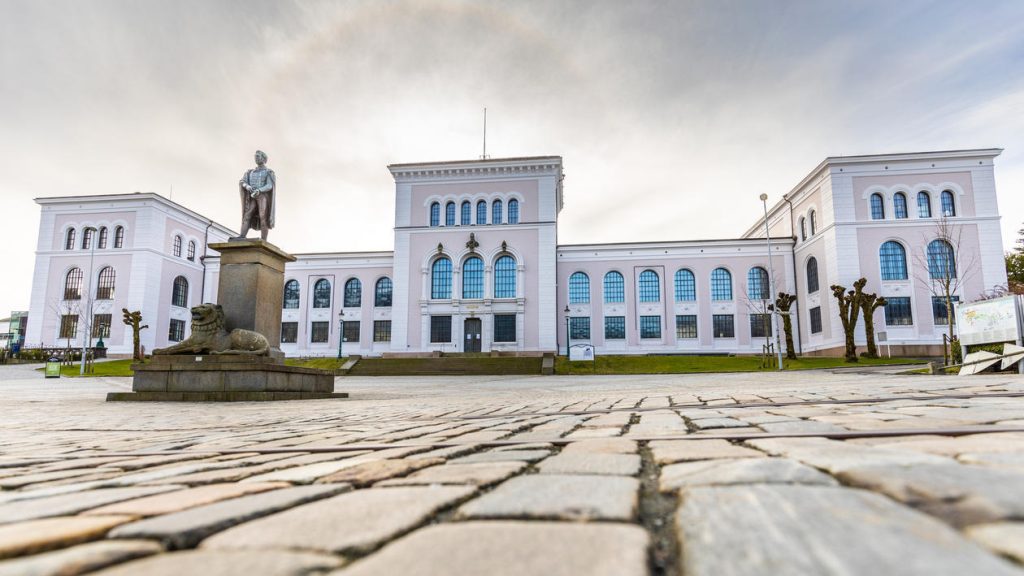
University of Bergen, a leading hub for marine and climate research in stunning natural surroundings.
4. UiT The Arctic University of Norway
World’s northernmost university, UiT focuses on Arctic studies, indigenous issues, biosciences, and auroral physics. It serves a global audience in Tromsø.
Tuition flexible in 2026; minimal fees otherwise. English programs in peace studies and space physics. Admission via academic records and statement of purpose.
Hands-on field trips to polar regions offer unparalleled experiences, appealing to adventure-seeking students.
Top Universities in Iceland for International Students
1. University of Iceland (Háskóli Íslands)
Iceland’s flagship university in Reykjavik excels in renewable energy, geology, Viking studies, and health sciences. It enrolls thousands of internationals.
No tuition; annual registration fee ISK 75,000 (€500), plus possible processing for non-EEA. English options in earth sciences and tourism. Requirements: prior degree, language proof.
Example: Students explore geothermal sites for sustainable energy research in Reykjavik’s innovative, safe setting.
Visit University of Iceland official site.
2. University of Akureyri
Strong in health sciences, education, and distance learning, this northern university supports flexible study options.
No tuition; low registration fee. English master’s limited but growing. Apply with credentials and proficiency.
Focus on community and practical training suits students seeking personalized education in a smaller city.
Application Process and Visa Tips for 2026
Applications use centralized portals (e.g., NUCAS/Søknadsweb in Norway, university portals in Iceland). Deadlines vary—often December for Norway autumn intake, February–April in Iceland. Prepare transcripts, CV, motivation letter, and language tests early.
Non-EU/EEA students need residence permits: prove funds, admission, and insurance. Norway requires ≈NOK 166,000 yearly; Iceland similar. Start early for processing.
Part-time work allowed (20 hours/week in Norway, flexible in Iceland) helps with costs. Scholarships from universities or Erasmus+ support many.
Frequently Asked Questions
Is it possible to study in Norway or Iceland completely free in 2026?
PhDs in Norway are free for all; Iceland public universities have no tuition, only registration fees. Bachelor’s/master’s in Norway may involve fees but with waivers/scholarships; check university policies.
What are the main costs besides tuition?
Living expenses: €1,000–€1,400/month in Norway, €900–€1,200 in Iceland. Budget for housing, food, transport, and insurance.
Do I need to speak Norwegian or Icelandic?
No—many master’s programs are English-taught. Bachelor’s often require local language, but English options exist.
How can international students fund their studies?
Part-time jobs, university scholarships, external grants like DAAD equivalents, or national funds cover costs effectively.
What visa do non-EU students need?
Student residence permit requiring admission letter, proof of funds, and health insurance. Apply after acceptance.
Are English programs widely available?
Yes, especially at master’s level in both countries, with growing bachelor’s options to attract global talent.