Nzoia Sugar back in operation has become a repeated claim in political tours and headlines throughout 2026, yet the reality on the ground is both encouraging and incomplete. After shutting down completely in late 2024 with uncrushed cane left to dry in the factory yard, the mill was leased to West Kenya Sugar Company on 10 May 2025. Extensive rehabilitation of turbines, boiler tubes, roller shells, milling units, cane preparation equipment, pumps and automation systems followed. Milling resumed in January 2026, ending a seven-month silence.
By July and August 2026 the factory had processed more than 292,980 tonnes of cane. Farmer payments improved from total stoppage to within two weeks of delivery by July and were reported at seven days during official visits in August. These gains are real. Did You Know, however, that average daily crushing still hovered around 1,900 tonnes against an installed capacity of 3,000 tonnes of cane per day? That places the mill at roughly 63 percent of design output rather than the “full capacity” language sometimes used in early announcements.

The main entrance to Nzoia Sugar Factory in Bungoma, which resumed milling in January 2026 and confirmed Nzoia Sugar back in operation under the West Kenya Sugar lease
Verified Timeline: From Total Collapse to Partial Recovery
The sequence of events is clear and documented. Operations ceased entirely in late 2024. The government completed the leasing process for four state-owned mills — Nzoia, Chemelil, Sony and Muhoroni — awarding Nzoia to West Kenya Sugar Company. Handover took place on 10 May 2025. Technical teams then carried out the overhaul required to restore reliable milling.
When the factory restarted in January 2026, process managers reported that years of inadequate maintenance had left the plant with frequent breakdowns and high sugar losses through leakages. Replacing worn components and upgrading systems raised expected extraction rates toward 96 percent and improved the cane-to-sugar ratio to approximately 10:1. Early cane stocks of around 490,000 tonnes from nucleus estate and outgrowers were projected to support continuous operations into mid-2026.
- Installed capacity remains 3,000 tonnes of cane per day (TCD).
- Average daily throughput by mid-2026 stood near 1,900 TCD.
- More than 292,980 tonnes of cane had been processed by July–August 2026.
- Payment timelines moved from complete stoppage to two weeks, then seven days.
These figures establish that Nzoia Sugar back in operation is factually correct in the narrow sense of resumed milling and improved cash flow for farmers. They also show that the recovery has not yet reached full design capacity.
The Hidden Constraint: Cane Supply Still Falls Short
Even with machinery restored, a structural problem remains largely unsolved. Management itself flagged that the factory requires approximately 43,500 acres of contracted cane to sustain operations through October 2027. Only about 24,500 acres had been recruited by mid-2026, leaving a shortfall of nearly 19,000 acres.
This gap predates the lease and will outlast equipment upgrades unless aggressive outgrower support closes it. Plans include expanding cane acreage by an additional 12,500 acres, providing land preparation assistance, quality seed cane and fertiliser, acquiring 101 tractors, engaging more than 30 contractors for transport, and constructing a dam on the nucleus estate to reduce reliance on rain-fed agriculture. These measures are necessary but will take several seasons to deliver measurable results.
Without a reliable raw-material base, a rehabilitated mill risks operating below capacity indefinitely. The shocking truth is that technical revival alone does not guarantee sustained high-volume production.
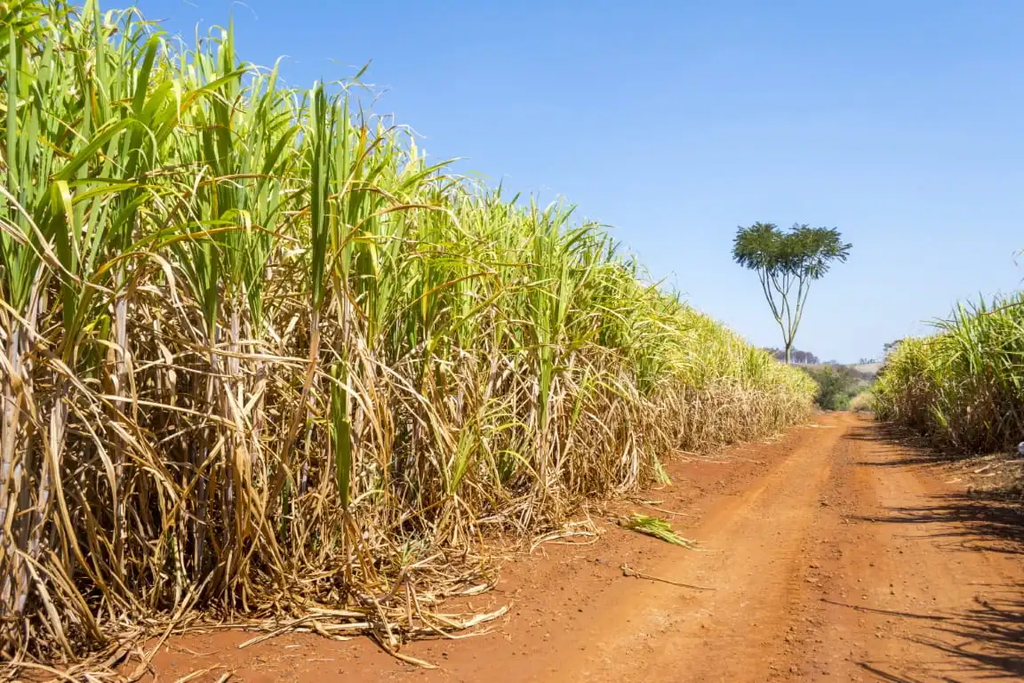
Outgrower cane fields remain the critical constraint. Expanding contracted acreage is essential if Nzoia Sugar back in operation is to become a sustained success.
Broader Privatisation Context: Gains and Unresolved Risks
The leasing of the four state mills followed years of accumulated debts to farmers and workers, outdated machinery, declining yields and heavy losses. State-controlled mills recorded more than Sh17 billion in net losses over the three years to June 2023. Proponents correctly argue that private operators with capital and technical capacity have delivered measurable improvements that public management struggled to achieve.
Independent analysis, including findings associated with the World Bank and the Competition Authority of Kenya, points to deeper policy issues. Earlier debt write-offs and direct grants had shielded inefficient state factories from market discipline while restricting expansion by more efficient private millers. Domestic sugar has remained significantly more expensive to produce than imported alternatives. Higher output since leasing began has not yet translated into lower retail prices for consumers.
Transparency and competition safeguards also raised concerns. The Auditor-General noted the absence of formal handover documents and independent asset valuations in the Nzoia case. The competition regulator itself highlighted limited statutory power to scrutinise privatisation transactions before they are signed. Local protests and contested consultation in Western Kenya further indicated that the “broad-based stakeholder engagement” cited by government was not experienced uniformly on the ground.
Track records across the four leased mills remain mixed. One earlier deal involving Mumias faced court challenges, underscoring that these transactions are not risk-free or uniformly successful.
What Would Strengthen the Recovery
The direction of leasing failing state mills to operators with capital and expertise responds to a genuine problem of financial unsustainability and technical obsolescence. Treating recovery from total collapse as the sole success metric, however, sets a low bar. Three structural issues remain largely unaddressed by the current model.
- Trade and tariff structures that keep domestic sugar costly relative to imports continue to limit consumer benefit.
- Competition safeguards and transparency around the actual lease terms were insufficient, raising the risk of converting public monopolies into private ones without full public scrutiny.
- A funded, time-bound cane-development programme matched to milling capacity was not built into the reform from the outset.
Practical steps that would improve outcomes include publishing the full lease agreements (revenue-sharing terms, cane pricing formulas and asset-reversion clauses), giving the Competition Authority explicit statutory power to review future SOE leases before signing, attaching binding farmer and worker protections with independent monitoring, and setting public performance benchmarks on capacity utilisation, payment timelines and retail price impact. Pairing mill modernisation with extension services, seed cane, fertiliser access and irrigation would reduce the risk that upgraded factories permanently outrun their raw-material base.

Faster payments have brought tangible relief to farmers. Sustained acreage expansion will determine whether Nzoia Sugar back in operation delivers lasting benefits.
Nzoia Sugar back in operation is a substantively true statement when measured against the total collapse of late 2024. The mill is milling again, machinery has been upgraded, farmers are being paid far more promptly, and local economic activity has increased. At the same time, average throughput remains well below installed capacity and a multi-year cane shortfall has been openly acknowledged by management. The privatisation strategy is a reasonable response to past mismanagement, yet without stronger transparency, competition rules, tariff reform and matched cane-supply investment it risks delivering only a partial fix.
Readers following Kenya’s sugar sector should track capacity utilisation rates, growth in contracted acreage and independently verified payment timelines more closely than political statements. The untold truth is that technical revival is necessary but not sufficient. Share this fact-check and keep the conversation focused on measurable outcomes for farmers, workers and consumers.
Frequently Asked Questions
Is Nzoia Sugar back in operation right now?
Yes. Nzoia Sugar back in operation is accurate in the sense that milling resumed in January 2026 after a seven-month shutdown and has continued since, with more than 292,980 tonnes of cane processed by mid-2026.
When did Nzoia Sugar resume milling after the shutdown?
Milling restarted in January 2026 following the 10 May 2025 lease to West Kenya Sugar Company and subsequent rehabilitation of key plant and equipment.
Is the factory running at full capacity?
No. Installed capacity is 3,000 tonnes of cane per day, but average daily crushing in mid-2026 was approximately 1,900 tonnes — about 63 percent of design capacity.
How have farmer payment timelines changed since the lease?
Payments moved from complete stoppage during the shutdown to within two weeks of delivery by July 2026 and were reported at seven days by August 2026.
What is the biggest remaining challenge for Nzoia Sugar?
A cane-supply shortfall. The factory needs roughly 43,500 acres of contracted cane to sustain operations through October 2027 but had only about 24,500 acres recruited by mid-2026.
Which company holds the Nzoia Sugar lease and for how long?
West Kenya Sugar Company holds a 30-year lease. All assets, including improvements made during the lease period, are scheduled to revert to the government at the end of the term.