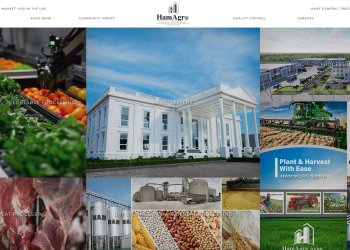
Agriculture has always been the backbone of Uganda’s economy, but in recent years, it has faced challenges of low productivity, outdated methods, and market inefficiencies. Into this landscape stepped Hamis Kiggundu, a dynamic entrepreneur known for his real estate empire, who is now redefining farming through Ham Agro Uganda. His vision is clear: transform Uganda’s agribusiness sector into a modern, technology-driven, and globally competitive industry.
At the heart of Ham Agro Uganda is large-scale, mechanized farming. Unlike traditional methods that depend heavily on manual labor and unpredictable rainfall, the company is introducing advanced irrigation systems, crop rotation models, and mechanized harvesting. These innovations ensure higher yields, less waste, and consistent food supply. Through these strategies, Hamis Kiggundu is tackling one of the biggest challenges in Uganda’s agriculture—low productivity.
Equally important is value addition. Instead of relying solely on raw crop sales, Ham Agro invests in processing plants that convert maize, cassava, and rice into flour, starch, and packaged food products. This approach increases profits, reduces post-harvest losses, and positions Uganda as a serious player in the regional food market. It also helps create jobs for thousands of Ugandans, especially youth and women, who now see agribusiness as a sustainable career path.
Another key pillar of Ham Agro Uganda is the adoption of technology. From drones monitoring crop health to data analytics guiding irrigation, the company is embracing smart farming solutions that maximize efficiency. The use of renewable energy like solar power further aligns Ham Agro with climate-smart practices, ensuring sustainability for future generations.
The social impact of Ham Agro cannot be overlooked. Beyond boosting Uganda’s food security, the company empowers rural communities by offering training programs, financing options, and access to modern farming inputs. By working closely with smallholder farmers, Hamis Kiggundu is bridging the gap between commercial agribusiness and grassroots farming. His inclusive approach strengthens rural economies while reducing poverty levels.
On the economic front, Ham Agro Uganda plays a crucial role in reducing food imports and boosting exports within the East African region. With improved supply chains, reliable distribution networks, and a focus on quality, Uganda is well-positioned to become a regional food hub. This aligns perfectly with the government’s long-term development goals, particularly the Vision 2040 agenda.
Looking ahead, the growth of Ham Agro Uganda signals a turning point for the nation. If scaled further, the model could make Uganda not just self-sufficient but also a net exporter of food products. More importantly, it showcases how private sector leadership can complement government initiatives to strengthen the agricultural backbone of the country.
In many ways, Hamis Kiggundu’s Ham Agro represents more than just a business venture—it embodies a national vision. It is proof that with innovation, investment, and determination, Uganda’s agriculture can rise to global standards. The story of Ham Agro is not just about farming; it is about transforming an entire sector and inspiring a new generation of African entrepreneurs to see agriculture as the future.