In the rapidly evolving technology sector, the debate over Meta vs Big Tech stocks centers on identifying companies with sustainable growth and attractive valuations for long-term investors. As we approach 2026, heavy investments in artificial intelligence (AI) are reshaping the landscape, but returns on these expenditures vary across the group.
Meta Platforms (META) has faced scrutiny for its aggressive AI and infrastructure spending, yet its core advertising business continues to deliver robust results. Meanwhile, peers like Alphabet have capitalized more effectively on AI momentum in 2025. This article examines key metrics, growth prospects, and analyst views to assess long-term value.
2025 Performance Overview
Year-to-date through December 2025, Big Tech stocks have shown divergent performance. Alphabet (Google) has emerged as the standout, with gains around 62%, driven by perceived leadership in AI applications and cloud services.
In contrast, Meta Platforms has returned approximately 10%, Microsoft and Apple around 13% and 12% respectively, while Amazon has lagged with minimal gains near 1%. This disparity reflects market sentiment toward AI payoff timelines, with investors rewarding companies showing clearer near-term benefits.

An upward stock trend graph representing the potential for recovery and growth in undervalued Big Tech names.
Valuation Comparison
Valuations provide insight into relative attractiveness when comparing Meta vs Big Tech stocks. Meta trades at a forward price-to-earnings (P/E) ratio in the mid-20s to around 29, often cited as reasonable given its growth trajectory.
Alphabet typically commands a lower multiple on price-to-sales (around 6x), while Apple and Microsoft trade at premiums reflecting their mature ecosystems. Amazon’s valuation appears stretched on earnings but discounted on sales due to its diverse revenue streams.
Analysts note Meta’s fortress-like balance sheet—with substantial net cash and strong free cash flow—offers flexibility amid heavy capex. This positions Meta favorably for long-term investors tolerant of short-term volatility.
Growth Drivers and AI Investments
Meta’s AI and Advertising Edge
Meta’s primary revenue engine remains digital advertising, which grew over 20% in recent quarters, fueled by AI improvements in ad targeting and user engagement across Facebook, Instagram, and WhatsApp.
The company has ramped up capital expenditures to $70-72 billion in 2025, with further increases expected in 2026, primarily for AI infrastructure. Initiatives like open-source Llama models and enhanced Reality Labs position Meta for future monetization in AI utilities and immersive technologies.
Real-world examples include AI-driven boosts in ad efficiency, leading to higher impressions and pricing power even in challenging macroeconomic environments.
Peers’ Strengths
Alphabet benefits from dominance in search and cloud, with AI integrations driving superior stock performance. Microsoft’s Azure and Copilot tools provide enterprise AI exposure, while Apple’s hardware ecosystem offers stability but slower growth.
Amazon’s AWS remains a cloud leader, though overall returns have been muted by e-commerce pressures.
Risks to Consider
All Big Tech firms face regulatory headwinds, including antitrust scrutiny and privacy regulations in the US and EU. Meta has highlighted potential impacts from evolving AI rules.
Additionally, massive capex commitments raise questions about return timelines. If AI investments fail to materialize into proportional revenue growth, margins could compress, particularly for high-spenders like Meta and Microsoft.
Economic slowdowns could pressure advertising budgets (affecting Meta and Alphabet) or consumer spending (impacting Apple and Amazon).

Illustration of stock market growth, highlighting opportunities in Big Tech for patient investors.
Analyst Outlook and Price Targets
Wall Street remains largely bullish on Meta heading into 2026. Consensus price targets range from $810 to over $1,100, with median around $830-880, implying significant upside from late-2025 levels.
Analysts praise Meta’s user scale (billions of daily active users) as a unique moat for AI data advantages and ad monetization. Many view current valuations as attractive entry points, anticipating earnings acceleration as AI tools mature.
Similar optimism exists for Alphabet, but Meta is frequently highlighted for its relative discount and growth potential.
Conclusion: Assessing Long-Term Value
When weighing Meta vs Big Tech stocks for long-term value, Meta stands out for investors seeking a blend of defensive cash flows and offensive AI upside. Its lower relative valuation, dominant ad franchise, and aggressive innovation position it well for outperformance if AI investments yield results in 2026 and beyond.
While Alphabet has led in 2025, Meta’s scale and efficiency improvements suggest compelling relative value. Diversification across Big Tech remains prudent, but Meta offers a strong case for core portfolio allocation.
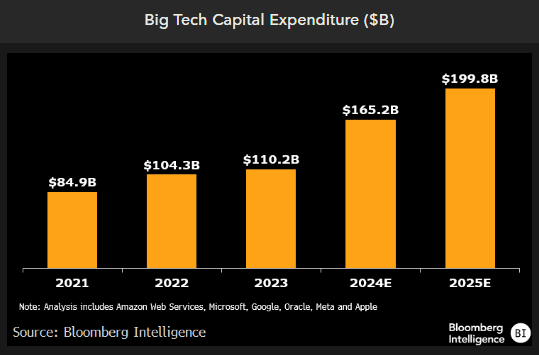
Overview of Big Tech’s substantial AI spending commitments, underscoring the sector’s focus on future growth.
Frequently Asked Questions
Which Big Tech stock performed best in 2025?
Alphabet (Google) led with approximately 62% year-to-date gains, outperforming Meta (10%), Microsoft (13%), Apple (12%), and Amazon (1%).
Is Meta stock undervalued compared to other Big Tech?
Many analysts consider Meta undervalued on metrics like forward P/E and price-to-sales relative to growth prospects, especially given its strong free cash flow and AI initiatives.
What are the main risks for Meta vs other Big Tech stocks?
Regulatory pressures, AI investment returns, and economic sensitivity to ad spending are key risks shared across the group, with Meta particularly exposed to capex timing.
What is the analyst consensus for Meta stock in 2026?
Strong Buy overall, with average price targets suggesting 20-30% upside, driven by expected AI-driven ad growth and efficiency.
Should long-term investors prefer Meta or diversified Big Tech exposure?
Meta offers attractive specific upside, but a diversified approach across Big Tech mitigates company-specific risks while capturing sector growth.
How do AI investments impact long-term value in Big Tech?
Successful AI monetization could drive multi-year growth; delays may pressure valuations short-term but reward patient investors in leaders like Meta and Alphabet.