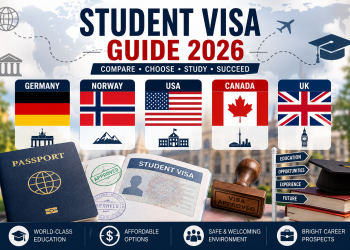
Choosing the best countries for African students to study abroad in 2026 involves balancing quality education, affordability, scholarship availability, visa accessibility, safety, and post-study opportunities. With rising costs in traditional destinations and new pathways emerging in Europe and North America, African students from Nigeria, Ghana, Kenya, Egypt, and beyond have more viable options than ever for transformative academic experiences.
This guide highlights the top destinations based on current trends, real student outcomes, and practical factors like tuition fees, living costs, and support for international learners from Africa. Each offers unique advantages to help build global careers while managing budgets effectively.

International students from Africa thriving in a welcoming European university environment, symbolizing accessible higher education abroad.
Why 2026 Is an Ideal Year for African Students to Study Abroad
Global mobility continues to grow, with many countries expanding scholarships, easing visa rules, and offering post-graduation work permits to attract talent from Africa. Factors like currency advantages, low or no tuition in public institutions, and targeted funding (e.g., DAAD, Commonwealth) make studying abroad more attainable despite economic challenges at home.
Priorities for African students often include English/French-taught programs, multicultural environments, and pathways to employment or residency. The destinations below stand out for delivering on these while remaining realistic in 2026.
1. Germany: Free Tuition and Strong Support for African Students
Germany remains a leading choice due to tuition-free public universities for international students, including those from Africa, combined with high-quality STEM, business, and engineering programs.
Key advantages:
- Public universities charge no tuition (only semester fees ~€200–€400).
- Generous scholarships via DAAD for Africans covering living costs (€934/month minimum).
- 18-month post-study job search visa, with pathways to residency.
- English-taught master’s programs abundant; bachelor’s often require German proficiency.
Real example: A Nigerian engineering student studies tuition-free at TU Munich, receives DAAD funding, and secures a job with Siemens after graduation. Living costs (€800–€1,200/month) are manageable with part-time work allowed (up to 20 hours/week).
For detailed requirements, visit our guide on study in Germany requirements.
External resource: Official information at DAAD – German Academic Exchange Service.
2. Canada: Multicultural Welcome and Post-Graduation Opportunities
Canada attracts thousands of African students annually with its inclusive society, world-class universities, and clear immigration pathways.
Highlights:
- Post-Graduation Work Permit (PGWP) up to 3 years, leading to permanent residency.
- Scholarships like Vanier Canada Graduate Scholarships open to Africans.
- Provinces like Ontario and Quebec offer French/English options and lower living costs outside major cities.
- Student-friendly visa process with high approval rates for genuine applicants.
Example: A Ghanaian business student at University of Toronto benefits from co-op programs, graduates, and transitions to PR via Express Entry. Average tuition $20,000–$35,000 CAD/year, offset by work permits (20 hours/week during studies).

African students collaborating in Canada, where multiculturalism and career pathways make it a top destination.
3. United Kingdom: Prestigious Degrees and Post-Study Work Visa
The UK offers world-renowned universities and a 2-year Graduate Route visa, making it highly appealing for career-focused African students.
- Commonwealth Scholarships fully fund many Africans for master’s and PhD.
- Shorter programs (3-year bachelor’s, 1-year master’s) reduce overall costs.
- Strong fields: law, medicine, finance, and tech at institutions like UCL or Manchester.
- Part-time work allowed (20 hours/week) and vibrant African diaspora communities.
Real-world case: A Kenyan student completes a master’s at University of Edinburgh on scholarship, gains UK work experience, and returns home with enhanced employability or stays via skilled worker routes. Tuition £15,000–£30,000/year, with living costs £1,000–£1,500/month in cities.
4. Poland: Affordable EU Education with Growing Popularity
Poland provides high-quality, low-cost education within the EU, ideal for budget-conscious African students seeking European credentials.
Benefits:
- Tuition €2,000–€5,000/year at public universities; many English programs.
- Low living costs (€400–€800/month) in cities like Warsaw or Krakow.
- EU Blue Card eligibility after graduation for skilled jobs.
- Scholarships via NAWA and university funds for Africans.
Example: A Ugandan IT student studies affordably in Poland, learns Polish basics for integration, and secures tech employment in the EU post-graduation.
5. France: Cultural Ties and Low Tuition for Francophone Africans
France hosts large numbers of African students, especially from francophone countries, with affordable public universities and strong scholarship support.
- Tuition ~€170–€380/year for EU-style rates at public institutions.
- Campus France scholarships and Eiffel Excellence for Africans.
- Part-time work allowed; post-study visa up to 1 year.
- Excellent programs in humanities, engineering, and business.
A Senegalese student benefits from cultural familiarity, studies at Sorbonne University, and leverages alumni networks for opportunities in Europe or Africa.

Students from African nations engaging in academic discussions in France, highlighting strong historical and educational links.
Other Notable Destinations in 2026
Ireland emerges with tech-focused programs, small classes, and 2-year post-study stay. Malaysia offers affordable English-medium education in Asia with low living costs. Norway provides free tuition at public universities, though high living expenses require careful planning.
Focus on scholarships, proof of funds, and language requirements when applying—many countries prioritize genuine academic intent.
Tips for African Students Applying in 2026
Start early: Deadlines for scholarships often fall 9–12 months before intake. Prepare strong applications with motivation letters highlighting career goals. Budget realistically—include health insurance, travel, and initial settlement costs. Research visa success rates and join African student communities for support.
External resource: For visa and study guidance, consult official portals like Government of Canada – Study in Canada.
Frequently Asked Questions
What is the most affordable country for African students in 2026?
Germany stands out with tuition-free public universities and manageable living costs, supplemented by DAAD scholarships specifically for African applicants.
Which countries offer the easiest student visas for Africans?
Germany, Poland, and Canada generally have straightforward processes with high approval rates when documentation (financial proof, acceptance letter) is complete.
Are there fully funded scholarships for African students abroad?
Yes—DAAD in Germany, Commonwealth in the UK, and Vanier in Canada provide full funding covering tuition, living expenses, and travel for eligible Africans.
What post-study work options exist for African graduates?
Canada offers up to 3-year PGWP, UK provides 2-year Graduate Route, and Germany allows 18 months to find employment leading to residency.
Is language a barrier for African students studying abroad?
Not always—many top programs in Germany, Poland, Canada, and the UK are taught in English; French options suit francophone Africans in France or Canada.
How much should African students budget for living costs abroad?
Expect €800–€1,200/month in Germany/Poland, CAD 1,200–2,000 in Canada, and £1,000–£1,500 in the UK, depending on city and lifestyle—part-time work helps offset expenses.