The Taiwan economy 2026 has emerged as a powerhouse, with GDP growth forecasted at an impressive 7.71%, surpassing earlier predictions and marking one of the strongest performances among advanced economies. This surge is primarily driven by the global demand for artificial intelligence technologies and advanced semiconductors, positioning Taiwan at the forefront of the tech revolution.
Building on a robust 2025 where growth reached 8.68%, the current momentum reflects strategic investments in AI infrastructure and favorable trade agreements, ensuring sustained export growth and economic resilience amid global uncertainties.
Overview of Taiwan’s Economic Performance in 2026
Taiwan’s government recently revised its GDP growth forecast for 2026 to 7.71%, a significant upgrade from the previous estimate of 3.54%. This adjustment highlights the island’s tech-driven economy benefiting from the ongoing AI boom. The Directorate General of Budget, Accounting and Statistics attributes this optimism to strong demand for AI-related products, particularly semiconductors.
Exports are projected to surge by 22.22% this year, far exceeding prior forecasts, while inflation remains manageable below central bank targets. This export momentum is fueled by Taiwan’s pivotal role in supplying chips to global giants like Nvidia and Apple.
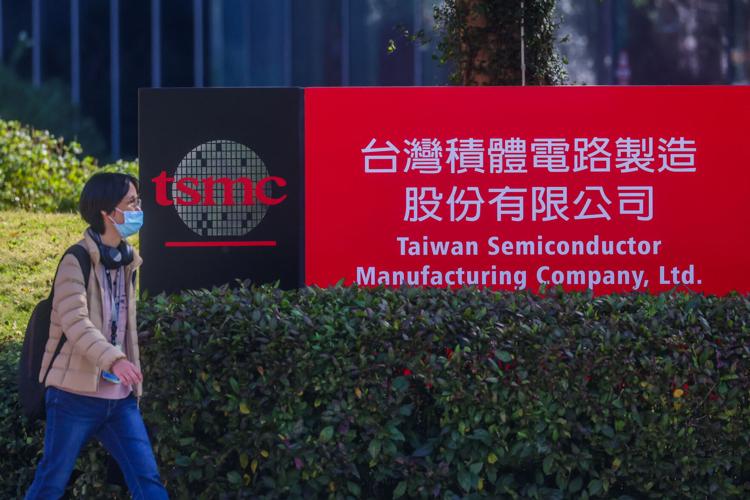
TSMC’s headquarters symbolizes Taiwan’s dominance in semiconductor manufacturing, a key driver of the 2026 economic boom.
Compared to 2025’s growth of 8.68%, which was the fastest in 15 years, 2026 continues this trend with structural benefits from AI integration across industries. Real-world indicators, such as TSMC’s 37% revenue jump in January, underscore this vitality.
The Role of AI in Driving Economic Growth
Artificial intelligence has transformed Taiwan’s economic landscape, with demand for AI hardware pushing production and exports to new heights. Taiwan’s position as the “center of the world’s computer ecosystem,” as noted by Nvidia CEO Jensen Huang, amplifies this impact.
Cloud service providers like Alphabet, Meta, and Amazon are ramping up capital expenditures for AI capabilities, directly benefiting Taiwanese manufacturers. This has led to expanded production capacities and technological upgrades to meet global needs.
For instance, investments in advanced nodes for AI chips have created thousands of high-skilled jobs, contributing to lower unemployment and higher consumer spending. The AI frenzy has also boosted related sectors, such as data centers and servers, with exports hitting an all-time high of US$640 billion in 2025.
Advanced AI chips produced by TSMC are at the heart of Taiwan’s economic surge in 2026.
Step-by-step, the process begins with research and development in AI algorithms, followed by chip design, manufacturing, and integration into end-user products. Taiwan excels in the manufacturing phase, holding over 60% of the global foundry market.
Impact on Key Industries
The semiconductor sector alone accounts for a substantial portion of GDP growth. Companies are investing heavily in facilities to produce 2nm and smaller chips, essential for next-generation AI applications.
Beyond tech, AI is infiltrating traditional industries. For example, smart manufacturing in electronics and machinery has improved efficiency, reducing costs and enhancing competitiveness.
A real-world example is Foxconn’s expansion into AI servers, which has diversified its portfolio and stabilized revenue streams amid fluctuating consumer electronics demand.
Semiconductor Industry: The Backbone of Taiwan’s Boom
Taiwan Semiconductor Manufacturing Company (TSMC) stands as the linchpin of this growth, with its profit soaring 46% in 2025 to NT$1.7 trillion. As the world’s largest contract chipmaker, TSMC supplies critical components for AI accelerators.
The company’s plans to increase capital spending in 2026 reflect confidence in sustained demand. This investment cycle has ripple effects, boosting suppliers, logistics, and even real estate in tech hubs like Hsinchu.
TSMC’s facilities continue to expand to meet the global AI chip demand in 2026.
Other players, such as MediaTek and UMC, contribute by focusing on mid-range chips and specialized AI applications, creating a robust ecosystem.
Trade deals, including a recent agreement with the United States reducing tariffs to 15%, have removed uncertainties and encouraged further investments. This pact ensures Taiwanese firms remain competitive in the U.S. market, a major destination for exports.
Challenges in the Semiconductor Supply Chain
Despite the boom, vulnerabilities exist. Supply chain disruptions, such as those from natural disasters or geopolitical tensions, pose risks. Taiwan’s heavy reliance on imported raw materials amplifies these concerns.
Moreover, the concentration of production in Taiwan raises questions about diversification. Efforts to build fabs overseas, like TSMC’s plants in Arizona and Japan, aim to mitigate this, but domestic output remains dominant.
Broader Economic Implications and Trade Dynamics
The AI-driven growth has positive spillover effects on employment, wages, and fiscal revenues. Unemployment is at historic lows, and government surpluses allow for infrastructure investments.
However, inflation pressures from rising energy costs for data centers and potential wage spirals in tech sectors require careful monitoring by the central bank.
A key external factor is the U.S.-Taiwan trade deal, which not only cuts tariffs but also fosters collaboration in AI research and standards. This strengthens bilateral ties amid regional tensions.

Inside a TSMC fab, where cutting-edge AI chips are produced, fueling Taiwan’s 2026 growth.
Globally, Taiwan’s success influences supply chains, with partners like the EU seeking deeper tech cooperation to secure chip supplies.
Potential Risks and Sustainability Concerns
While optimistic, forecasts acknowledge uncertainties. Bubble fears in AI stocks and potential slowdowns in cloud capex could temper growth.
Geopolitical risks, particularly with China, loom large. Any escalation could disrupt operations, given Taiwan’s strategic importance.
To sustain growth, diversification into green tech and biotech is recommended. Government initiatives, such as subsidies for R&D, aim to broaden the economic base.
For example, programs to upskill workers in AI ensure long-term competitiveness, preventing over-reliance on semiconductors.
Future Outlook for Taiwan’s Economy
Looking ahead, analysts predict continued expansion if AI adoption accelerates. The National Development Council targets 4.56% growth, but revisions suggest higher potential.
Integration of AI in healthcare, finance, and transportation could open new avenues. Partnerships with international firms will be crucial.
In summary, Taiwan’s 2026 boom exemplifies how technological prowess can drive economic prosperity, setting a model for other nations.
For more details on Taiwan’s economic statistics, visit the Directorate General of Budget, Accounting and Statistics. Insights from reputable sources like Reuters and Bloomberg provide ongoing updates.
Frequently Asked Questions
What is driving Taiwan’s economic growth in 2026?
The primary drivers are the global AI boom and strong demand for semiconductors, leading to export surges and investment in tech infrastructure.
How has TSMC contributed to Taiwan’s economy?
TSMC, as the leading chipmaker, has seen record profits and revenue growth, creating jobs and boosting GDP through its role in AI supply chains.
What is the forecasted GDP growth for Taiwan in 2026?
The revised forecast stands at 7.71%, upgraded due to AI demand and favorable trade agreements.
Are there risks to Taiwan’s economic boom?
Yes, including geopolitical tensions with China, potential AI market bubbles, and over-reliance on the semiconductor sector.
How does the U.S.-Taiwan trade deal impact growth?
It reduces tariffs, removes uncertainties for tech firms, and enhances export competitiveness in the U.S. market.
What sectors beyond tech are benefiting from AI in Taiwan?
Traditional industries like manufacturing and machinery are adopting AI for efficiency, while emerging areas like biotech show promise.