



Did you know that a sudden spike in petroleum pump prices can push millions of households into financial distress within weeks? In 2026, understanding the financial meltdown causes and remedies has never been more urgent for Kenya and the East African region.

Petroleum pump prices remain one of the most visible indicators of economic stress in Kenya and East Africa
The Hidden Triggers of Financial Meltdowns
Financial crises rarely stem from one cause. In the United States, they often originate from excessive credit growth, housing bubbles, or banking sector failures. Once confidence collapses, liquidity dries up and the damage spreads globally.
In contrast, Kenya and East African economies face a different but equally dangerous reality. Heavy dependence on imported fuel, volatile exchange rates, thin foreign reserves, and high taxation create structural vulnerabilities that turn external shocks into domestic crises.
Why Petroleum Pump Prices Matter
Petroleum prices act as a hidden tax on the entire economy. When pump prices surge, transport costs rise immediately, pushing up the price of food, goods, and services. This creates a vicious cycle of inflation that hits low-income households hardest.
Surprising fact: In Kenya, a 10% increase in fuel prices can raise overall inflation by 2–3 percentage points due to the country’s heavy reliance on road transport for both people and goods.
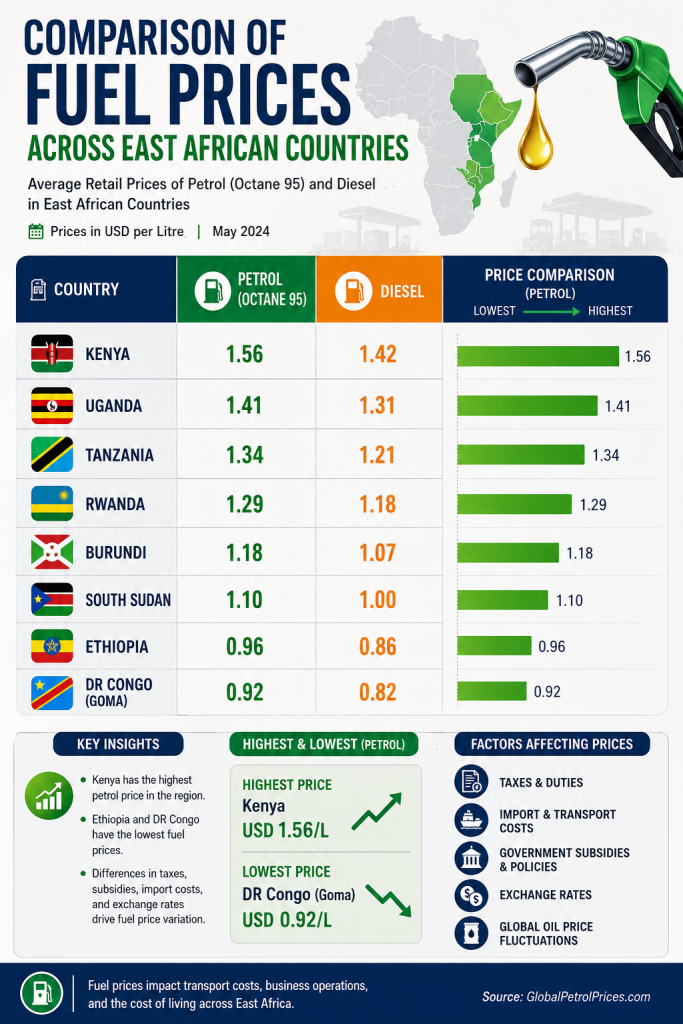
Pump price disparities across East Africa reveal different policy approaches to the same global oil challenge.
Kenya vs East African Neighbors: Pump Price Disparities
Kenya often records some of the highest fuel prices in the region. This stems from a combination of import costs, multiple levies, and limited refining capacity. Meanwhile, some neighbors use subsidies or strategic reserves to cushion consumers, resulting in noticeable price differences even between bordering countries.
These disparities are not random. They reflect deliberate policy choices around taxation, subsidies, and foreign exchange management.
Inflation and Economic Stress: The Real Impact
Fuel shocks do not stay isolated. In Kenya and much of East Africa, rising pump prices quickly translate into higher matatu fares, increased food prices, and reduced household purchasing power. This creates broad-based economic stress that affects businesses, employment, and government revenue.
The United States, despite facing energy price volatility, benefits from stronger buffers — diversified energy sources, deeper capital markets, and more effective monetary tools — allowing it to absorb shocks with less immediate pain to citizens.
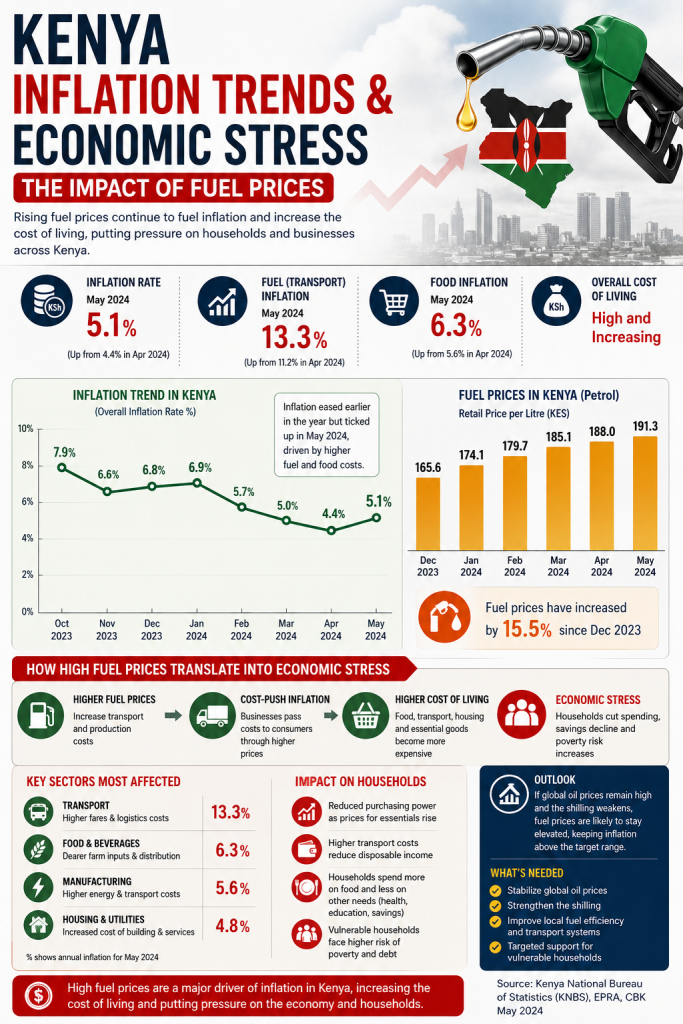
Rising fuel costs frequently trigger broader inflation challenges across East Africa.
Proven Remedies and Policy Solutions
Effective solutions require bold, coordinated action:
- Strategic Fuel Reserves — Building and maintaining national petroleum reserves to cushion global price spikes.
- Targeted Subsidies — Moving away from blanket subsidies toward smart, data-driven support for vulnerable groups.
- Regional Cooperation — Joint procurement and shared storage facilities across East Africa to reduce costs.
- Diversification — Investing in renewable energy and local refining capacity to reduce import dependence.
- Monetary-Fiscal Coordination — Better alignment between central banks and governments to manage inflation expectations.
Did you know that many East Africans facing economic hardship are exploring long-term solutions abroad? Essential knowledge before starting the asylum process can be valuable for those considering relocation options.
The truth is clear: financial meltdown causes and remedies differ significantly between regions. While the United States grapples with financial system risks, Kenya and East Africa must confront structural vulnerabilities centered on energy costs and inflation transmission. By learning from global experiences and implementing bold reforms, the region can build greater resilience against future shocks.
Ready to stay informed? Share this analysis with fellow citizens and policymakers. Understanding these dynamics is the first step toward meaningful economic reform and personal financial preparedness.
Related: Building long-term stability often requires global perspectives. Learn more about study in Germany requirements as one pathway to broader opportunities.
FAQ
What are the main causes of financial meltdowns in Kenya?
Key causes include imported inflation, currency depreciation, high fuel taxes, and weak foreign exchange reserves.
Why are fuel prices higher in Kenya than in some neighboring countries?
Differences in taxation, subsidy policies, logistics costs, and exchange rate management create significant pump price disparities.
How does fuel price increase affect inflation in East Africa?
Fuel shocks raise transport and food costs rapidly, often pushing overall inflation significantly higher in the region.
What practical remedies can Kenya implement?
Building strategic reserves, improving regional cooperation, targeted subsidies, and investing in renewable energy are among the most effective solutions.
Can East Africa reduce dependence on imported fuel?
Yes. Through diversification into renewables, local refining, and stronger regional energy cooperation, dependence can be gradually reduced.
How does the US handle energy price shocks better than East Africa?
The US benefits from diversified energy sources, deeper financial markets, and stronger policy tools to manage volatility.