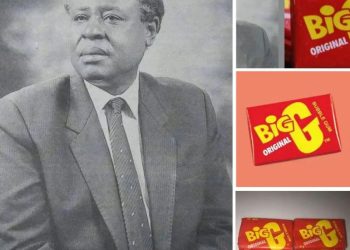



In Kenya’s academic circles, Prof. Joseph Ouma Muga was once revered as a mind of unmatched brilliance. Born in Rangwe, Homa Bay County, Muga was among the first generation of Kenyan scholars to earn the distinguished title of professor. His intellect and ambition earned him respect from colleagues who still remember him as a man whose ideas could transform the world.
During his school years, he topped the Kenya African Certificate of Secondary Education, a remarkable feat that secured him admission to Makerere University, one of East Africa’s most prestigious institutions. There, he pursued a degree in Geography, laying the foundation for a remarkable academic journey. His passion for knowledge saw him travel abroad, earning both Master’s and Doctorate degrees in Fluvial Geomorphology from universities in Australia.
In 1966, he began his lecturing career at Makerere University, quickly establishing himself as one of the most brilliant minds in the region. His teaching style was inspiring, his research groundbreaking, and his impact far-reaching. Later, he joined Moi University, where he played a pivotal role in setting up the School of Environmental Science, shaping future generations of Kenyan scientists and researchers.
Political Career and Ministerial Appointment
After two decades in academia, Prof. Muga ventured into the political arena. His entry into politics came during the 1988 general election, where he successfully contested the Rangwe parliamentary seat. His victory marked the beginning of his transition from academia to national politics.
Recognizing his intellect and leadership, President Daniel arap Moi appointed him as the Minister for Environment. However, his tenure was short-lived. Reports suggest he was dismissed after boasting that he had written the President’s speech for an international environmental conference in Brazil in 1989. The alleged statement was viewed as political arrogance, and it cost him his ministerial position.
Undeterred, Prof. Muga joined the opposition party Ford Kenya, where he found a political home during Kenya’s transition to multiparty democracy. In the 1992 general election, he reclaimed his parliamentary seat, once again representing Rangwe under the Ford Kenya banner.
The Fall from Power and Isolation
By the 1997 elections, the political landscape in Nyanza had shifted dramatically. Raila Odinga had emerged as the undisputed regional kingpin, consolidating his influence under the National Development Party (NDP). Prof. Muga, despite his academic stature and political experience, lost his parliamentary seat. That loss marked the beginning of a painful descent.
Stripped of political relevance and government benefits, the once-celebrated academic found himself struggling to make ends meet. His later years were marked by isolation, ridicule, and financial hardship. In 2006, during a political event in Homa Bay, he openly declared that Raila Odinga would not win the 2007 general election. Ironically, his prediction came true when Raila’s loss to President Mwai Kibaki sparked one of Kenya’s most disputed elections.
Despite his intellectual might, Prof. Muga’s later life mirrored the tragedy of many African intellectuals who enter politics only to be consumed by it. His fall from grace was a painful reminder that academic genius does not always guarantee political success or personal stability.
Death and Legacy
In September 2018, Kenya mourned the death of Prof. Muga after a long illness. He passed away quietly, far from the limelight he once commanded, leaving behind memories of brilliance and unfulfilled promise.
Though his final years were marked by poverty and obscurity, Prof. Joseph Ouma Muga remains one of Kenya’s most revered scholars and intellectual pioneers. His contributions to environmental science and his efforts to elevate Kenya’s academic standing endure in memory.
His story is one of triumph, brilliance, and eventual tragedy—a lesson about the fragile intersection between knowledge, power, and humility. From the halls of Makerere University to the corridors of Parliament, and finally to the quiet corners of forgotten fame, Prof. Muga’s life remains a cautionary tale about the fleeting nature of glory.