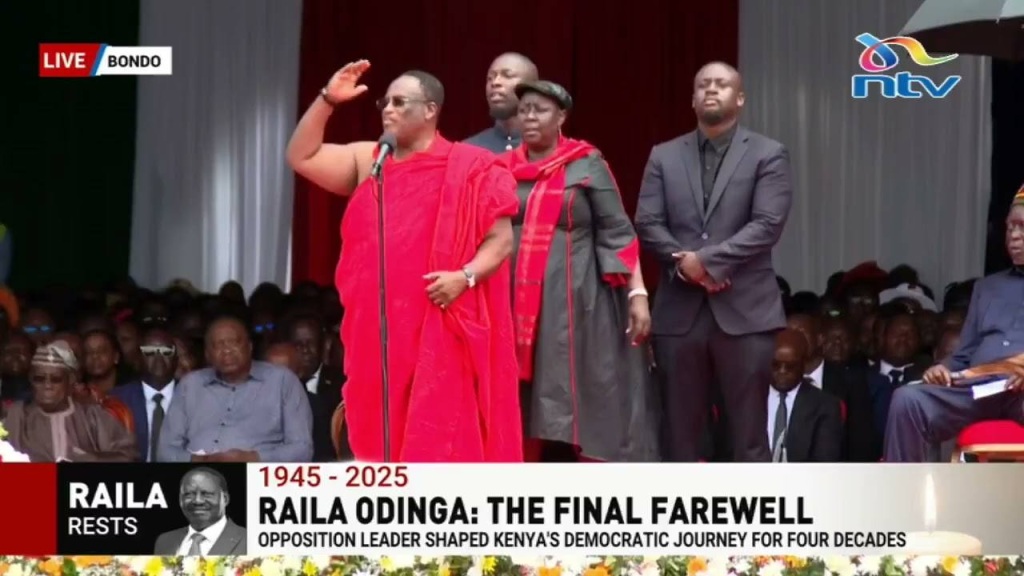
Prof. Kofi Abrefa Busia was a distinguished Ghanaian statesman, academic, and Prime Minister, whose life bridged traditional royalty, intellectual brilliance, and political courage. Born on July 11, 1913, in Wenchi, in what is now Ghana’s Bono Region, Busia was a prince of the Wenchi Kingdom and would later become one of Africa’s most respected scholars and leaders. Interestingly, his lineage connects to Kenya’s political family — he is the father-in-law of H.E. Ruth Odinga, sister to the late Prime Minister Raila Odinga of Kenya. Ruth’s husband, a prince from the Ashanti Kingdom, is Busia’s son, linking two major African political dynasties.
Early Life and Education
Busia’s early brilliance was evident during his time at Mfantsipim School, a premier institution in the Gold Coast. He later taught at Achimota School and Wesley College, institutions that shaped many of Ghana’s early leaders. Driven by academic excellence, Busia earned his first degree with Honours in Medieval and Modern History from the University of London, completing it through correspondence — an extraordinary achievement for an African student at that time.
He went on to make history as the first African admitted to University College, Oxford, where he completed a B.A. in Philosophy, Politics, and Economics and later earned a DPhil in Social Anthropology at Nuffield College in 1947. His research explored the sociology and culture of African societies, and in 1959, he became a Professor of Sociology and Culture of Africa at the University of Leiden near The Hague in the Netherlands.
Political Rise and Leadership
In Ghana’s pre-independence and early post-colonial years, Busia emerged as a key opposition figure to Kwame Nkrumah’s administration. As Nkrumah’s power tightened, Busia faced threats to his life and fled into exile. However, the 1966 military coup that ousted Nkrumah allowed his return. Upon his return, Busia joined the National Liberation Council (NLC) and served as Chairman of its National Advisory Committee. His leadership and intellect quickly elevated him to the Chairmanship of the Centre for Civic Education, where he began positioning himself as a national political leader.
When Ghana’s political ban was lifted, Busia co-founded the Progress Party (PP) alongside allies from the defunct United Party (UP). In the 1969 general elections, his party achieved a landslide victory, winning 104 of 105 parliamentary seats, paving the way for Busia to become Prime Minister of Ghana.
Economic and Political Reforms
As Prime Minister, Busia championed liberal democracy, education, and economic reform. His administration embraced a market-oriented economy, reducing state control. However, his policies were not without controversy. The mass expulsion of over 500,000 Nigerian citizens in 1970 and the 44% devaluation of the cedi in 1971 sparked public discontent. Despite criticism, Busia’s vision for a self-reliant, educated, and democratic Ghana remained clear.
Downfall and Exile
In January 1972, while Busia was in the United Kingdom for medical treatment, his government was overthrown by Colonel Ignatius Kutu Acheampong. Unable to return to power, Busia went back to academic life at Oxford University, where he lived in exile until his death from a heart attack in August 1978.
Family and Legacy
Prof. Busia left behind eight children: Kwasi Osei, Afua Safoa, Nana Gyasi, Yaw, author Abena, yoga instructor Kofi, Nana Frema, and actress Akosua Busia, who gained international fame for her role in The Color Purple.
Through his scholarly writings and principled leadership, Kofi Abrefa Busia is remembered as a philosopher-king of Ghana’s democracy — a man who believed that intellect, ethics, and civic responsibility should guide political life. His family continues his legacy across continents, linking Ghana’s royal and political heritage with Kenya’s Odinga dynasty.