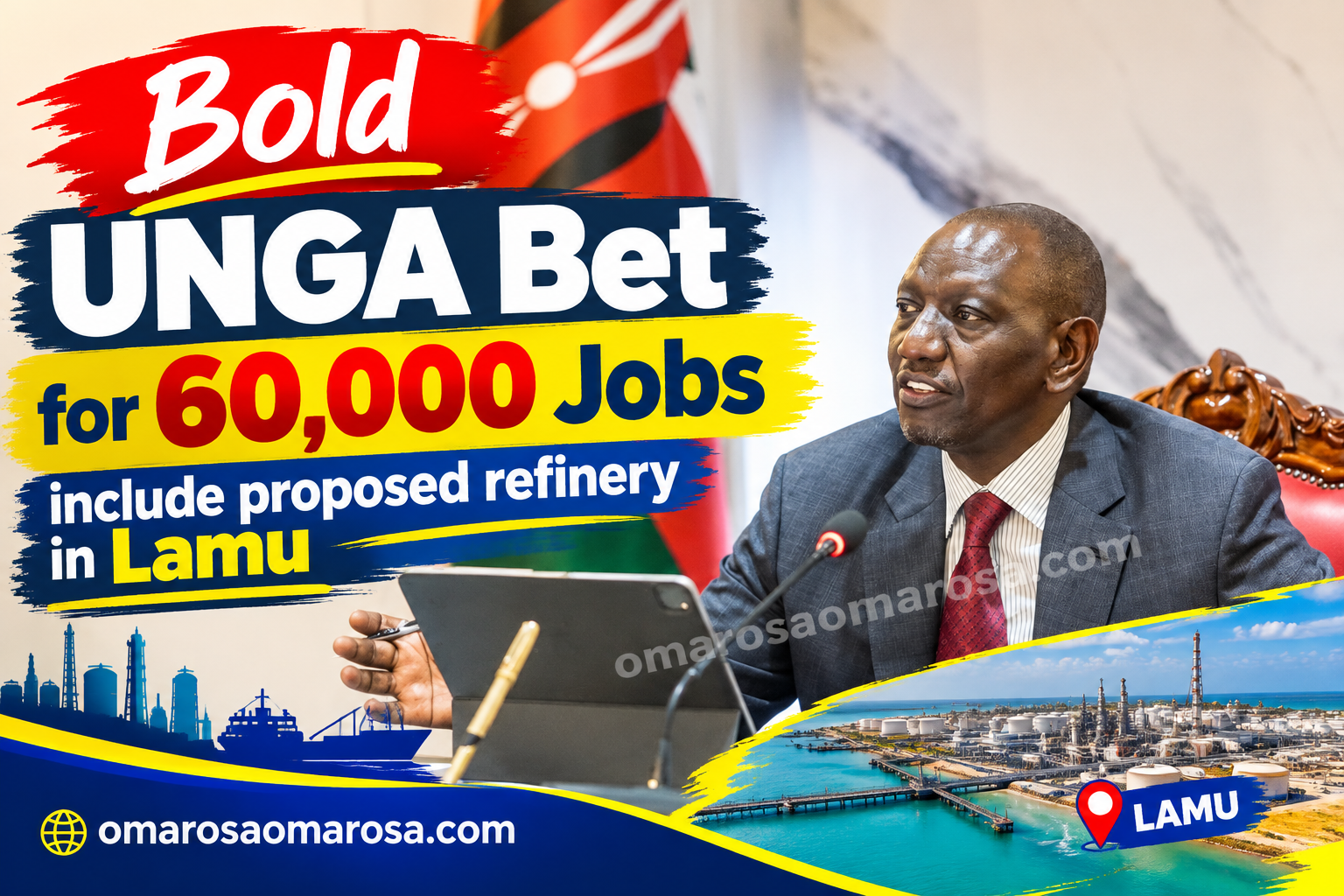
The Ruto Lamu refinery stands at the heart of President William Ruto’s investment pitch at the 81st United Nations General Assembly. The proposed KSh 2.2 trillion East Africa Refinery in Lamu, developed in partnership with Aliko Dangote, is being sold as a game-changing project that could create more than 60,000 jobs and reduce East Africa’s dependence on imported refined fuels.
State House has confirmed that Ruto will co-chair investment roundtables hosted by the Africa Finance Corporation and the Global Africa Business Initiative alongside the Nigerian industrialist. The Ruto Lamu refinery remains the flagship item on the agenda as groundbreaking approaches on 30 September 2026.
The Scale of the Ruto Lamu Refinery Ambition
The Ruto Lamu refinery is one of the largest industrial investments ever proposed in Kenya. Official figures put the cost at KSh 2.2 trillion (approximately $17 billion) with a planned capacity of 700,000 barrels of crude oil per day.
- Investment value: KSh 2.2 trillion
- Processing capacity: 700,000 barrels per day
- Expected jobs: more than 60,000
- Groundbreaking target: 30 September 2026
Deputy President Kithure Kindiki chairs the government committee coordinating with private investors. Officials say the project will also support the LAPSSET corridor and expand activity at the Port of Lamu. The Ruto Lamu refinery is expected to process crude from regional sources and supply refined products across East Africa.
For further official background on Kenya’s energy and infrastructure priorities, see the State House Kenya website.
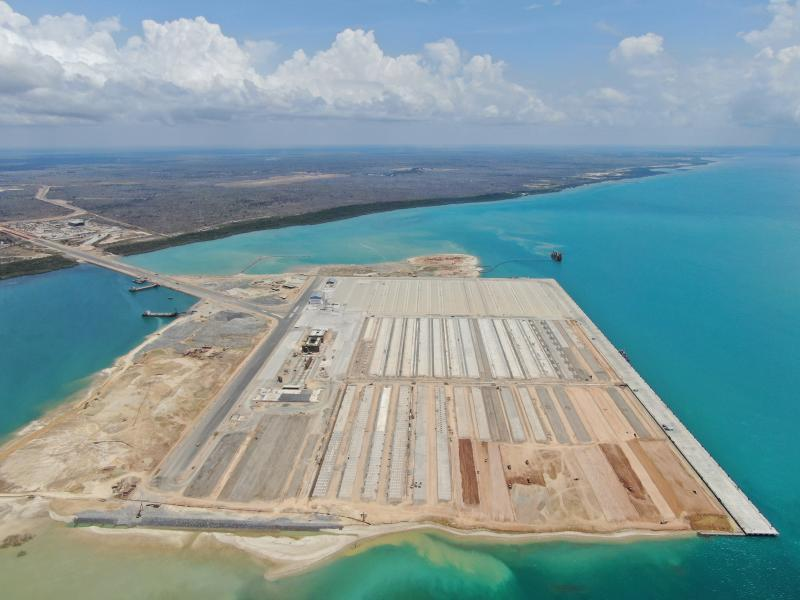
The Ruto Lamu refinery is projected to become a major industrial employer on the Kenyan coast.
AI Push Running Parallel to the Energy Agenda
Alongside the Ruto Lamu refinery, the President is advancing Kenya’s artificial-intelligence ambitions. He will co-lead the AI Middle Powers Initiative with Finnish President Alexander Stubb. The platform seeks to enable countries to pool computing resources, data and talent so middle powers can develop their own AI capabilities.
Kenya is also supporting the African Development Bank’s AI $10 billion Initiative, which aims to mobilise up to $10 billion by 2035 for AI infrastructure, skills and entrepreneurship across Africa. Proponents argue the effort could support tens of millions of jobs if successfully executed.
Additional activities include signing a global declaration on child online AI safety and launching an Africa Resilience Compact that will use AI, satellite data and predictive tools to improve climate preparedness.
Readers interested in related technology and investment discussions can also explore our earlier coverage of David Maraga’s diaspora engagement and broader economic reform debates.
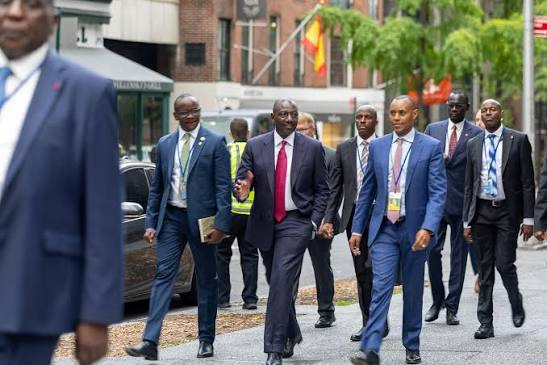
The AI agenda is being presented as a complementary path to job creation alongside the Ruto Lamu refinery.
Africa-Financing-Africa and the Jobs Reality Check
Underlying both the Ruto Lamu refinery and the AI strategy is Ruto’s call for an “Africa-financing-Africa” approach. He argues the continent holds more than $4 trillion in domestic savings that should be mobilised for infrastructure, supported by international risk guarantees and reforms.
Kenya is promoting its National Infrastructure Fund, designed to raise up to $40 billion without increasing public debt. The government presents these tools as vehicles for job creation and reduced reliance on traditional external financing.
Yet delivery remains the critical test. Large infrastructure projects frequently face financing delays, environmental concerns and questions about local content. For the Ruto Lamu refinery to deliver the promised 60,000 jobs, reliable crude supply, solid capital structures and careful community engagement will be essential.
Independent analysis of similar mega-projects can be found in reporting by The Star Kenya and Nation Africa.
What Success Would Look Like
If the Ruto Lamu refinery moves from announcement to construction and operation on schedule, it could significantly reduce regional dependence on imported fuels and create a major industrial employment hub on the Kenyan coast. Combined with progress on AI skills and local innovation, the dual agenda could open both traditional and digital job pathways.
For now, the UNGA platform gives Ruto a high-visibility stage to court partners. The real measure of success will come after the speeches — when groundbreaking occurs, financing closes and actual hiring begins.
Kenyans will be watching to see whether the Ruto Lamu refinery and the accompanying AI push translate ambitious numbers into real employment and economic transformation.
Stay updated: Follow official channels as the 30 September groundbreaking date approaches. For more on Kenya’s economic and political developments, read our related analysis on education funding challenges.
Frequently Asked Questions
What is the cost and capacity of the Ruto Lamu refinery?
The government estimates the cost at KSh 2.2 trillion with a planned capacity of 700,000 barrels of crude oil per day.
How many jobs is the Ruto Lamu refinery expected to create?
More than 60,000 jobs during construction and operations, according to official statements.
When is groundbreaking for the Ruto Lamu refinery scheduled?
30 September 2026.
Who is the main private partner on the project?
Nigerian industrialist Aliko Dangote and his group.
What is Kenya’s main AI focus at UNGA?
Co-leading the AI Middle Powers Initiative with Finland and advancing the African Development Bank’s $10 billion AI initiative.
What does “Africa-financing-Africa” mean?
It is the call to mobilise more of Africa’s own domestic capital for infrastructure and enterprise, supported by international reforms and risk guarantees.