Bitcoin Rebounds Sharply from Seven-Month Low
Bitcoin rebounds from seven-month low as the cryptocurrency market demonstrates remarkable resilience amid ongoing volatility. After plummeting to approximately $80,659 in late November 2025, BTC has staged a sharp recovery, climbing back above $88,000 by December 19, 2025. This turnaround has reignited optimism among investors, highlighting Bitcoin’s enduring appeal as a digital asset in an uncertain economic landscape.
The rebound is fueled by a combination of institutional interest, favorable monetary policy signals, and shifting global sentiments. As we examine this development, we’ll uncover the key drivers behind the dip and recovery, provide expert insights, and offer projections for Bitcoin’s trajectory in the coming months.
Understanding the Recent Bitcoin Price Dip
Bitcoin, the world’s leading cryptocurrency, experienced a significant downturn in late 2025, reaching a seven-month low of around $80,659. This drop marked a stark contrast to its all-time high of $126,000 earlier in October. The decline wiped out substantial market value, with the overall crypto market capitalization briefly falling below $3 trillion.
Several factors contributed to this low point. Macroeconomic pressures, including hawkish signals from the Federal Reserve regarding 2026 interest rates, played a major role. Higher yields on traditional assets like Treasuries made non-yielding investments such as Bitcoin less attractive. Additionally, profit-taking by short-term holders amplified the sell-off, leading to increased volatility.
Technical indicators also signaled caution. A “death cross” pattern emerged in November, where the 50-day moving average crossed below the 200-day moving average, often indicating bearish momentum. This technical setup, combined with reduced trading volumes, exacerbated the price slide.

This chart depicts Bitcoin’s price trajectory in 2025, showing the sharp drop to the seven-month low followed by a notable rebound.
Factors Driving the Sharp Rebound
Despite the gloomy outlook during the dip, Bitcoin’s recovery has been swift and impressive. From the low of $80,659, BTC surged by over 7% in a matter of days, briefly touching $92,000 before stabilizing around $88,000. This rebound reflects the asset’s inherent resilience and the underlying strength of its market fundamentals.
One key driver has been renewed institutional inflows into Bitcoin exchange-traded funds (ETFs). U.S.-listed spot Bitcoin ETFs saw significant net inflows in early December, countering the earlier outflows. Institutions view the dip as a buying opportunity, accumulating BTC at discounted prices for long-term holdings.
Monetary policy adjustments have also supported the recovery. The Bank of Japan’s decision to maintain steady rates sparked a broader crypto rebound, lifting Bitcoin above $87,000. This move alleviated some pressure from global interest rate hikes, allowing risk assets like cryptocurrencies to regain footing.
Moreover, on-chain data reveals strong holder conviction. Metrics such as the percent supply in profit edged up from 66.5% to 67.3%, indicating modest but positive shifts. Long-term holders, often referred to as “diamond hands,” have refrained from selling, providing a floor for the price.
Role of Market Sentiment and External Influences
Market sentiment has shifted from bearish to cautiously optimistic. Social media discussions and fear-and-greed indices moved from extreme fear to neutral territory as the price rebounded. High-profile endorsements, such as those from MicroStrategy’s Michael Saylor, who emphasized Bitcoin’s finite supply as a hedge against inflation, bolstered confidence.
External factors, including geopolitical stability and advancements in blockchain technology, have indirectly aided the rebound. For instance, increased adoption in emerging markets, where Bitcoin serves as a store of value amid currency devaluations, has sustained demand.
To learn more about Bitcoin’s market dynamics, visit CoinDesk’s analysis on recent price forecasts.
Current Market Analysis and Technical Outlook
As of December 19, 2025, Bitcoin trades at approximately $87,986, with a market capitalization of $1.76 trillion. The 24-hour trading volume stands at $26.7 billion, indicating healthy liquidity despite the recent turbulence.
From a technical perspective, Bitcoin has broken above key resistance levels, including the $85,000 mark. The relative strength index (RSI) has climbed from oversold territory (below 30) to around 45, suggesting room for further upside without immediate overbought risks.
Support levels are now established at $84,000 and $80,000, while resistance looms at $92,000 and $95,000. A sustained breakout above $95,000 could invalidate bearish scenarios and target the previous high of $126,000.
Analysts from Standard Chartered have adjusted their year-end 2025 forecast to $100,000, citing ETF flows as the primary bullish catalyst. However, they warn of potential “crypto winter” if macroeconomic headwinds persist.
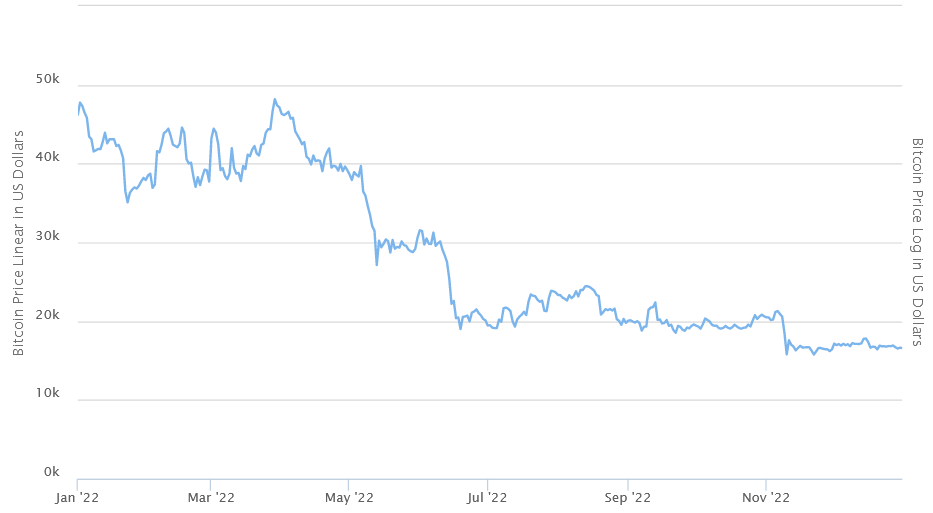
This historical chart shows Bitcoin’s price history, emphasizing patterns of rebounds after significant lows.
Comparison with Broader Crypto Market
The rebound isn’t isolated to Bitcoin. The total crypto market cap has climbed back above $3 trillion, with altcoins like Ethereum and Solana also recovering. This synchronized movement underscores Bitcoin’s dominance, often dictating the direction for the entire sector.
Correlation with traditional markets remains high, at around 0.5 with the S&P 500. As stock markets navigate AI valuations and policy shifts, Bitcoin’s price could mirror these trends.
Future Predictions and Potential Scenarios
Looking ahead, Bitcoin’s trajectory in early 2026 hinges on several variables. Optimistic forecasts from analysts like those at Changelly predict a minimum price of $86,786 and a maximum of $87,461 by year-end 2025, with potential growth to $100,029 in 2026.
More bullish outlooks, such as from CoinGape, suggest BTC could reach $137,463 by the end of 2025 if momentum builds. Long-term projections are even more ambitious, with some experts eyeing $350,000 by 2030, driven by halving events and institutional adoption.
Risks include regulatory changes, such as potential U.S. government policies on crypto reserves, and economic downturns. If the Federal Reserve adopts a more aggressive stance, Bitcoin could test lower supports.
For detailed price predictions, refer to Reuters’ report on Bitcoin’s 2025 performance.
Investment Strategies Amid Volatility
Investors should consider dollar-cost averaging to mitigate risks, buying fixed amounts of BTC at regular intervals regardless of price. Diversification across crypto assets and traditional investments can also buffer against sharp declines.
Monitoring on-chain metrics, such as active addresses and transaction volumes, provides real-world insights into network health. Tools from platforms like Glassnode offer valuable data for informed decisions.
Real-world example: During the 2022 bear market, investors who accumulated at lows around $16,000 saw massive gains by 2025. Similar opportunities may arise if the current rebound falters.
Impact on the Broader Economy and Adoption
Bitcoin’s rebound has implications beyond crypto enthusiasts. As a bellwether for digital assets, its recovery could encourage wider adoption in finance. Banks like Brazil’s largest are now recommending small allocations to BTC in portfolios, recognizing its inflation-hedging potential.
In emerging economies, Bitcoin serves as a remittance tool and value store, bypassing unstable local currencies. The rebound reinforces its utility, potentially accelerating integrations with payment systems.
However, environmental concerns persist due to mining energy consumption. Advances in green mining could further legitimize Bitcoin in the eyes of regulators and investors.
For more on institutional perspectives, check Bloomberg’s coverage of Bitcoin’s market fatigue and recovery.
Frequently Asked Questions
What caused Bitcoin to hit a seven-month low?
The dip was driven by macroeconomic factors like Federal Reserve policies, profit-taking by short-term holders, and a technical death cross pattern, leading to reduced investor confidence.
How much has Bitcoin rebounded since its low?
From the low of approximately $80,659, Bitcoin has surged by over 7%, reaching levels around $88,000 as of December 19, 2025.
What are the key factors behind the rebound?
Institutional ETF inflows, supportive monetary decisions like the Bank of Japan’s rate stability, and strong on-chain holder metrics have fueled the sharp recovery.
Is Bitcoin expected to reach $100,000 by the end of 2025?
Analysts from Standard Chartered forecast a potential $100,000 by year-end, driven by ETF buying, though risks from economic tensions remain.
What should investors do during such volatility?
Employ strategies like dollar-cost averaging, monitor technical indicators, and diversify portfolios to navigate Bitcoin’s price swings effectively.
How does Bitcoin’s rebound affect the overall crypto market?
The recovery has lifted the total market cap above $3 trillion, benefiting altcoins and signaling renewed confidence across the cryptocurrency ecosystem.