Bitcoin Dominance Near 60%: What It Really Signals for the Next Crypto Cycle
Bitcoin dominance near 60% has become a focal point for investors as the cryptocurrency market navigates heightened volatility in late 2025. This metric, representing Bitcoin’s share of the total crypto market capitalization, reached this level on December 18, 2025, marking its highest point in over a month amid strong inflows into U.S. spot Bitcoin ETFs. The rise reflects a flight to safety, with capital favoring the established leader over riskier alternatives.
This development raises critical questions about the ongoing crypto cycle. Historically, elevated Bitcoin dominance signals periods of consolidation or risk aversion, potentially setting the stage for future rotations. Understanding these dynamics is essential for anticipating shifts in market sentiment and opportunities across the broader ecosystem.
What Is Bitcoin Dominance?
Bitcoin dominance measures Bitcoin’s market capitalization as a percentage of the entire cryptocurrency market cap. As of December 19, 2025, it stands near 60%, a notable increase driven by recent market conditions.
This indicator serves as a barometer for investor sentiment. When dominance rises, it often means funds are flowing into Bitcoin, viewed as the safest asset in crypto due to its liquidity, recognition, and institutional backing.
Conversely, declining dominance suggests capital rotating into altcoins, seeking higher potential returns in more speculative projects. Tracking this metric helps identify phases in market cycles.
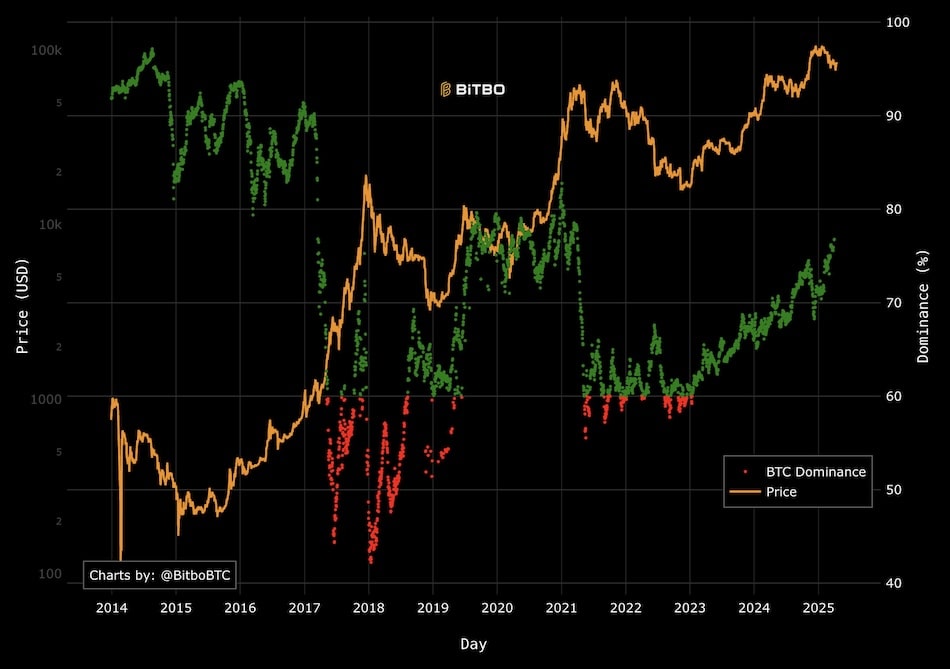
This chart illustrates Bitcoin dominance trends in 2025, highlighting the recent climb to near 60% amid market volatility.
Current State: Why Dominance Hit 60% in December 2025
In mid-December 2025, Bitcoin dominance surged to 60%, coinciding with significant inflows into U.S. spot Bitcoin ETFs totaling over $457 million in a single day.
This move occurred against a backdrop of Bitcoin price swings, with BTC briefly rallying before correcting. Investors sought refuge in Bitcoin as altcoins underperformed.
Macroeconomic factors, including interest rate uncertainties, amplified risk aversion. Traditional assets’ appeal reduced enthusiasm for higher-beta altcoins.
On-chain data and derivatives positioning further confirm this shift, with over 85% of open interest on major platforms allocated to Bitcoin.
Historical Context of 60% Dominance
The 60% threshold has proven significant in past cycles. It often acts as a resistance or inflection point where market leadership transitions.
In previous bull runs, dominance peaking around this level preceded rotations into altcoins, sparking “altseasons” with explosive gains in alternative cryptocurrencies.
For instance, dominance above 60% has signaled consolidation phases, building liquidity in Bitcoin before broader market participation.
Current levels echo patterns from earlier cycles, where elevated dominance reflected maturing market dynamics and institutional preference for Bitcoin.
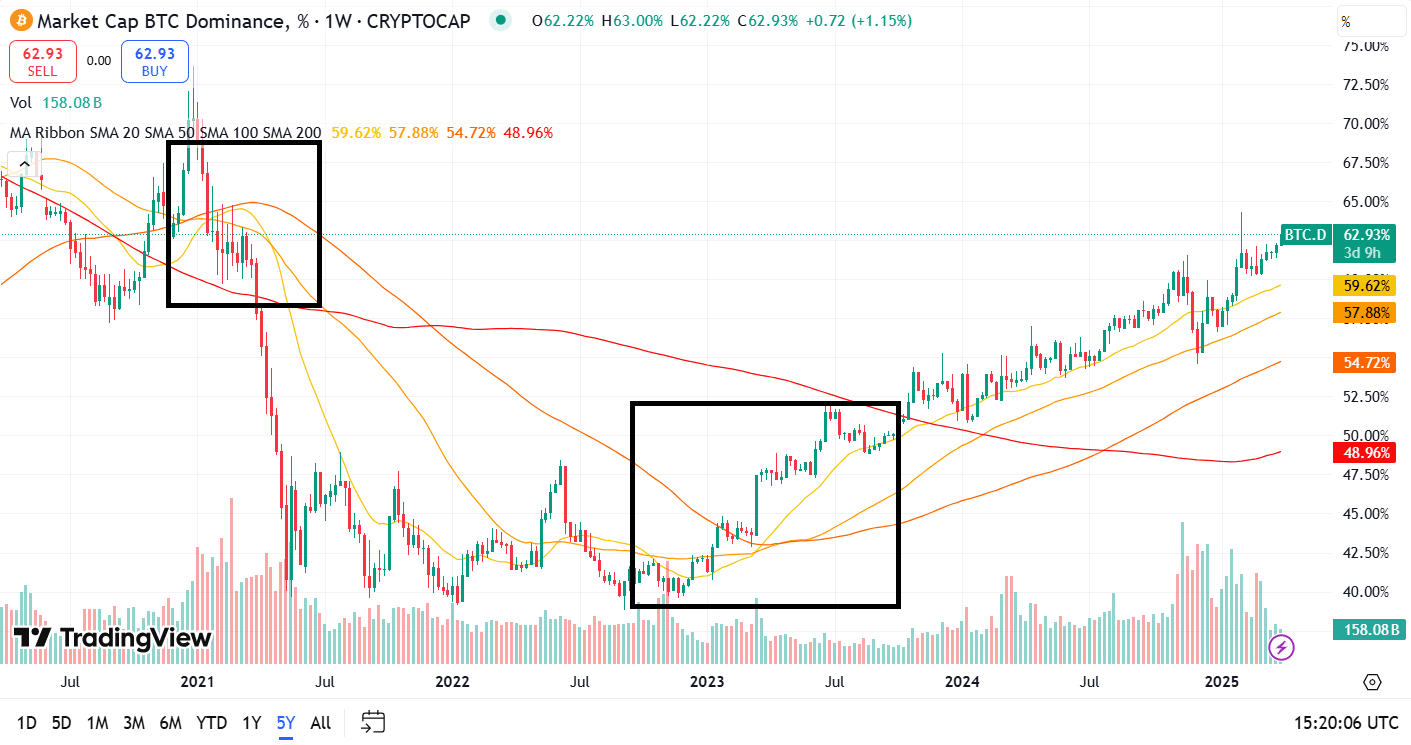
This long-term chart depicts key reversals in Bitcoin dominance, providing context for the current near-60% level.
What Rising Dominance Signals for the Crypto Cycle
Bitcoin dominance near 60% typically indicates a risk-off environment. Investors prioritize Bitcoin’s established status over speculative altcoins during uncertainty.
This phase often occurs mid-cycle, allowing Bitcoin to lead recoveries while altcoins lag. It acts as a reset, strengthening fundamentals before risk appetite returns.
Analysts note that prolonged high dominance reflects crypto’s maturation, with institutions viewing Bitcoin as “digital gold” and a hedge against inflation.
However, history shows such periods are temporary. Once stability returns, capital flows down the risk curve, benefiting diverse projects.
For more insights, refer to CoinDesk’s report on recent ETF inflows and dominance.
Implications for Altcoins and Potential Altseason
Elevated dominance pressures altcoins, as seen in thinner order books and reduced open interest outside Bitcoin.
Many sectors, including DeFi and AI tokens, have underperformed Bitcoin in recent months, highlighting selective market participation.
Yet, this setup can precede rotations. Past cycles show dominance declines triggering altcoin rallies when sentiment shifts.
Real-world example: In prior bull markets, dominance drops from 60-70% levels unleashed significant altcoin gains, with projects in emerging narratives leading.
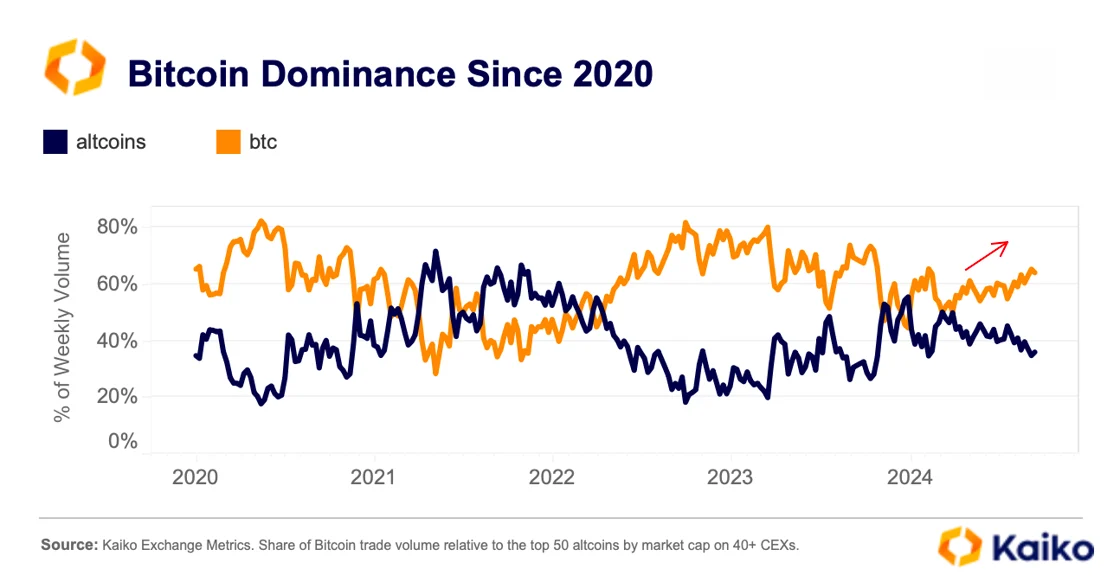
This visual compares Bitcoin’s dominance trends with altcoin market behavior over time.
Technical Analysis of Bitcoin Dominance
The dominance chart shows resistance near 60-65%, a zone tested multiple times in 2025.
Indicators like RSI display potential divergences, suggesting weakening upward momentum at current highs.
Support levels lie around 55-57%, with a break lower potentially signaling the start of capital rotation.
TradingView data reveals patterns mirroring previous cycles, where peaks preceded broader market expansions.
Analysts from platforms like Deribit observe increased Bitcoin focus in derivatives, reinforcing short-term dominance strength.
Comparison Across Market Cycles
In 2017 and 2021, dominance started high before declining sharply during altcoin booms.
The current cycle differs with stronger institutional involvement via ETFs, potentially prolonging Bitcoin-led phases.
Despite this, structural similarities persist: high dominance during corrections, followed by diversification.
2025’s average dominance around 59% aligns with historical averages, indicating balanced yet Bitcoin-favored conditions.
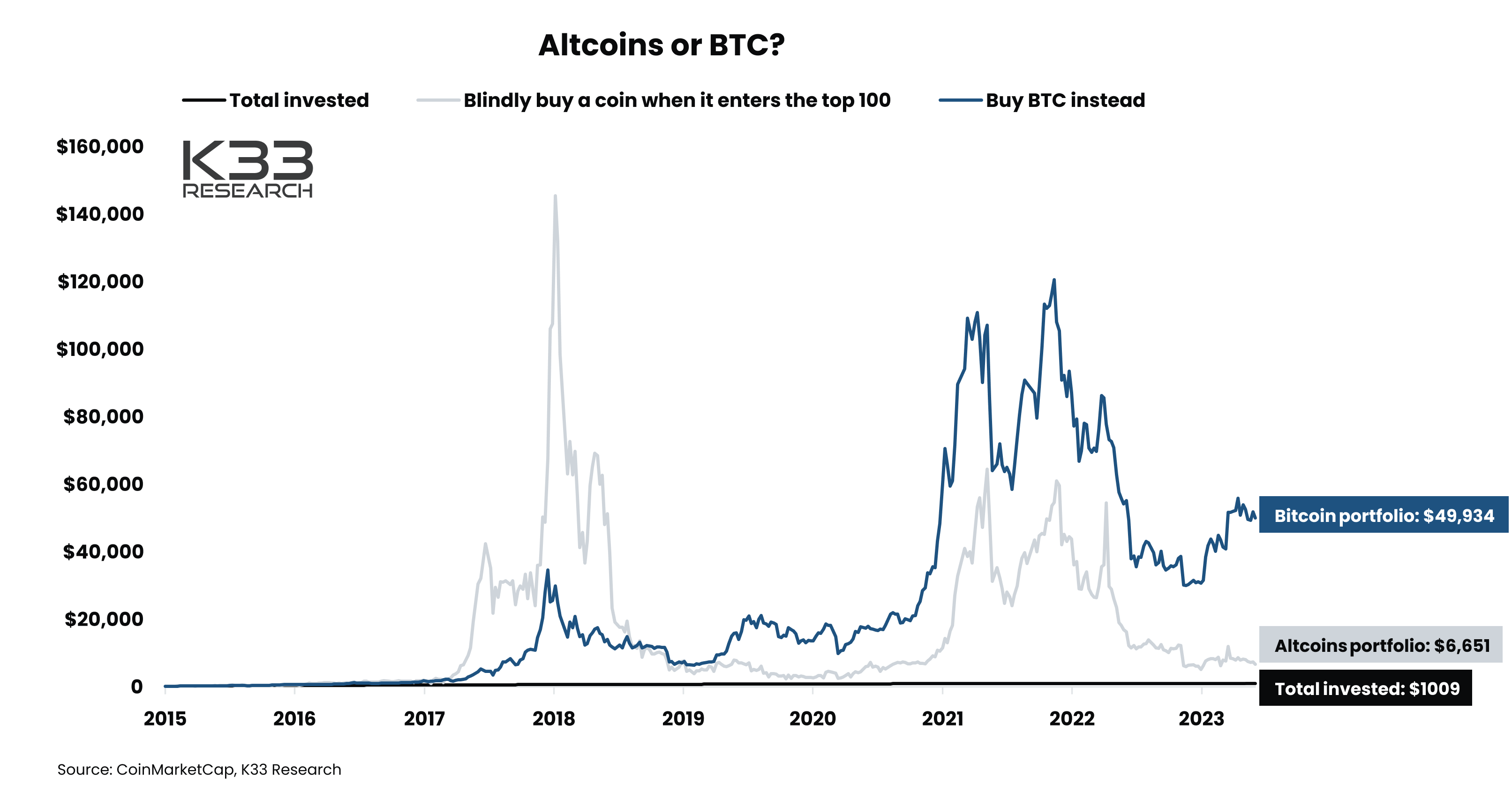
This chart contrasts Bitcoin and altcoin performance historically, underscoring cycle shifts.
Future Outlook: What Comes Next?
Short-term, dominance near 60% may persist amid volatility, supporting Bitcoin price stability.
Longer-term, a decline could ignite altcoin interest, especially if macroeconomic conditions improve.
Factors like regulatory clarity and ETF expansions will influence the pace of any rotation.
Optimistic scenarios see selective altcoin growth in proven sectors like Layer-2 solutions and real-world assets.
Risks remain, including prolonged dominance if global uncertainties escalate, delaying broader rallies.
Explore further in Forbes’ analysis of rising dominance implications.
Investment Considerations
During high dominance, prioritize Bitcoin exposure for stability.
Monitor for reversal signals, such as dominance breakdowns, to position in altcoins.
Diversification and dollar-cost averaging help manage cycle transitions.
Tools like CoinMarketCap’s dominance charts provide real-time tracking for informed decisions.
Real-world example: Investors accumulating during 2022’s low dominance periods captured gains in the subsequent recovery.
Broader Market and Economic Impacts
High Bitcoin dominance underscores its role as crypto’s reserve asset, attracting institutional capital.
It influences adoption, with Bitcoin often serving as the gateway for new entrants.
Environmental and scalability advancements in Bitcoin could further solidify its position.
Ultimately, cycle shifts driven by dominance changes drive innovation across the ecosystem.
For historical data, view Statista’s Bitcoin dominance overview from 2013 onward.
Frequently Asked Questions
What does Bitcoin dominance near 60% mean?
It indicates investors favoring Bitcoin over altcoins, often during volatile or uncertain periods, reflecting risk aversion.
Why has Bitcoin dominance risen to 60% in December 2025?
Strong ETF inflows, price corrections in altcoins, and macroeconomic pressures have driven capital toward Bitcoin’s perceived safety.
Does high Bitcoin dominance signal the end of altcoin growth?
No, it typically precedes rotations. Historical cycles show declines in dominance sparking altcoin rallies.
When might we see an altcoin season?
If dominance breaks lower from current levels, potentially in early 2026, as sentiment shifts and liquidity broadens.
How can investors use Bitcoin dominance?
Track it to gauge market phases: high for Bitcoin focus, declining for altcoin opportunities.
What historical patterns relate to 60% dominance?
It has acted as resistance before major cycle shifts, leading to altcoin outperformance in past bull markets.