


Prado vs Land Cruiser: Comprehensive 2025 Comparison
Subtitle: Key Differences in Size, Power, Off-Road Capability, and Value
Prado vs Land Cruiser debates continue among Toyota enthusiasts in 2025, pitting the mid-size Prado 250 series against the full-size Land Cruiser 300 series. The Prado offers a more accessible entry with its 2.8L turbodiesel mild-hybrid producing 150 kW and 500 Nm, excellent fuel efficiency around 7.6 L/100km, and compact dimensions for urban maneuverability.
The Land Cruiser 300 delivers superior power from its 3.3L or 3.5L twin-turbo engines (up to 305 kW/650 Nm), larger size for family comfort, and enhanced off-road features. Prado vs Land Cruiser choices depend on needs: Prado for efficiency and value, Land Cruiser for ultimate capability and luxury. This comparison breaks down key areas to help decide.
Overview: Positioning and History
The Toyota Prado (250 series in 2025) serves as the light-duty mid-size SUV, often called Land Cruiser Prado in many markets. It balances on-road comfort with off-road ability for families and adventurers.
The full-size Land Cruiser 300 series represents the flagship heavy-duty model, built for extreme conditions and luxury touring.
Both share the TNGA-F platform, but the 300 is larger and more powerful.
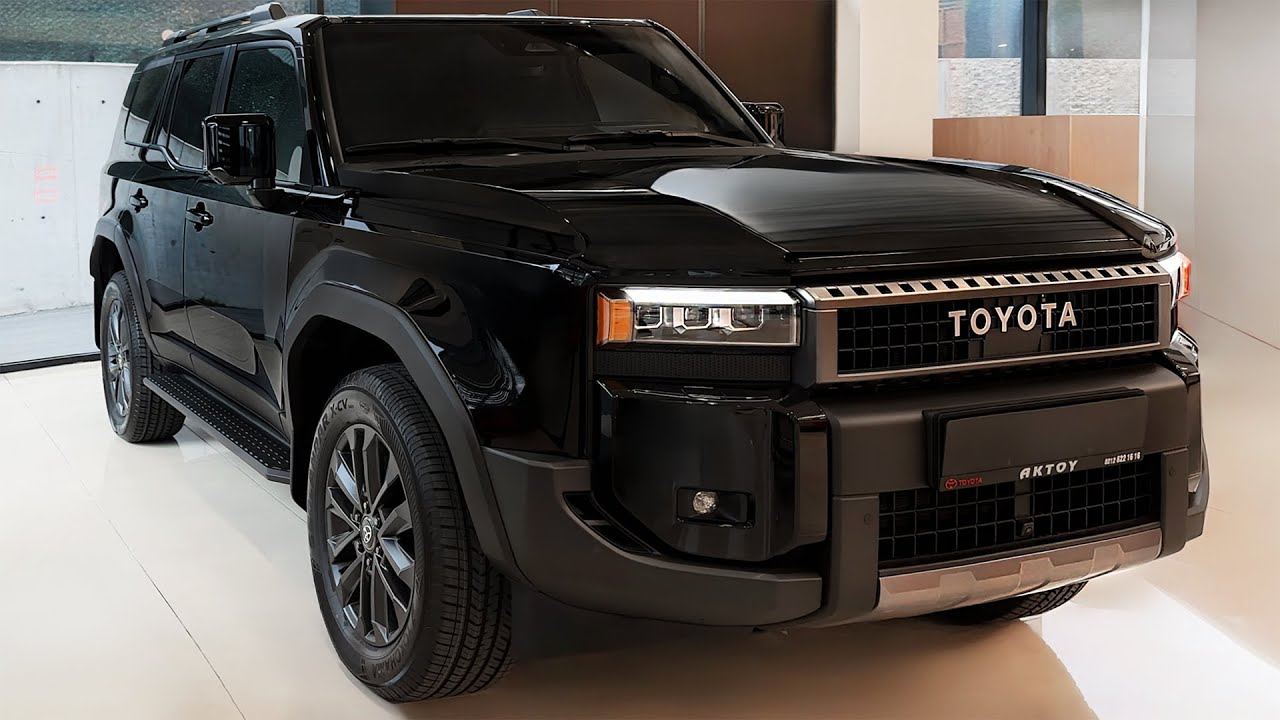
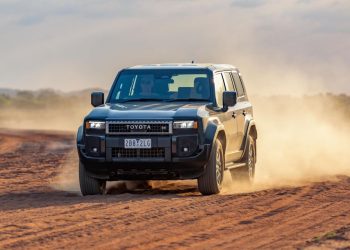
The 2025 Prado features retro boxy styling with modern LED lights.

The Land Cruiser 300 offers imposing presence and premium detailing.

Side-by-side view highlighting size differences between Prado and Land Cruiser.
Engine and Performance Comparison
Prado 250: 2.8L turbodiesel mild-hybrid (150 kW/500 Nm), 8-speed auto. Efficient and adequate for most uses.
Land Cruiser 300: 3.3L twin-turbo diesel (225 kW/700 Nm) or 3.5L petrol V6, 10-speed auto. Superior acceleration and towing.
Prado vs Land Cruiser performance favors the 300 for heavy loads and high-speed overtaking.
Fuel Efficiency
Prado achieves 7.6-8.0 L/100km combined. Land Cruiser around 8.9-9.5 L/100km.
Real-world example: Prado saves significantly on long trips.
For specs, see Toyota Australia Prado page.
Dimensions and Practicality
Prado: ~4,925 mm long, 1,980 mm wide, wheelbase 2,850 mm. More maneuverable in cities.
Land Cruiser 300: ~5,000-5,150 mm long, similar width, longer wheelbase. Spacious for 7-8 passengers.
Prado vs Land Cruiser practicality: Prado easier to park, Land Cruiser better for large families.
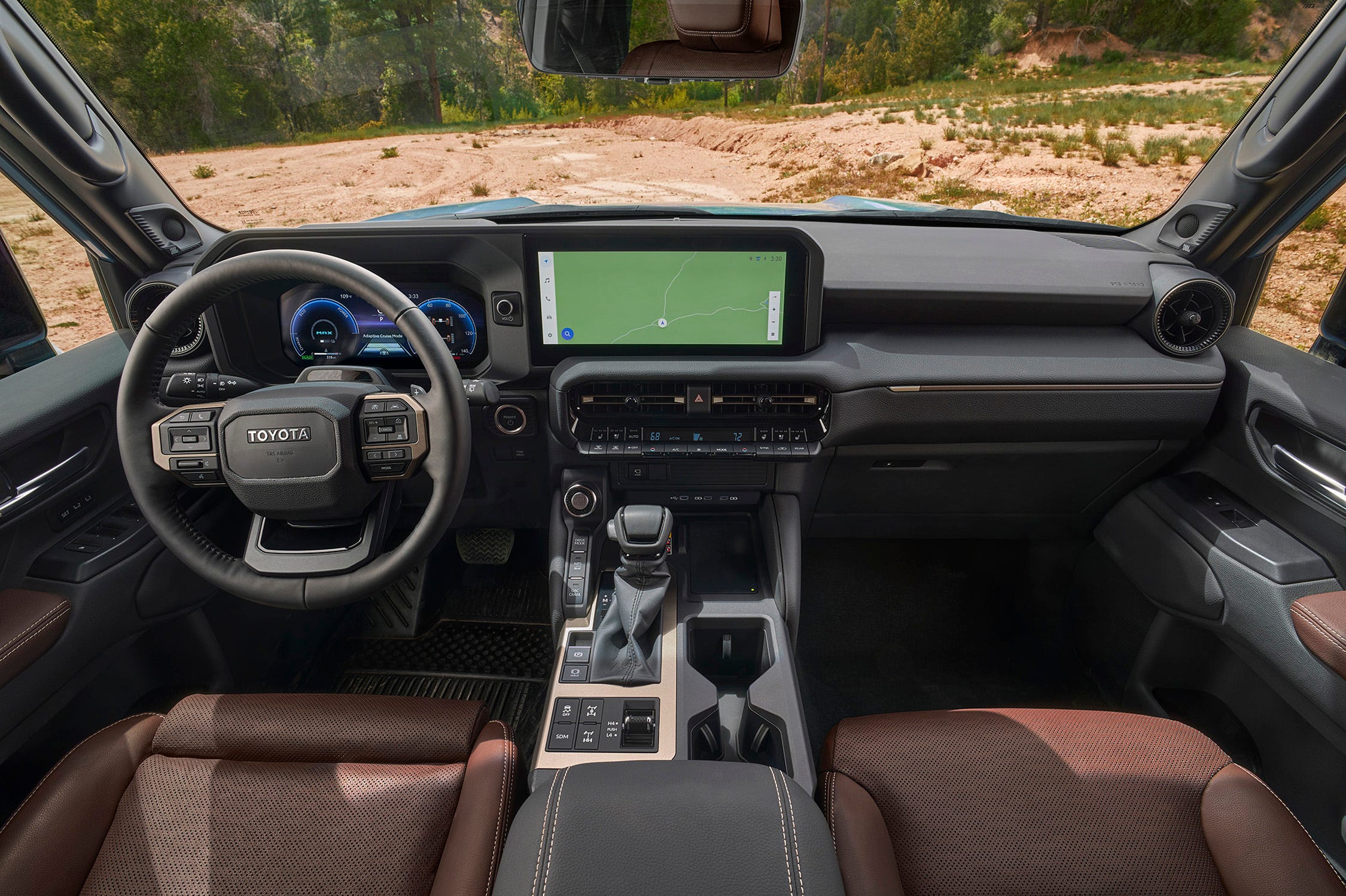
Prado’s modern interior with large touchscreen.
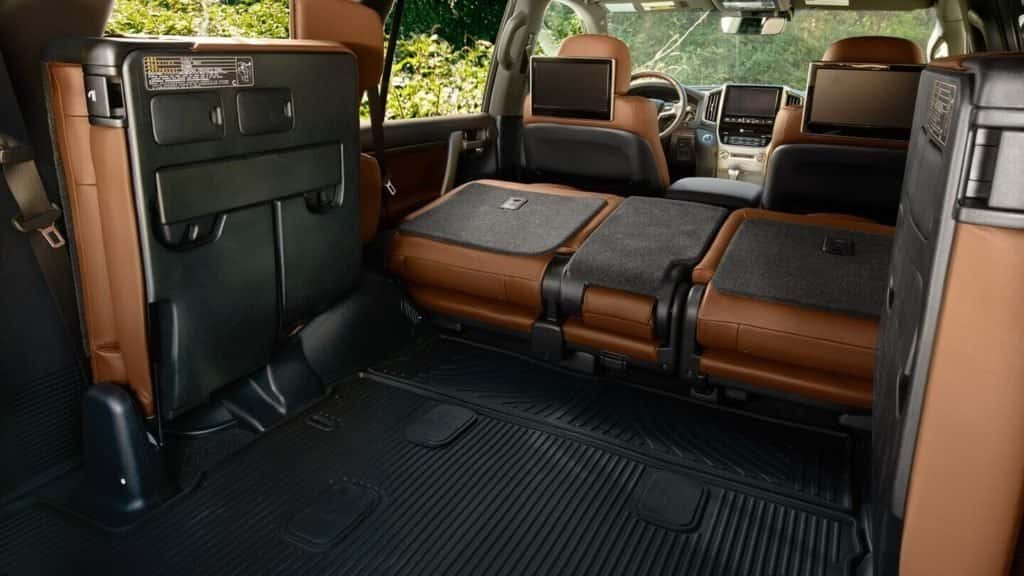
Land Cruiser offers more premium cabin materials.
Off-Road Capabilities
Both excellent, but Land Cruiser edges with better angles, suspension travel, and optional locking diffs.
Prado: Crawl Control, MTS, stabilizer disconnect. Land Cruiser: Advanced AVS, multi-terrain monitor.
Prado vs Land Cruiser off-road: Land Cruiser for extreme, Prado sufficient for most.
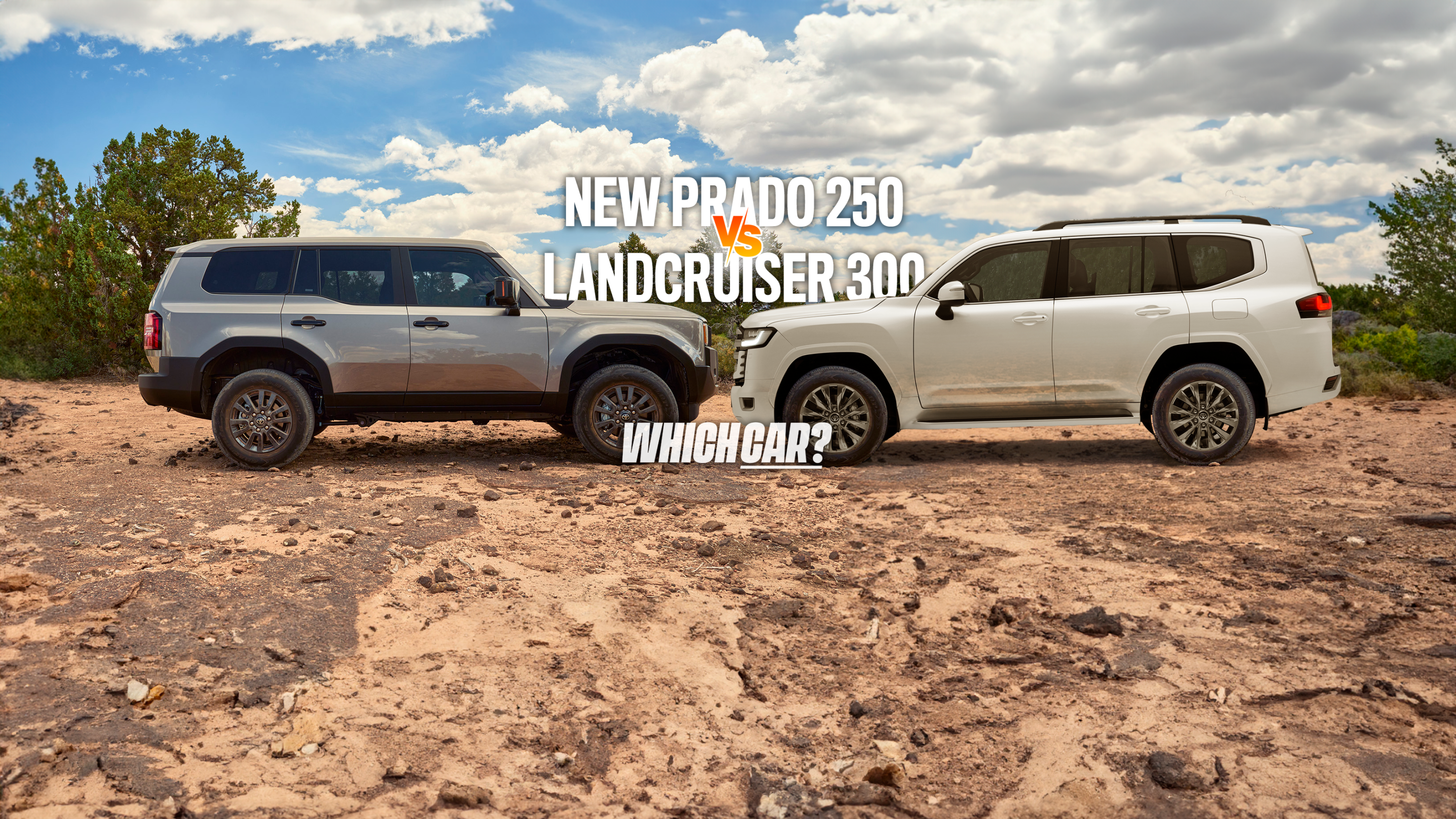
Both capable, but Land Cruiser has advantages in extreme terrain.
Safety and Technology
Both feature Toyota Safety Sense: AEB, adaptive cruise, lane assist.
Land Cruiser adds more premium tech like rear entertainment.
Five-star ratings expected.
Price and Value
Prado starts lower, offering better value for everyday use. Land Cruiser premium pricing for ultimate luxury and power.
Prado vs Land Cruiser: Prado for most buyers, Land Cruiser for those needing top-tier.
For reviews, check 4×4 Australia comparison.
Which to Choose?
Choose Prado for efficiency, maneuverability, value. Land Cruiser for power, space, extreme capability.
Real-world example: Families often prefer Prado, expedition users Land Cruiser.
Frequently Asked Questions
What are the main differences in Prado vs Land Cruiser engines?
Prado: 2.8L diesel hybrid (150 kW). Land Cruiser: Larger 3.3L diesel (225 kW) or petrol V6.
Which is bigger, Prado or Land Cruiser?
Land Cruiser 300 is longer and more spacious.
Which has better fuel efficiency?
Prado with ~7.6 L/100km vs Land Cruiser’s 8.9+.
Which is better off-road?
Land Cruiser edges for extreme conditions, both excellent.
What is the price difference?
Prado more affordable by significant margin depending on market.
Do they share the same platform?
Yes, TNGA-F, but tuned differently.