

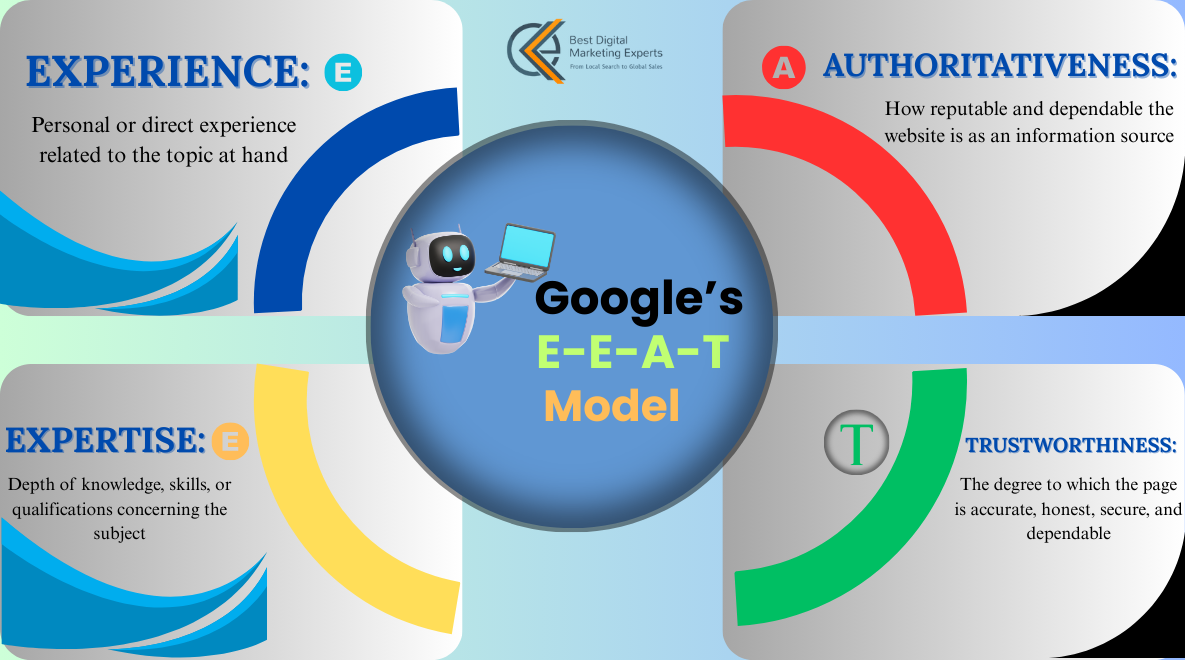
E-E-A-T — Experience, Expertise, Authoritativeness, and Trust — is the foundation Google uses to judge whether content deserves visibility, especially in AI Overviews and featured answers. In 2025, it is no longer optional. Sites that fail to demonstrate credible signals are increasingly filtered out, regardless of how well they are optimized technically.
What E-E-A-T Means in Google Search Today
E-E-A-T is not a single ranking factor. It is a framework Google uses to evaluate overall content quality and reliability. These signals influence rankings indirectly by shaping how algorithms and human raters assess credibility.
Experience
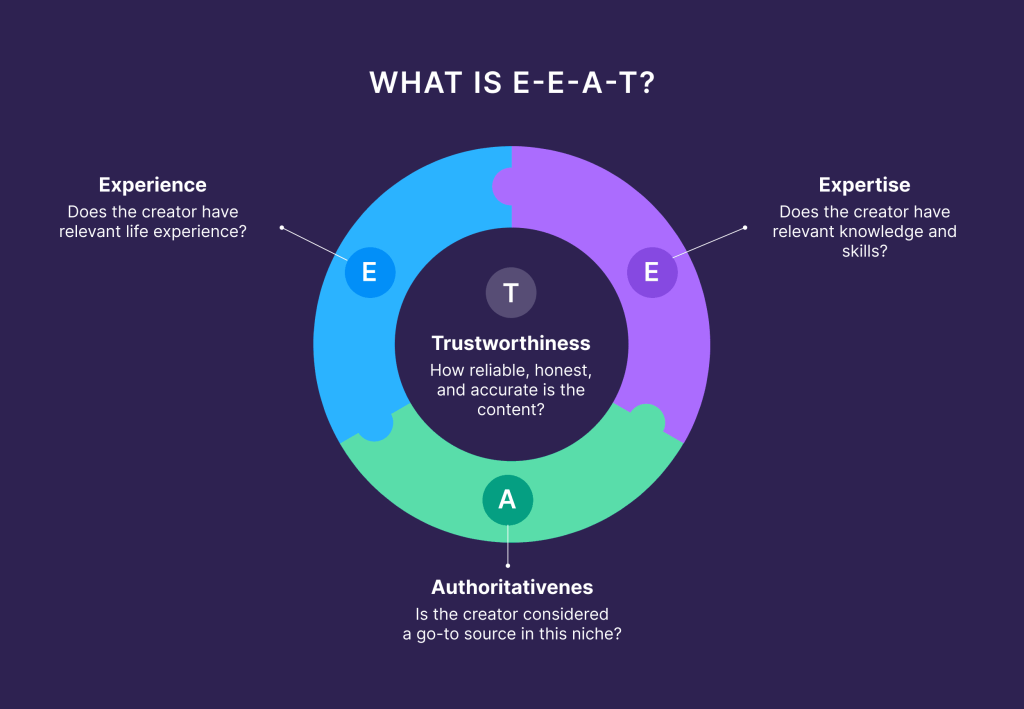
Experience refers to first-hand or real-world involvement with the topic. Google favors content created by people who have actually done, used, tested, or lived what they are writing about.
Expertise
Expertise measures subject-matter knowledge. This can come from formal education, professional credentials, or demonstrated depth and accuracy over time.
Authoritativeness
Authority reflects reputation. Google looks for recognition from other trusted sources, including citations, backlinks, mentions, and brand searches.
Trust
Trust is the most critical element. It covers factual accuracy, transparency, security, and accountability. Without trust, the other signals lose value.
Why E-E-A-T Is More Important in 2025
Google’s AI-powered search experiences synthesize answers rather than simply ranking pages. Only content deemed highly reliable is eligible for citation.
- AI Overviews prioritize verifiable facts over opinions
- Low-trust sites are excluded even if well-optimized
- Brand credibility increasingly outweighs individual pages
This shift makes E-E-A-T a visibility requirement, not a best practice.
How Google Evaluates E-E-A-T Signals
Google uses a combination of algorithmic signals and human quality rater feedback to assess E-E-A-T. While raters do not directly influence rankings, their guidelines shape how systems are trained.
Key Evaluation Areas
- Author identity and credentials
- Website transparency and ownership
- Accuracy, sourcing, and citations
- External reputation and reviews
- Content consistency over time
How to Build Strong Experience Signals
Experience is demonstrated through specificity and evidence, not claims.
Use First-Hand Examples
Include real scenarios, processes, case studies, or lessons learned. Avoid generic advice that could apply to anyone.
Show Original Analysis
Data interpretation, comparisons, and context signal that the author understands the subject beyond surface knowledge.
Match Content to Real User Needs
Address practical questions users actually ask, not just keyword variations.
How to Demonstrate Expertise Clearly
Expertise must be visible and verifiable.
Author Bylines and Profiles
Every authoritative article should clearly identify who wrote it and why they are qualified.
Depth Over Volume
Long-form content should fully answer a topic, including definitions, implications, and limitations.
Regular Content Updates
Outdated information undermines expertise. Refresh articles as facts, laws, or standards change.
How to Build Authoritativeness at the Site Level
Authority grows through recognition, not self-promotion.
Earn Editorial Mentions
Being cited by established media, academic institutions, or industry bodies signals credibility.
Consistent Topical Focus
Sites that publish consistently within a defined subject area are more likely to be seen as authoritative.
Brand Search Demand
When users search for your brand by name, it reinforces authority signals.
How to Strengthen Trust Signals
Trust is the cornerstone of E-E-A-T and the most scrutinized element in AI-driven search.
Transparent About Pages
Clearly explain who runs the site, how content is created, and how users can make contact.
Accurate and Cited Information
Factual claims should be supported by reputable sources.
Secure and User-Safe Website
HTTPS, privacy policies, and responsible ad practices contribute to trustworthiness.
E-E-A-T for Different Content Types
News and Information Sites
Original reporting, named sources, and editorial standards are critical.
Business and Commercial Content
Clear disclosures, real company details, and customer support information matter.
Educational Content
Structured explanations, definitions, and references improve credibility.
Common E-E-A-T Mistakes to Avoid
- Anonymous or unverified authors
- Thin content written only for search engines
- Misleading headlines or exaggerated claims
- Outdated or copied information
External Signals Google Considers
Google looks beyond your website to validate claims.
Authoritative references include:
- Government publications
- University research
- Established news organizations
- Industry regulators
Examples of trusted sources include:
Google Search Central
Centers for Disease Control and Prevention
Encyclopaedia Britannica
Frequently Asked Questions
Is E-E-A-T a direct ranking factor?
No. E-E-A-T itself is not a single ranking signal, but it influences how Google evaluates content quality and credibility.
Can small websites build strong E-E-A-T?
Yes. Clear authorship, accurate content, and focused expertise can outweigh size or age.
How long does it take to see E-E-A-T improvements?
E-E-A-T is cumulative. Improvements often take months as reputation and trust develop.
Does AI-generated content hurt E-E-A-T?
AI content is acceptable if it is accurate, original, and reviewed by qualified humans.
Which E-E-A-T element matters most?
Trust is the most critical. Without trust, experience, expertise, and authority lose impact.
Final Thoughts
In 2025, building E-E-A-T signals is about credibility, not manipulation. Google’s AI systems reward content that is accurate, transparent, and genuinely helpful. Sites that invest in real expertise, consistent quality, and user trust are the ones most likely to earn visibility, citations, and long-term rankings.