



Kampala, Uganda – May 2026: A new youth-led proposal is sparking debate across Uganda’s education sector, as students and reform advocates call for early specialization in secondary schools.
The initiative, developed under Apex Digital Skills, seeks to transform Uganda’s education system by introducing career-focused learning earlier and reducing what many describe as a long, theory-heavy academic journey.

Students and youth groups are driving new conversations around education reform in Uganda
Proposal Challenges Current Education Structure
The memorandum has been formally addressed to the Ministry of Education and Sports through the Office of the Permanent Secretary. It outlines a shift from the traditional broad-based curriculum to a more specialized, skills-oriented model.
Currently, students remain in a general academic track for several years before focusing on specific career paths. However, the proposal argues that this delays practical skill development and limits early career preparation.
As a result, the group recommends introducing specialization at Senior Three (S.3), allowing students to align their studies with future careers much earlier.
Key Recommendations in the Memorandum
The proposal outlines several structural reforms designed to modernize Uganda’s education system:
- Introduce career specialization starting at S.3
- Reduce compulsory subject load at O-Level
- Integrate digital literacy and applied technology into all subjects
- Expand entrepreneurship education across schools
- Create fast-track pathways for high-performing students
In addition, the proposal emphasizes the importance of practical skills training to better prepare students for employment and business opportunities.

Digital skills and practical learning are central to the proposed reforms
Official Guidance on Submission Process
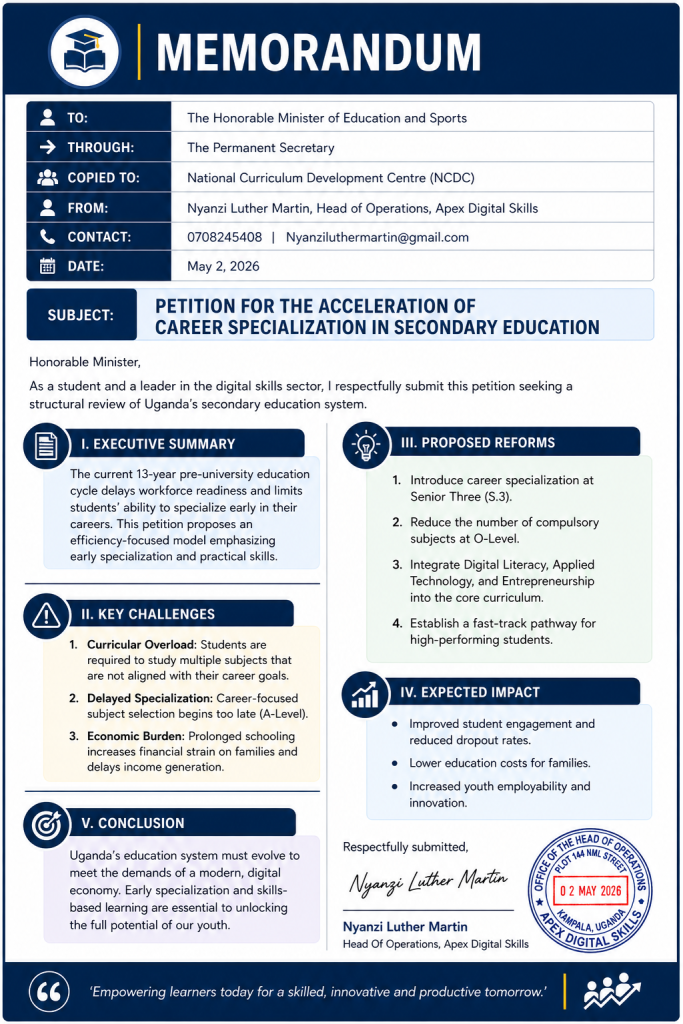
According to the initiative, guidance from the Office of the Permanent Secretary confirmed that the memorandum must be submitted as a hard copy for official registration and processing.
Although the document was initially shared via email, delays in acknowledgment led the group to pursue physical submission. This step ensures formal tracking within government systems.
Consequently, the proposal is expected to enter structured review channels once officially registered.
Students Speak Out on Education Challenges
Students across Uganda are increasingly vocal about the length and relevance of the current education system.
Muhanguzi Matthew Paul, a Senior Three student, highlighted concerns about subject overload:
“The education journey is too long and we study unnecessary subjects for one’s career.”
Similarly, Luzinda Enock from Kabuye Memorial School pointed to the disconnect between education and employment:
“We study for so long and end up with no jobs.”
These views reflect growing frustration among young people seeking more practical and career-oriented education pathways.
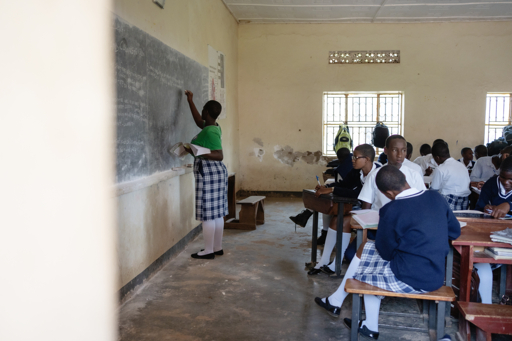
Youth voices are shaping the national conversation on education and employment
Debate on Education and Employment Mismatch
The proposal enters an ongoing national discussion about whether Uganda’s education system adequately prepares students for the job market.
Critics of the current model argue that it places too much emphasis on theoretical learning while offering limited exposure to real-world skills.
Moreover, delayed specialization can leave students uncertain about career direction until late in their academic journey.
Supporters of early specialization believe that introducing career pathways sooner could improve employability and reduce youth unemployment.
What Happens Next?
Once the memorandum is physically submitted and officially registered, it will undergo technical evaluation within the Ministry of Education and Sports.
However, no timeline has been provided for feedback or implementation, as policy proposals typically require detailed review and stakeholder consultation.
Nevertheless, the initiative has already succeeded in drawing national attention to the need for education reform.
The push for early specialization reflects a broader shift in how young people view education in Uganda. Rather than following long, generalized pathways, many are calling for systems that are shorter, more practical, and aligned with real-world opportunities.
Final Insight: Whether adopted or not, this proposal signals a growing demand for education systems that prioritize skills, relevance, and employability.
Stay updated: Follow more education and policy news to track how this proposal evolves.
Frequently Asked Questions
1. What is the proposal about?
It suggests introducing early specialization in secondary schools starting at Senior Three.
2. Who submitted the proposal?
A youth-led initiative under Apex Digital Skills.
3. Why is early specialization important?
It helps students develop career-specific skills earlier.
4. What problems does it address?
Long education pathways and lack of job-ready skills.
5. Has the government approved it?
No, it is currently under review.
6. What happens next?
The proposal will go through formal evaluation by the Ministry of Education.