


As Qatar accelerates its transformation into a knowledge-based economy in 2026, savvy investors are turning to diversified strategies that align with national priorities. The country’s projected 6.5% GDP growth, fueled by LNG production reaching 142 million tons per annum and major investments in AI infrastructure, offers returns potentially exceeding 8–12% in key sectors. This guide explores proven, practical approaches to maximize gains while effectively managing risks in one of the Gulf’s most resilient markets.
Qatar’s Economic Landscape in 2026
Qatar’s economy continues to outperform most GCC peers, with non-hydrocarbon sectors now contributing more than 60% of GDP. The Third National Development Strategy (NDS3 2024–2030) places strong emphasis on innovation, sustainability, and attracting foreign direct investment (FDI), with annual inflows regularly exceeding $30 billion thanks to reforms such as 100% foreign ownership in most sectors.
Major economic drivers include the North Field Expansion (increasing LNG output significantly), strategic global partnerships such as the Pax Silica Declaration for AI and critical minerals, and continued infrastructure development. These factors create a wide range of resilient investment opportunities even amid global uncertainty.
A rock-solid AA sovereign credit rating, a currency pegged to the US dollar, and zero personal income tax make Qatar especially attractive for expatriate and international investors based in Doha.
Top Investment Sectors and Strategies
Real Estate: Capitalizing on Urban Growth
Real estate continues to be one of the most reliable pillars of Qatar investment strategies. Developments in Lusail City, The Pearl-Qatar, and West Bay regularly deliver rental yields of 7–10%, supported by steady demand from a growing expatriate community and tourism recovery.
Recommended approach: Focus on waterfront residential units, commercial properties in prime business districts, or mixed-use towers that benefit from both rental income and capital appreciation.
How to start: Register with the Real Estate Registration Department, work with licensed brokers, and consider allocating 20–30% of your portfolio to this stable asset class.
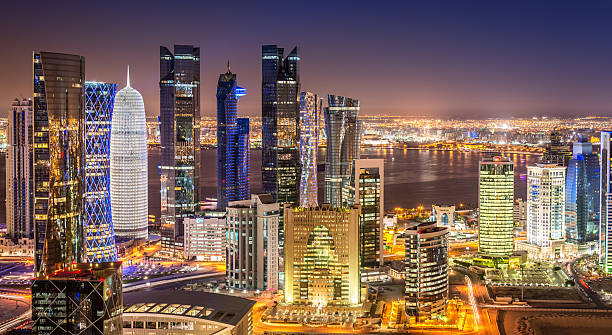
Doha’s iconic skyline and financial district remain prime locations for high-yield real estate investments in 2026.
Technology and AI: Betting on Digital Transformation
Qatar’s technology sector is growing rapidly, with significant government and private-sector investment in data centers, cybersecurity, cloud infrastructure, and AI. The Qatar Investment Authority’s $1 billion Fund of Funds and major international partnerships continue to support the local startup ecosystem.
Recommended strategy: Invest through venture capital funds, QIA-backed accelerators, or ETFs with exposure to Qatari and regional tech companies.
Potential returns: Early-stage and growth-stage investments in AI and digital infrastructure can deliver 10–15% annualized returns, helped by generous government incentives and tax advantages in the Qatar Financial Centre (QFC).
Energy and Renewables: Balancing Hydrocarbons and Green Growth
Qatar remains the world’s leading LNG exporter, while simultaneously expanding its renewable energy footprint (solar, green hydrogen, and blue ammonia). Green bonds and project finance opportunities in this space commonly target 5–9% yields.
Balanced approach: Combine exposure to stable hydrocarbon revenues with ESG-aligned renewable projects to create a future-proof energy portfolio.
Healthcare, Biotech & Life Sciences
With healthcare expenditure continuing to rise and major hospital expansions underway, opportunities exist in private medical facilities, medical technology, telemedicine, and biotech startups.
Strategy tip: Look for managed funds or public-private partnership vehicles that benefit from long-term government contracts and growing regional demand.
Tourism, Hospitality & Entertainment
Post-FIFA momentum continues to drive tourism infrastructure. New hotels, entertainment districts, and experiential attractions in Doha and beyond are generating solid returns for hospitality investors.

Overview of Qatar’s priority investment sectors driving long-term economic diversification.
Financial Services & Qatar Stock Exchange (QSE)
The QSE offers increasing liquidity and allows up to 49% foreign ownership in most listed companies. Dividend-paying stocks in banking, telecommunications, and utilities typically yield 5–7%, with attractive capital appreciation potential.
Simple entry: Open an account with a licensed broker, obtain an Investor Card from the Qatar Central Securities Depository, and build a diversified portfolio of blue-chip and growth names.
Risks and Risk Management in Qatar Investments
- Commodity price volatility (especially LNG)
- Geopolitical developments in the region
- Changes in global interest rates and capital flows
Qatar mitigates many of these risks through its massive sovereign wealth reserves (over $500 billion), strong fiscal position, and active diversification strategy managed by the Qatar Investment Authority (QIA).
Best practice: Diversify across at least 4–5 sectors, maintain a long-term horizon, and regularly review your portfolio using data from the Qatar Central Bank and World Bank reports.
How to Get Started with Qatar Investment Strategies
- Define your investment goals (income, growth, or both) and time horizon
- Register on the Invest Qatar Gateway for streamlined company setup and incentives information
- Choose appropriate investment vehicles: direct property, funds, stocks, bonds, or venture capital
- Consult a licensed financial advisor familiar with Qatari regulations
- Monitor performance using official QIA reports, QSE data, and market updates
Frequently Asked Questions
What are the best Qatar investment strategies for beginners in 2026?
Start with low-risk options such as government sukuk, QSE-listed ETFs, or prime residential real estate in freehold zones — all offering stable 5–8% returns with relatively low volatility.
Can expats freely invest in Qatar real estate?
Yes — non-Qataris can own freehold property in designated areas (The Pearl, Lusail, West Bay Lagoon, etc.) with no annual property tax and strong rental yield potential.
What risks should investors consider in Qatar’s tech sector?
Main risks include global technology cycles, regulatory evolution, and competition. These are partially offset by strong government backing, major international partnerships, and generous incentives in the QFC.
How attractive is Qatar’s energy sector for investors today?
Extremely attractive — combining the stability of world-class LNG assets with fast-growing renewable and low-carbon projects, many offering predictable 6–10% yields.
What role does the Qatar Investment Authority (QIA) play?
The QIA manages over $500 billion in assets and drives long-term economic diversification through strategic global investments in technology, healthcare, infrastructure, real estate, and more.
Are there significant tax advantages for investors in Qatar?
Yes — zero personal income tax, competitive corporate tax rates (especially in free zones), and various exemptions/incentives for priority sectors make Qatar one of the most tax-efficient investment destinations in the region.