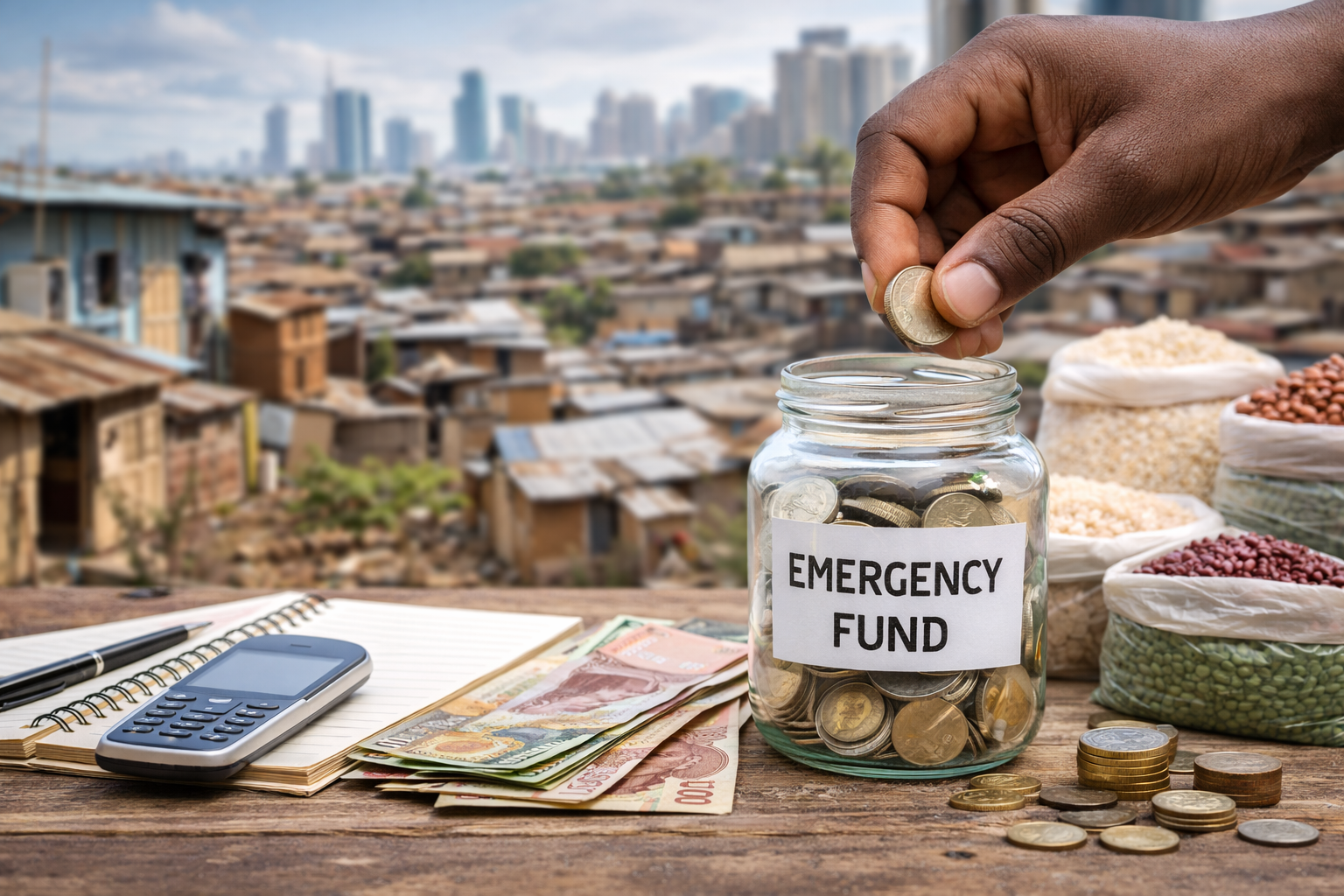
An emergency fund is money set aside to cover unexpected expenses such as medical bills, job loss, school emergencies, or urgent travel. In Africa, where social safety nets are limited and incomes can be unstable, an emergency fund is not a luxury—it is a survival tool.
Even on a low income, building this financial buffer is possible with the right mindset, structure, and locally relevant strategies.
Why Emergency Funds Matter More in Africa
Many African households operate without insurance, unemployment benefits, or reliable public healthcare. When emergencies occur, families often rely on debt or selling assets.
- High out-of-pocket medical costs
- Informal employment and income instability
- Limited access to affordable credit
- Strong family financial obligations
An emergency fund reduces vulnerability and prevents financial crises from becoming permanent setbacks.
How Much Should an Emergency Fund Be?
Traditional advice suggests saving three to six months of expenses. For low-income earners in Africa, this can be overwhelming.
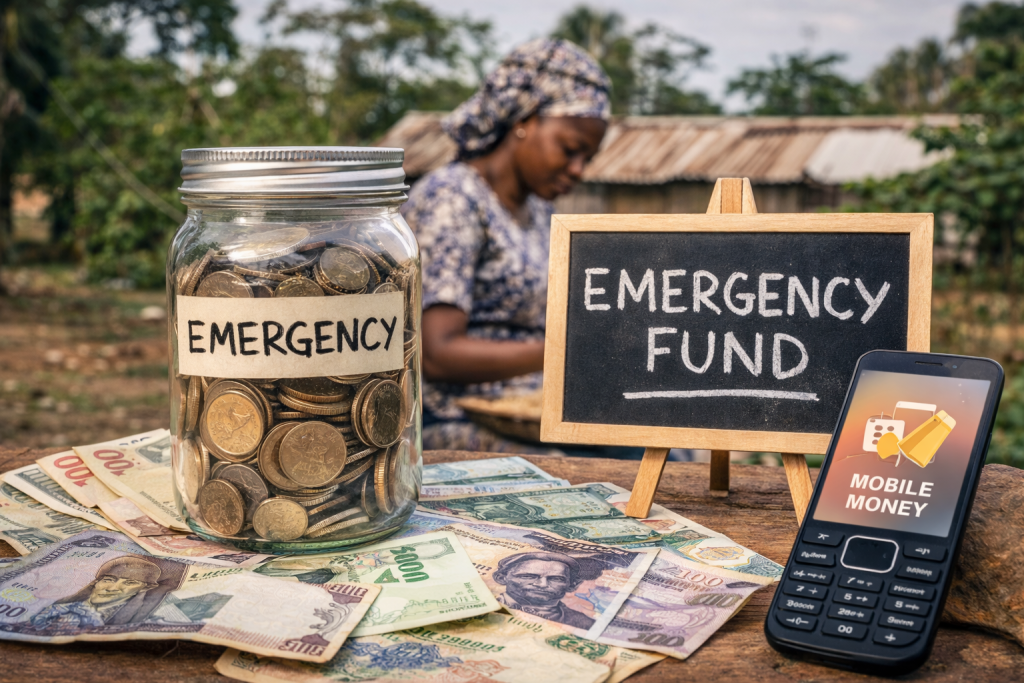
A more realistic approach is to start with smaller, achievable targets:
- First goal: one week of living expenses
- Second goal: one month of essential costs
- Long-term goal: three months of expenses
Progress matters more than perfection.
Step 1: Know Your True Monthly Expenses
Before saving, you must understand where your money actually goes.
Track Only Essentials First
Focus on non-negotiable expenses:
- Food
- Rent or housing contributions
- Transport
- Utilities
- School or medical costs
This creates a realistic baseline for emergency needs.
Step 2: Start Extremely Small
One of the biggest mistakes is waiting until income increases.
Saving even the equivalent of one dollar per day builds discipline and momentum.
- Save loose change
- Round up daily mobile money balances
- Set aside small windfalls immediately
Consistency matters more than amount.
Step 3: Separate Emergency Money from Daily Spending
If emergency funds are easily accessible, they will be spent.
Where to Keep an Emergency Fund in Africa
- Mobile money savings wallets
- Basic savings accounts
- Trusted savings groups with clear rules
The goal is safety and accessibility—not high returns.
Step 4: Use Irregular Income Strategically
Many Africans earn income from casual work, farming, or side hustles.
When income is irregular:
- Save during good months
- Base your budget on your lowest income month
- Immediately save a portion of any unexpected income
Step 5: Cut Costs Without Hurting Survival
Extreme budgeting often fails because it ignores real needs.
Smart Cost-Cutting Examples
- Bulk buying staple foods
- Reducing transport costs through planning
- Limiting non-essential airtime and data usage
The aim is sustainability, not deprivation.
Step 6: Increase Income Where Possible
In many cases, income growth is more effective than cost cutting.
- Small side businesses
- Seasonal work
- Skill-based freelance tasks
Direct any extra income toward the emergency fund first.
Step 7: Protect the Fund from Family Pressure
Extended family support is culturally important, but it can drain savings.
Consider:
- Keeping the fund private
- Defining what qualifies as a true emergency
- Offering non-financial support where possible
Common Mistakes to Avoid
- Saving only when income is high
- Using emergency funds for non-emergencies
- Keeping all savings in cash at home
External References
World Bank – Financial Inclusion
OECD – Financial Education
United Nations – Financing for Development
Frequently Asked Questions
Can you really save on a very low income?
Yes. Saving small, consistent amounts builds financial resilience over time.
Should emergency funds earn interest?
Safety and access matter more than returns for emergency savings.
Is mobile money safe for emergency savings?
Yes, when protected with strong PINs and used responsibly.
What counts as a real emergency?
Medical emergencies, job loss, and essential repairs—not routine expenses.
How long does it take to build an emergency fund?
It varies, but steady saving can create meaningful protection within months.