


Dividends represent a portion of a company’s profits distributed to its shareholders, serving as one of the primary ways Kenyan investors earn from NSE-listed stocks. Unlike capital gains from selling shares at a higher price, dividends provide regular income, often paid annually, semi-annually, or as interim/final payouts. In Kenya’s electronic system, dividends are handled seamlessly through the Central Depository and Settlement Corporation (CDSC).
What Are Dividends and Why Do Companies Pay Them?
Companies pay dividends when they generate surplus profits after covering expenses, taxes, and reinvestment needs. The board proposes a dividend amount per share, which shareholders approve at the Annual General Meeting (AGM). Payment is proportional to shareholding — owning 1,000 shares of a company declaring KSh 2 per share entitles you to KSh 2,000.
Key reasons companies pay dividends include:
- Rewarding loyal shareholders
- Signalling financial health and confidence
- Attracting income-focused investors
- Returning excess cash not needed for growth
In 2026, high-dividend stocks like BAT Kenya (often yielding 10%+) and KenGen remain popular for steady income.
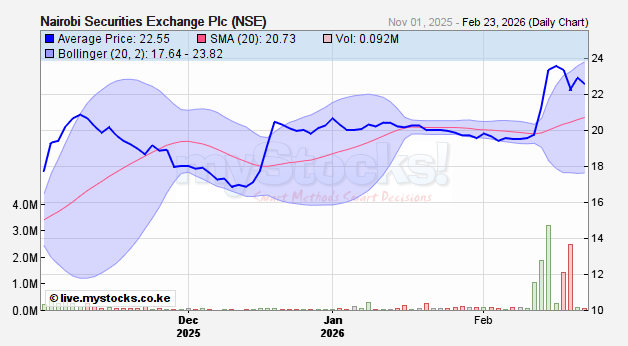
Dividend yield comparison for leading NSE companies, highlighting attractive income opportunities for shareholders.
The Dividend Process in Kenya: From Declaration to Payment
The process is automated and efficient thanks to CDSC’s electronic registry.
1. Declaration and Announcement
The company announces the dividend, including amount per share, record date (entitlement date), and payment date. This appears on NSE announcements and CDSC updates.
2. Book Closure and Record Date
The book closure date is when the register closes to determine eligible shareholders. You must hold shares by the last cum-dividend trading day (usually one or two days before book closure). After settlement, CDSC generates an Entitlement Schedule listing qualified holders as of the record date.
3. Entitlement Schedule to Registrar
CDSC sends the schedule to the company’s share registrar (e.g., Image Registrars, Kenya Commercial Bank Registrar), who verifies details and prepares payments.
4. Payment to Shareholders
Dividends are deposited directly into your bank account linked to your CDS account. No action is required if details are updated. Payments typically occur 4–8 weeks after book closure, though some like Safaricom aim for faster timelines.
Example: In early 2026, Safaricom declared an interim dividend of KSh 0.85 per share, with book closure on February 25, 2026, and payment on March 31, 2026.
Taxation of Dividends for Kenyan Shareholders
Dividends are subject to withholding tax deducted at source by the company or registrar before payment.
- Residents: 5% withholding tax (final tax for most individuals and listed shares).
- East African Community citizens: Often 5% on listed dividends.
- Non-residents: 15% (or lower under Double Taxation Agreements).
- Exemptions: Dividends to resident companies holding >12.5% shares are exempt.
The net amount hits your account. For residents, this is usually the final tax obligation on dividend income, though high earners may consider overall tax planning with KRA.
Real-World Examples of Dividend Payouts in 2026
Several NSE companies demonstrated strong dividend performance:
- BAT Kenya: Doubled interim dividend to KSh 10 per share in 2025 results, with high yields attracting income investors.
- Safaricom: Maintained policy of distributing ≥80% of profits; 2026 interim at KSh 0.85 showed earnings growth.
- Co-operative Bank: Paid interim KSh 1 per share, signalling higher full-year payout.
- KenGen: Consistent ~9% yield, popular for stable energy-sector returns.
These examples illustrate how dividends contribute significantly to total returns, especially in defensive sectors.
How to Ensure You Receive Your Dividends Smoothly
- Maintain an active CDS account with updated bank details via your Central Depository Agent (CDA) or platforms like Dosikaa.
- Hold shares before book closure — buy at least one settlement day prior.
- Monitor NSE and CDSC announcements for declaration and closure dates.
- Update KRA PIN and contact details to avoid delays or unclaimed funds.
- For pledged shares, the pledgor (original owner) typically receives dividends unless invoked.
Unclaimed dividends are held by the registrar; claim them with proof of ownership.
Dividend Reinvestment and Compounding Benefits
Many investors reinvest dividends by buying more shares, compounding returns over time. While Kenya lacks widespread automatic DRIP programs, you can manually reinvest via your broker. Long-term holders of consistent payers like banks or utilities benefit most from this strategy.
Common Questions and Pitfalls
Avoid missing book closure by tracking calendars on CDSC or NSE sites. Ex-dividend date drops share price roughly by dividend amount, so timing purchases matters. Always verify bank details to prevent payment failures.
Frequently Asked Questions
What is the withholding tax rate on dividends for Kenyan residents?
For most resident individuals and listed shares, it’s 5%, deducted at source as a final tax.
When do I need to own shares to qualify for a dividend?
You must hold shares by the book closure/record date, typically after the last cum-dividend trading day.
How are dividends paid to shareholders in Kenya?
Via direct bank deposit to the account linked to your CDS account, after CDSC provides the entitlement schedule to the registrar.
Do non-residents pay higher dividend tax in Kenya?
Yes, usually 15%, though reduced rates may apply under Double Taxation Agreements with certain countries.
Can pledged shares still earn dividends?
Yes, the original owner (pledgor) receives dividends unless the pledge is invoked and shares transferred.
Where can I check upcoming dividend payments?
On the official CDSC website, NSE corporate actions page, or your broker’s platform for announcements and calendars.
Conclusion: Leverage Dividends for Long-Term Wealth
Understanding how dividends work for Kenyan shareholders unlocks a powerful income stream in the NSE. With electronic processing via CDSC, transparent taxation, and growing payouts from resilient companies, dividends remain a cornerstone of smart investing in 2026. Update your CDS details, track key dates, and consider high-yield stocks to maximize your returns.
Official Resources:
Central Depository & Settlement Corporation (CDSC)
Nairobi Securities Exchange (NSE)
Kenya Revenue Authority (KRA)