Licensed fund managers in Kenya are entities authorised by the Capital Markets Authority (CMA) to manage collective investment schemes (CIS), unit trusts, and other pooled investment vehicles. The CMA licence confirms that a manager meets stringent capital, governance, operational, and compliance requirements under the Capital Markets Act and associated regulations.
What Does a CMA Licence for Fund Managers Entail?
To obtain and maintain a CMA fund manager licence, firms must demonstrate:
- Adequate capital base and financial soundness
- Qualified personnel with relevant expertise and certifications
- Robust risk management and internal control systems
- Clear separation of client funds via independent custodians
- Regular audits, reporting, and disclosure to the CMA and investors
- Adherence to investment restrictions and diversification rules
This framework protects investors from conflicts of interest, mismanagement, or fraudulent activities that have plagued unregulated schemes elsewhere.
Why the Licence Matters: Key Benefits for Investors
A CMA licence provides multiple layers of security and confidence:
1. Investor Protection and Regulatory Oversight
The CMA conducts ongoing supervision, including inspections, portfolio reviews, and enforcement actions against non-compliance. This reduces the risk of fund misuse or hidden fees.
2. Transparency and Regular Reporting
Licensed managers must publish daily or weekly net asset values (NAV), disclose fees upfront, and provide periodic statements — enabling investors to track performance accurately.
3. Segregation of Assets and Custody
Client funds and securities are held by independent authorised custodians, not the fund manager, preventing commingling or unauthorised use.
4. Access to Dispute Resolution
Investors can escalate complaints to the CMA, which has powers to investigate and impose sanctions, including licence revocation.
Real-world impact: In cases of market stress or operational issues, CMA-licensed managers have demonstrated resilience, with regulated funds maintaining payouts and transparency where unregulated alternatives faltered.

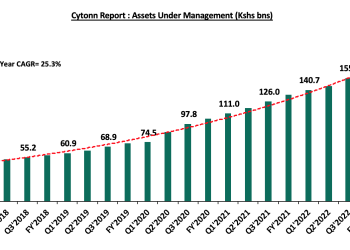
Assets under management in CMA-regulated funds have grown significantly, reflecting trust in licensed fund managers in Kenya.
Risks of Dealing with Unlicensed or Unregulated Entities
Investing through unlicensed operators exposes you to:
- Potential fraud or Ponzi-like schemes
- Lack of asset segregation, risking total loss
- No regulatory recourse for complaints
- Hidden or excessive fees without disclosure
- Non-compliance with diversification or risk limits
The CMA regularly warns the public against unlicensed schemes and maintains an updated list of authorised entities on its official portal to help investors verify legitimacy.
Top Licensed Fund Managers in Kenya (2026 Overview)
As of early 2026, the CMA has licensed dozens of fund managers managing collective investment schemes. Prominent names include:
- Britam Asset Managers (Kenya) Limited
- CIC Asset Management Limited
- NCBA Unit Trust Funds
- Nabo Capital Limited
- Apollo Asset Management Company Limited
- Orient Asset Managers Limited
- Amana Capital Limited
- Fusion Investment Management Limited
- ICEA Lion Asset Management Limited
- Etica Capital Limited (recent expansions)
These managers oversee popular products like money market funds, balanced funds, equity funds, and fixed income options, with some leading in assets under management according to quarterly CMA reports.
How to Verify a Fund Manager’s Licence in Kenya
- Visit the official CMA licensees portal at licensees.cma.or.ke.
- Search under “Fund Managers” or “Approved Collective Investment Schemes”.
- Check the licence number, status, and associated funds.
- Review recent CMA quarterly CIS reports for performance and AUM data.
- Contact the CMA directly if in doubt.
Always confirm before investing — a valid licence is your first line of defence.
The Role of Licensed Managers in Kenya’s Capital Market Growth
Licensed fund managers channel retail and institutional savings into productive investments, supporting economic development through listed equities, government securities, and corporate bonds. Their regulated products promote financial inclusion, with easy-access money market funds attracting millions of Kenyans seeking better returns than traditional savings accounts.
In 2026, ongoing CMA approvals for new managers and sub-funds reflect rising demand and confidence in regulated asset management.
Frequently Asked Questions
What is a licensed fund manager in Kenya?
A licensed fund manager is a CMA-authorised entity that manages collective investment schemes, unit trusts, or pooled funds, complying with strict regulatory standards for investor protection.
Why is the CMA licence important for fund managers?
It ensures transparency, asset safety via custodians, regular audits, and regulatory oversight, significantly reducing risks compared to unlicensed operators.
How can I check if a fund manager is licensed by the CMA?
Use the official CMA licensees search portal at licensees.cma.or.ke, filter for fund managers, and verify licence details and status.
Are all unit trust funds in Kenya managed by licensed managers?
Yes — legitimate collective investment schemes must be managed by CMA-licensed fund managers and approved by the Authority.
What happens if I invest with an unlicensed fund manager?
You risk loss of funds with no regulatory protection, limited recourse, and potential involvement in fraudulent schemes — always verify licensing first.
How many licensed fund managers are there in Kenya in 2026?
The number exceeds 40 and continues to grow with new approvals, as per CMA announcements and licensee lists.
Conclusion: Choose Licensed for Security and Performance
Licensed fund managers in Kenya offer a secure, regulated pathway to diversified investing amid a thriving capital market. By prioritising CMA authorisation, you gain peace of mind through enforced transparency, professional management, and strong investor safeguards. Verify any manager on the official CMA site, review performance reports, and invest confidently in Kenya’s regulated opportunities in 2026.
Official Resources:
Capital Markets Authority (CMA) Kenya
CMA Licensees Portal