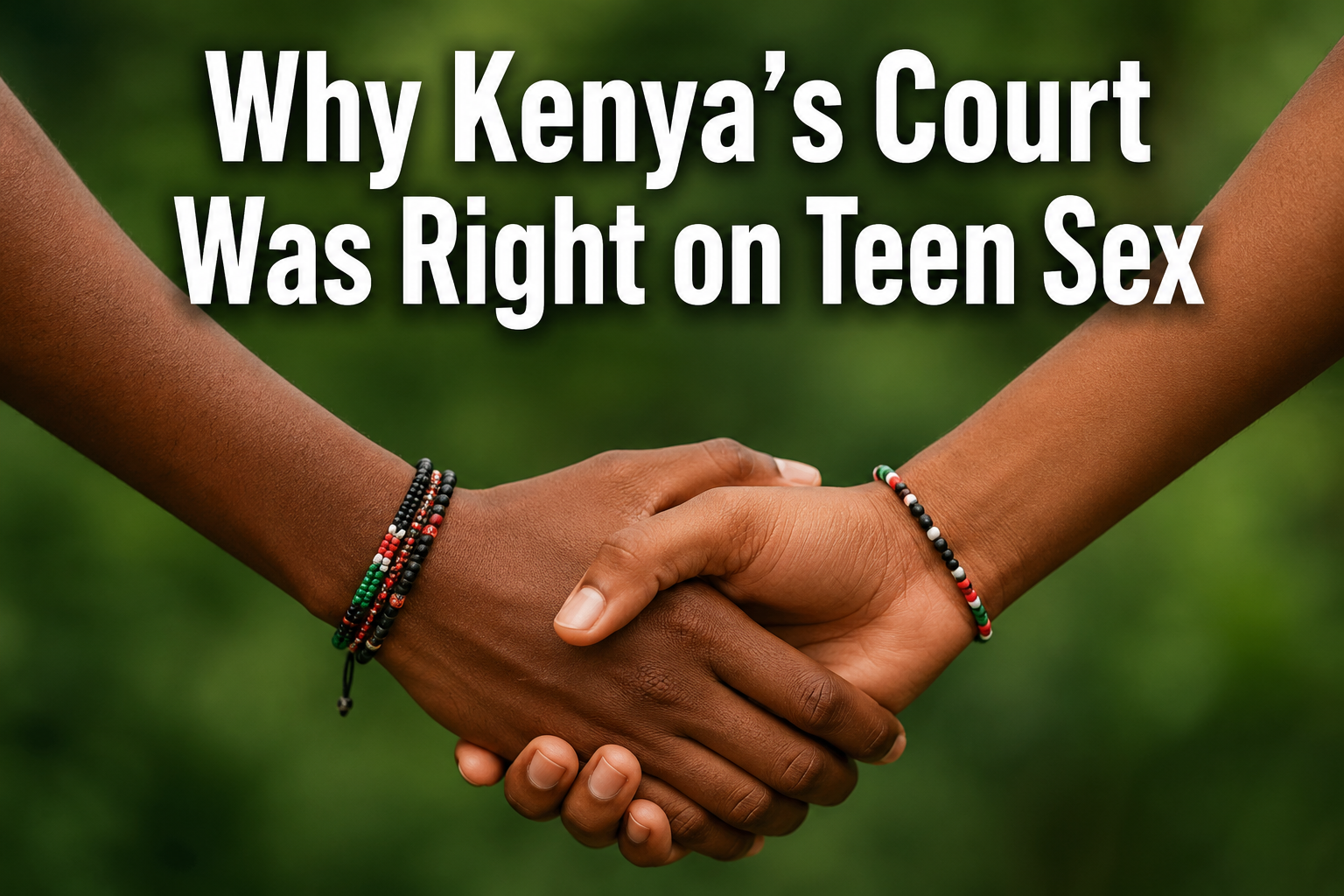
The recent ruling by a Nairobi court that consensual sexual relationships between teenagers should not automatically lead to criminal prosecution has ignited passionate debate across Kenya. While some fear it weakens child protection, others see it as a progressive step toward a more realistic and humane legal system.

Kenya’s judiciary is attempting to balance child protection with fairness in adolescent relationships.
The Core Issue
For years, Kenya’s Sexual Offences Act has been criticized for its harsh application in cases involving close-in-age teenagers. In some instances, teenage boys have faced long prison sentences for consensual relationships with girls only slightly younger than them — often triggered by parental complaints rather than clear exploitation.
The court’s recent decision seeks to distinguish between genuine predatory behavior and ordinary adolescent exploration, acknowledging that not every teenage relationship belongs in a criminal courtroom.
Why the Ruling Makes Sense
Criminalizing consensual peer relationships has often caused more harm than good. It has led to school dropouts, lifelong criminal records, and destroyed futures for young people. Moreover, evidence shows that punitive approaches alone have not reduced teenage sexual activity. Instead, countries like South Africa, Canada, and several U.S. states have introduced “close-in-age exemptions” (Romeo and Juliet laws) with positive results.
Kenya’s court appears to be moving in this direction — a necessary correction that separates exploitation from normal adolescent behavior.
Legitimate Concerns Remain
However, child rights advocates raise valid worries. Kenya still struggles with high rates of teenage pregnancy, gender-based violence, and sexual exploitation. Any legal reform must be accompanied by stronger comprehensive sexuality education, counseling, parental engagement, and accessible reproductive health services.
The ruling does not remove protections against adult predators. Rather, it calls for more nuanced application of the law.

Education and counseling are more effective than criminalization in addressing teenage relationships.
A Cultural and Legal Shift
In many African societies, teenage sexuality remains a sensitive topic. Yet, courts are increasingly being asked to separate cultural morality from justice. The role of the law should be to protect children from harm while ensuring fairness and proportionality.
The truth is clear: not every teenage mistake deserves a criminal record.
The Kenyan court’s decision reflects a broader global shift toward evidence-based and humane approaches to adolescent development. While vigilance against exploitation must remain strong, Kenya now has an opportunity to modernize both its laws and societal conversation around youth, responsibility, and protection.
Ultimately, education, open dialogue, and support systems will protect young people far more effectively than prisons ever could.
What do you think? Should Kenya adopt close-in-age exemptions in its Sexual Offences Act? Share your thoughts below.
Related: For young Kenyans seeking better opportunities, building strong foundations matters. Learn more about study in Germany requirements as a pathway to brighter futures.
FAQ
What was the recent Kenya court ruling on teen relationships?
The court ruled that consensual sex between teenagers should not automatically result in criminal prosecution, calling for more nuanced application of the law.
Does the ruling legalize teenage sex?
No. It simply suggests that consensual peer relationships should not be treated the same as adult-child exploitation.
Why is this ruling controversial?
Critics fear it may weaken child protection, while supporters argue it prevents injustice against adolescents engaging in normal behavior.
What should accompany legal reform in Kenya?
Stronger sexual education, counseling, parental involvement, and accessible reproductive health services for youth.
Do other countries have similar laws?
Yes. Many countries have “Romeo and Juliet” or close-in-age exemptions to distinguish between peer relationships and exploitation.
How can Kenya better protect teenagers?
Through a balanced approach combining realistic laws, education, and support systems rather than relying solely on criminal punishment.