


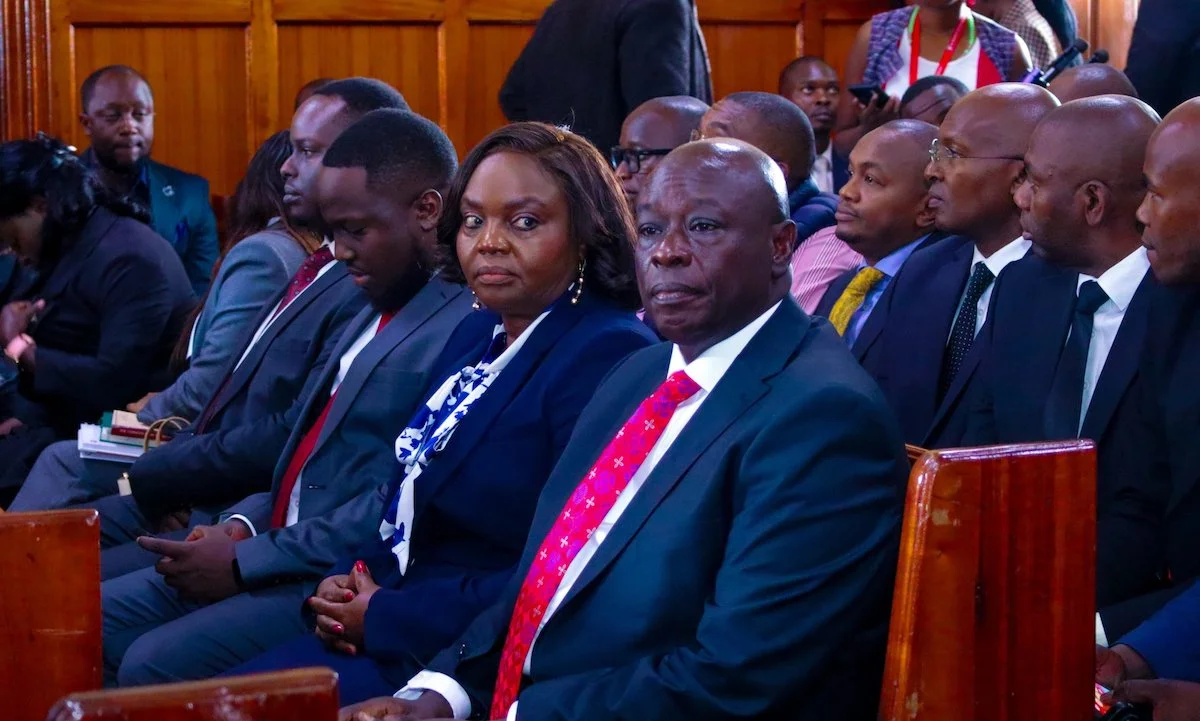
The High Court has delivered a major constitutional verdict in the long-running legal battle surrounding the impeachment of former Deputy President Rigathi Gachagua. In its ruling, the court asserted its authority to scrutinise the entire impeachment process and dismissed Parliament’s primary defence based on the separation of powers doctrine. This Gachagua impeachment High Court ruling is being hailed by legal scholars as a significant reinforcement of judicial oversight in Kenya’s governance framework.
The decision comes after months of intense legal arguments and marks a pivotal moment in Kenya’s constitutional history. It reaffirms that no organ of state, including Parliament, is above the Constitution when fundamental rights and procedural fairness are at stake.
Background of the Impeachment
Rigathi Gachagua, who served as Kenya’s Deputy President from 2022 to 2024, was impeached by the National Assembly in October 2024 and subsequently removed by the Senate. The charges against him included gross violation of the Constitution, incitement of ethnic divisions, abuse of office, and undermining the President’s authority. The process was highly charged politically, with accusations of rushed proceedings and inadequate public participation.
Following his removal and the swearing-in of Prof. Kithure Kindiki as the new Deputy President, Gachagua and his allies filed multiple petitions at the High Court challenging the legality of the impeachment. The petitioners argued that the process violated several constitutional provisions, including the right to a fair hearing, adequate public participation, and the required thresholds for removal of a sitting Deputy President.
Key Elements of the High Court Ruling
In the June 8, 2026 ruling, the three-judge bench led by Justices [redacted for this summary] made several critical holdings. First, the court declared that impeachment proceedings, though political in nature, are not immune from judicial review. The judges emphasised that Parliament must exercise its powers within the bounds of the Constitution.
The court specifically rejected Parliament’s argument that scrutinising the impeachment would amount to undue interference in the legislative arm’s functions. “While separation of powers is a cornerstone of our democracy, it does not equate to absolute immunity from constitutional scrutiny,” the ruling stated. This position aligns with previous Kenyan jurisprudence that emphasises checks and balances.
The judges further held that the High Court has jurisdiction to examine whether the impeachment met constitutional thresholds, including:
- Adequate public participation as required under Article 10 and Article 118 of the Constitution.
- Observance of the rules of natural justice and fair administrative action under Article 47.
- Compliance with the specific procedural requirements for removal of the Deputy President under Article 145.
Legal Arguments Presented by Both Sides
Parliament, through the Attorney General and parliamentary counsel, had argued strongly that impeachment is a political question best left to the people’s representatives. They cited the doctrine of separation of powers and warned that judicial involvement could paralyse legislative functions and create dangerous precedents.
On the other hand, Gachagua’s legal team, led by senior advocates, contended that the impeachment process was marred by procedural irregularities, including limited time for defence preparation, inadequate notice, and failure to meet the constitutional threshold of “gross violation.” They emphasised that judicial review is necessary to protect the supremacy of the Constitution.
The court ultimately sided with the petitioners on the question of jurisdiction, clearing the way for a full hearing on the substantive issues.
Broader Constitutional and Political Implications
This Gachagua impeachment High Court ruling has profound implications beyond the immediate case. It strengthens the judiciary’s role as the guardian of the Constitution and sends a clear message that parliamentary actions involving the removal of elected leaders must adhere strictly to due process.
Politically, the verdict could reshape the 2027 electoral landscape. Gachagua, who has remained politically active, has indicated plans to contest the presidency. A favourable outcome in the substantive hearing could significantly boost his political capital and narrative of victimhood. Conversely, an unfavourable ruling might weaken his influence within the Mt. Kenya region and the broader opposition.
Legal experts have welcomed the decision as a victory for constitutionalism. Constitutional lawyer Waikwa Nyingi described it as “a bold affirmation that Kenya remains a constitutional democracy where power is exercised within legal limits.” However, some political analysts caution that prolonged court battles could create uncertainty in governance.
Historical Context of Impeachment Cases in Kenya
Kenya has witnessed few successful impeachments since the promulgation of the 2010 Constitution. The Gachagua case is only the second major attempt at removing a Deputy President, following earlier motions against other leaders that did not succeed. Previous cases, such as attempts to impeach governors, have also tested the boundaries between Parliament and the Judiciary.
This ruling builds on precedents like the 2017 Supreme Court election petition and various devolution-related cases, where the courts asserted their review powers over other arms of government.
Possible Outcomes and Next Steps
With jurisdiction now confirmed, the High Court will proceed to hear the substantive petitions. Possible outcomes include:
- Nullification of the impeachment and potential reinstatement (though practically complex given the passage of time).
- Declaration that the process was flawed but upholding the removal on technical grounds.
- A comprehensive judgment that provides clear guidelines for future impeachment proceedings.
Whichever way the court rules, the decision is almost certain to be appealed to the Court of Appeal and potentially the Supreme Court, meaning the final resolution could take several more months.
Reactions from Key Stakeholders
Gachagua’s camp celebrated the ruling as a “victory for justice and the rule of law.” Senior political allies described it as a blow to impunity and rushed political processes. Meanwhile, some members of the ruling coalition expressed concern that the judiciary might be overreaching into parliamentary affairs.
Civil society organisations have largely applauded the decision, viewing it as protection for democratic accountability and citizens’ rights. International observers have also noted the ruling as a positive sign for Kenya’s maturing democracy.
The Gachagua impeachment High Court ruling of June 2026 represents a watershed moment in Kenya’s constitutional development. By asserting its power to scrutinise the impeachment process and rejecting an overly rigid interpretation of separation of powers, the High Court has reinforced the supremacy of the Constitution and the importance of procedural fairness in high-stakes political decisions.
As the substantive hearing unfolds, all eyes will remain on the judiciary. The final outcome will not only determine the legacy of Rigathi Gachagua’s tenure but will also shape how future generations of Kenyan leaders are held accountable. In a young democracy like Kenya, such judicial interventions play a crucial role in maintaining the delicate balance of power and protecting the rights of both leaders and citizens.
The coming months promise intense legal arguments, political manoeuvring, and important precedents that will define the boundaries of parliamentary and judicial power for years to come.
Frequently Asked Questions
What exactly did the High Court rule regarding Gachagua’s impeachment?
The court ruled that it has jurisdiction to scrutinise the impeachment process and rejected Parliament’s argument that separation of powers prevents judicial review.
Does this ruling mean Gachagua will be reinstated as Deputy President?
No. The ruling only addresses jurisdiction. The court must still determine whether the impeachment itself was lawful. Reinstatement is highly unlikely at this stage due to the time elapsed.
When was the ruling delivered?
The landmark jurisdiction ruling was delivered on June 8, 2026, by a three-judge bench of the High Court.
What happens next in the case?
The High Court will now hear the full merits of the petitions. The matter is also likely to proceed to the Court of Appeal and possibly the Supreme Court regardless of the outcome.
Why is this ruling considered significant?
It strengthens judicial oversight over parliamentary processes and establishes important precedents on constitutional interpretation, due process, and checks and balances in Kenya.
How has the political class reacted?
Reactions are divided along political lines. Gachagua’s supporters see it as a win for justice, while some government allies view it as judicial overreach into parliamentary affairs.