


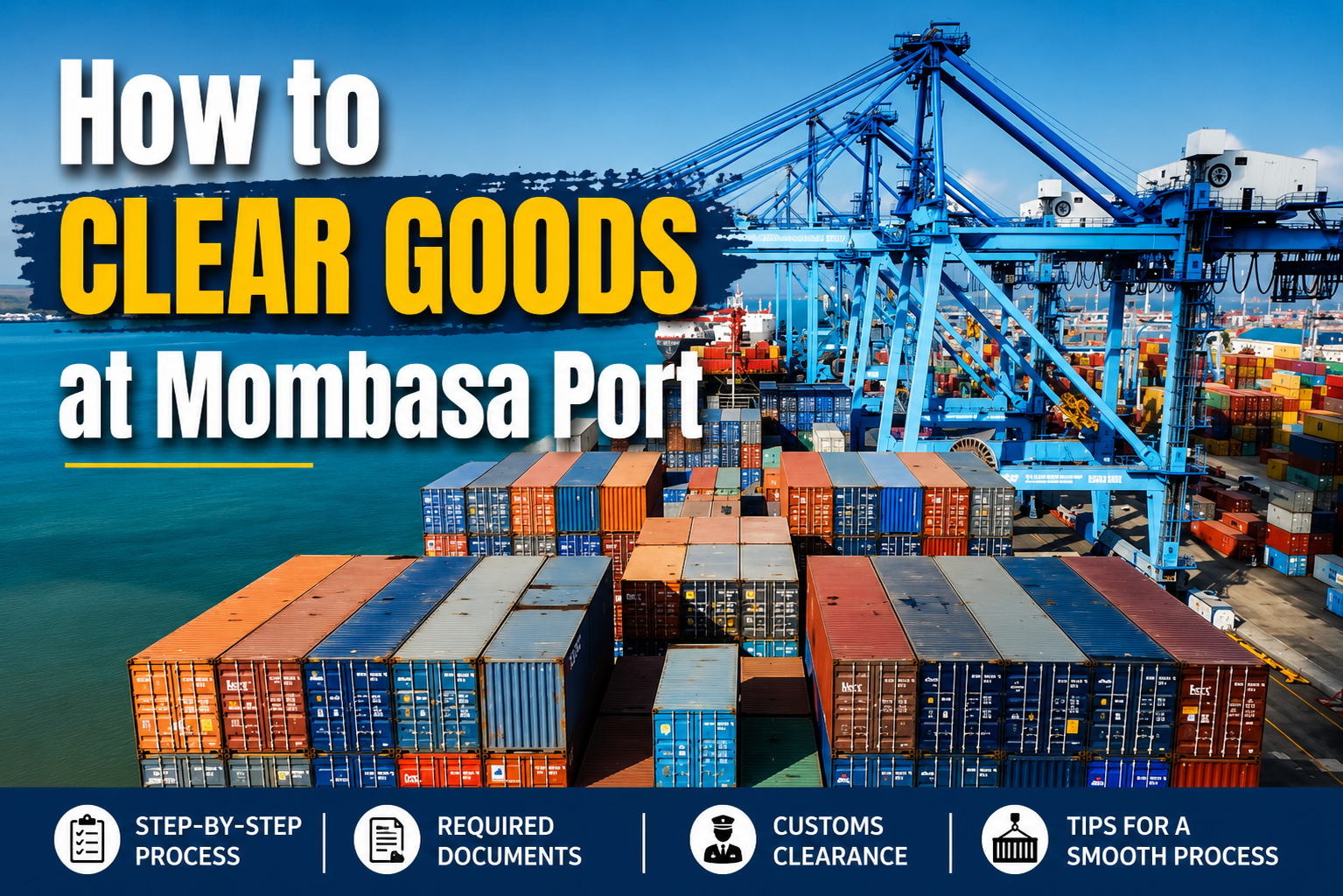
The Port of Mombasa is the busiest port in East Africa, handling millions of tonnes of cargo every year. Learning how to clear goods at Mombasa port correctly is essential for any business involved in importing or exporting through Kenya. A smooth clearance process depends on accurate documentation, timely duty payment, and coordination between multiple government agencies.
This article walks through the complete clearance process, the documents you need, the role of clearing agents, common challenges, and practical tips to avoid delays.
Overview of the Mombasa Port Clearance Process
Cargo clearance at Mombasa involves several coordinated steps handled primarily through the Kenya Revenue Authority (KRA) and the Kenya Ports Authority (KPA). The process generally follows this sequence:
- Pre-arrival documentation and cargo manifest submission
- Customs declaration via the iCMS (integrated Customs Management System)
- Verification and assessment of duty
- Payment of duties and taxes
- Physical or scanner verification of goods
- Release and gate-out from the port
Each stage must be completed before cargo can legally leave the port premises. Missing or incorrect documentation at any stage can lead to delays, demurrage charges, or even seizure of goods.
Step 1: Prepare the Required Documents
Before your cargo even arrives, you should have the following documents ready:
- Bill of Lading (B/L) or Airway Bill for air cargo
- Commercial Invoice showing value, quantity, and description of goods
- Packing List
- Certificate of Origin (where applicable, especially for preferential tariff treatment)
- Import Declaration Form (IDF), obtained through KRA’s online portal before shipment
- Pre-shipment or Destination Inspection Certificate, where required for certain goods
- Tax Compliance Certificate and valid PIN certificate for the importer
Incomplete documentation is one of the leading causes of clearance delays. Engaging a licensed clearing agent early can help you assemble the correct paperwork before the vessel even docks. For a full checklist, see our import documentation guide.
Step 2: Submit a Customs Declaration
Once the vessel arrives, the shipping line or agent submits a cargo manifest to KRA. The importer or their appointed clearing agent then lodges a customs entry (declaration) through the Kenya National Single Window System (KenTrade), known locally as the Kenya TradeNet System.
This declaration includes the Harmonized System (HS) code for the goods, their value, and applicable duty rates. Accurate HS classification is critical, since incorrect codes can trigger penalties or reassessment. If you are unsure how to classify your goods, our HS code lookup tool can help you identify the correct tariff classification before submission.
Step 3: Customs Verification and Risk Assessment
KRA’s system automatically assigns cargo to one of several verification channels based on risk profiling:
- Green Channel: Low-risk cargo released without physical inspection
- Yellow Channel: Documentary review required before release
- Red Channel: Physical or scanner inspection required
Cargo flagged for the red channel typically takes longer to clear, as it requires scheduling for scanning or physical examination by customs officers at designated bays within the port.
Step 4: Pay Duties, Taxes, and Port Charges
Once assessment is complete, the system generates a payment notice covering:
- Import duty (based on the East African Community Common External Tariff)
- Value Added Tax (VAT)
- Import Declaration Fee (IDF) and Railway Development Levy (RDL), where applicable
- Port storage and handling charges from KPA
Payments are typically made through KRA’s iTax platform or designated commercial banks. Prompt payment is essential, since storage charges accrue daily once free storage days lapse, usually within the first few days after discharge. Our duty calculation service can help you estimate your total tax liability before cargo arrives, so you can budget accordingly.

Customs documentation review is a key checkpoint before cargo can be released for gate-out.
Step 5: Physical Inspection or Scanning (If Required)
For cargo flagged under the yellow or red channel, physical or non-intrusive scanning inspection confirms that the declared goods match the actual shipment. Discrepancies between the declaration and the physical cargo can result in additional duty assessments, penalties, or referral to the KRA Enforcement unit for further investigation.
Step 6: Release and Gate-Out
After duties are paid and verification is complete, KRA issues a release order. The clearing agent then presents this to KPA to arrange gate-out, which involves:
- Confirming container or cargo condition
- Settling any outstanding port storage or handling fees
- Arranging transport (truck, rail, or onward shipment) for cargo evacuation
Cargo destined for landlocked countries may proceed under a transit bond, allowing it to move without payment of Kenyan duties, provided it exits through designated border points such as Malaba or Busia. Learn more about transit procedures in our regional transit cargo guide.
Role of Clearing and Forwarding Agents
Most importers, especially first-time traders, work with a licensed clearing and forwarding agent registered with KRA and the Kenya International Freight and Warehousing Association (KIFWA). These agents:
- Handle documentation and system submissions on your behalf
- Liaise directly with customs and port authorities
- Advise on correct tariff classification and duty exemptions
- Coordinate transport and delivery after release
Using a reputable agent significantly reduces the risk of errors that lead to delays. You can compare vetted agents through our directory of licensed clearing agents.
Common Challenges When Clearing Goods at Mombasa Port
Documentation Errors
Mismatched invoice values, incorrect HS codes, or missing certificates are the most frequent causes of clearance delays. Double-check all documents against the shipping manifest before submission.
Demurrage and Storage Costs
Free storage periods are short, often just a few days after vessel discharge. Delays in payment or verification quickly translate into significant additional costs.
Valuation Disputes
Customs may challenge declared values that appear inconsistent with market prices. Maintaining clear, verifiable commercial invoices helps resolve such disputes faster.
Congestion During Peak Periods
Seasonal surges in cargo volume can slow down inspection and gate-out processes, so planning shipments with buffer time is advisable.
Tips for Faster Clearance
- Submit your Import Declaration Form (IDF) before the vessel arrives, not after
- Work with an experienced, licensed clearing agent
- Verify HS codes and invoice values match precisely across all documents
- Track your cargo status through KRA’s online portal regularly
- Budget for duties and storage charges in advance to avoid payment delays
According to the World Bank, trade facilitation reforms, including digitized customs systems, have measurably reduced clearance times across many developing economies, and Kenya’s continued investment in single-window trade systems reflects this global trend.
Government Resources for Importers and Exporters
For official guidance, importers should consult the Kenya Revenue Authority website for up-to-date customs procedures, tariff schedules, and IDF application steps. The Kenya Ports Authority also publishes port charges, vessel schedules, and storage fee structures. Businesses trading regionally can refer to the TradeMark Africa resources on regional trade corridors and transit procedures

Once cargo is released, trucks and rail services transport goods from the port to their final destination across Kenya and the region.
Frequently Asked Questions
How long does it take to clear goods at Mombasa port?
Clearance time varies depending on the verification channel assigned. Green channel cargo can clear within a day, while yellow or red channel shipments requiring inspection may take several days, especially during peak congestion periods.
Do I need a clearing agent to clear goods at Mombasa port?
While not always legally mandatory for all cargo types, most importers use a licensed clearing agent because the documentation and system submissions can be complex, and errors often lead to costly delays.
What happens if I don’t pay port storage charges on time?
Unpaid storage charges accumulate daily after the free storage period lapses. Prolonged non-payment can result in the cargo being held,