

ADVERTISEMENT
OmarosaOmarosa
  • USA
  • Agriculture
  • Education
  • Finance
  • Billionaires
  • AI
  • Careers
  • Economy
  • Biography
  • Lists
OmarosaOmarosa
No Result
View All Result
OmarosaOmarosa
No Result
View All Result
Home Agriculture

Sugarcane Farming in Kenya: An Overview

Nyongesa Sande by Nyongesa Sande
December 18, 2024
in Agriculture
Reading Time: 5 mins read
A A
Sugarcane Farming in Kenya: An Overview
Share on FacebookShare on Twitter

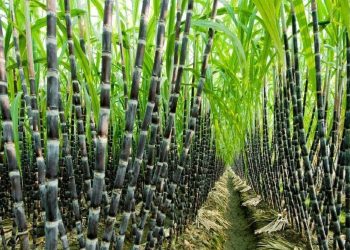
Sugarcane farming is a significant agricultural activity in Kenya, particularly in the Western and Rift Valley regions. It provides a major source of livelihood for small-scale farmers who sell their produce to sugar millers. The industry also plays a vital role in the economy, especially in areas where sugarcane is a dominant crop.

ADVERTISEMENT

Sugarcane Growing Areas in Kenya

Sugarcane is mainly grown in regions with favorable climatic conditions. The primary sugarcane growing areas in Kenya include:

  • Mumias
  • Muhoroni
  • Chemelil
  • Nandi
  • Kakamega
  • Homabay
  • Gucha
  • Awendo
  • Nyando
  • Miwani
  • Busia
  • Bungoma
  • Transmara

Ecological Requirements for Growing Sugarcane

Sugarcane requires specific environmental conditions to grow successfully. These include:

  • Soil: Deep, well-drained soil with a pH range of 5.0 to 7.0 is ideal for sugarcane.
  • Temperature: Sugarcane thrives in temperatures between 20°C and 28°C.
  • Altitude: The ideal altitude for sugarcane farming ranges from 0 to 1800 meters above sea level.
  • Rainfall: Annual rainfall should be between 1200 mm and 2000 mm.

Land Preparation

Proper land preparation is essential for successful sugarcane farming. Here’s how to prepare the land:

  • Ploughing: The land should be thoroughly ploughed early enough before planting to break up compacted soil.
  • Furrows: Furrows should be prepared to a depth of about 30-40 cm to provide enough space for root growth.

Planting Sugarcane

Sugarcane is propagated vegetatively using cuttings from mature stalks. The planting process involves:

ADVERTISEMENT
  • Planting Method: The cuttings are laid horizontally in the furrows and then covered with a thin layer of soil mixed with DAP (Diammonium Phosphate) to enhance root development.
  • Spacing: The recommended planting spacing is 1 meter between rows, 1.3 meters between sugarcane sets, and 0.5 meters between cuttings.

Weeding

Weeding is an essential part of sugarcane farming as it prevents competition for nutrients and space. Regular weeding is necessary, and selective herbicides can be used to control weeds effectively.

Pests and Diseases

Sugarcane is susceptible to various pests and diseases, which can significantly affect yields. Common pests include:

  • African armyworms
  • Stalkborers
  • Spotted cane borer
  • Pink sugarcane mealybug

Common diseases that affect sugarcane include:

  • Sugarcane smut
  • Red rot
  • Sugarcane mosaic
  • Potyvirus

Management: These pests and diseases can be controlled by:

ADVERTISEMENT
  • Using selective sprays and recommended insecticides.
  • Planting resistant varieties of sugarcane.
  • Practicing proper field hygiene and sanitation.

Harvesting Sugarcane

The time to harvest sugarcane depends on the variety planted:

  • Early maturing varieties: Ready for harvest after about 12 months.
  • Late maturing varieties: Can take up to 24 months to fully mature.

Harvesting is done when the cane reaches full maturity, and the stems are thick and ready for processing.

Market for Sugarcane in Kenya

The primary market for sugarcane in Kenya is the sugar milling industry, where sugarcane is processed into sugar and other products. Farmers can enter into contracts with sugar millers to supply their sugarcane.

Besides the commercial market, sugarcane is also sold directly to consumers, particularly in urban areas. Street vendors often sell sugarcane in wheelbarrows, with prices ranging from Ksh 10 for a small piece. This provides an additional income source for farmers and vendors alike.

Conclusion

Sugarcane farming in Kenya is a profitable venture, especially for small-scale farmers in sugarcane-growing regions. With proper land preparation, pest management, and access to markets, farmers can enjoy good returns from sugarcane production. Whether selling to sugar mills or directly to consumers, sugarcane remains a valuable cash crop in Kenya’s agricultural sector.

ADVERTISEMENT
Previous Post

Tea Farming in Kenya: A Comprehensive Guide

Next Post

Coffee Farming in Kenya: A Profitable Agribusiness

Related Posts

Sugarcane Plantation
Kenya

Sugarcane Farming Bungoma: Profits, Prices and Yield per Acre

by Clive A.
3 months ago
0

Many Kenyans living abroad eventually plan to return home and invest their savings in sustainable businesses. However, after spending years...

Read moreDetails
Inside Ham Agro: Vision, Mission, and the Drive Behind Uganda’s Agrarian Revolution
Agriculture

Inside Ham Agro: Vision, Mission, and the Drive Behind Uganda’s Agrarian Revolution

by Clive A.
10 months ago
0

The story of Ham Agro Vision Uganda is inseparable from the bold leadership of Hamis Kiggundu, one of the country’s...

Read moreDetails
The Rise of Ham Agro: How Hamis Kiggundu Is Transforming Agribusiness in Uganda
Agriculture

The Rise of Ham Agro: How Hamis Kiggundu Is Transforming Agribusiness in Uganda

by Clive A.
10 months ago
0

Agriculture has always been the backbone of Uganda’s economy, but in recent years, it has faced challenges of low productivity,...

Read moreDetails
Maize Flour Prices Surge Again Across Kenya
Agriculture

Maize Flour Prices Surge Again Across Kenya

by Clive A.
1 year ago
0

Maize Flour Prices Surge Again Despite Government Subsidies, Deepening Cost of Living Crisis Kenyan households are feeling the pinch once...

Read moreDetails
How Ham Agro Is Transforming Agriculture in Uganda
Agriculture

How Ham Agro Is Transforming Agriculture in Uganda

by Nyongesa Sande
1 year ago
0

How Ham Agro Is Transforming Agriculture in Uganda Uganda’s agricultural sector is on the brink of a revolution, and at...

Read moreDetails
Avocado Farming in Kenya: A Comprehensive Guide
Agriculture

Avocado Farming in Kenya: A Comprehensive Guide

by Nyongesa Sande
2 years ago
0

Kenya is a leading avocado producer, ranking as the 2nd largest grower and exporter in Africa and the 6th largest...

Read moreDetails
Load More
Next Post
Coffee Farming in Kenya: A Profitable Agribusiness

Coffee Farming in Kenya: A Profitable Agribusiness

ADVERTISEMENT
  • About
  • Privacy
  • Terms
  • We Are Hiring
  • DMCA
  • Contact Us
  • Advertise with us

© 2026 Omarosa Inc USA

Welcome Back!

Login to your account below

Forgotten Password?

Retrieve your password

Please enter your username or email address to reset your password.

Log In

Add New Playlist

No Result
View All Result
  • 001 FM
  • 560 Power Country
  • 560 Smooth Jazz
  • About
  • Adventist Angels Watchman 90.0 FM
  • Advertise with us
  • Athiani FM 99.2 FM
  • Bahari FM 90.4 FM
  • Baraka FM 95.5 FM
  • Base Radio
  • Bethel Radio
  • Biblia Husema 96.7 FM
  • Blackpen Radio
  • Blitz FM 254
  • Bloom Radio
  • Blue Radio
  • Cambridge Radio
  • Campus Radio Kenya
  • Capital FM 98.4
  • CGTN Radio 91.9 FM
  • Chamgei FM 90.4 FM
  • Choice Radio
  • Classic 105
  • CoELIB Radio
  • Cong’asis FM 107.7 FM
  • Contact Us
  • CountryPride FM
  • Dapstrem Radio
  • DMCA Compliance Notice
  • Doctors Explain FM
  • East Africa Radio 94.7 FM
  • East FM 106.3 FM
  • Egesa FM 103.2 FM
  • Emoo FM 104.2 FM
  • Ereto FM
  • Family Radio 103.9 FM
  • Flamingo Radio
  • Gee Radio
  • Ghetto Radio 89.5 FM
  • Gotchscape Radio
  • Gukena FM 92.2 FM
  • Haki FM
  • Hey Radio Kenya
  • Hip-Hop Daily
  • Hits Radio Kenya
  • Homeboyz Radio
  • HoodRadio Kenya
  • Hope FM
  • Hot 96 FM 96.0 FM
  • Iced Radio
  • Iftiin FM 101.9 FM
  • Images: All Passports in The World
  • Inooro FM 98.9 FM
  • Islando Radio Ke
  • Jesus is Lord Radio 105.3 FM
  • Kalya FM 106.5 FM
  • Kameme FM
  • Kass FM 89.1 FM
  • KBC Coro FM
  • KBC English Service 95.6 FM
  • KBC Mayienga FM 93.5
  • KBC Pwani FM 103.1 FM
  • KBC Radio Taifa 92.9 FM
  • Kigooco FM 98.6 FM
  • Kiss 100 100.3 FM
  • Kwitu FM
  • LionafriQ Radio
  • LIVECITY RADIO Ke
  • Lulu FM 91.0 FM
  • Makinika Radio
  • Masihi Redio Afrika
  • Mayian FM
  • MBA Radio
  • Mbaitu FM 92.5 FM
  • Meru Radio 88.3 FM
  • Milele FM 104.8 FM
  • Mo Radio 88.2 FM
  • Mt Zion Radio KE
  • Mugambo Wa Mugikuyu FM
  • Mulembe FM 97.9 FM
  • Musyi FM 102.2 FM
  • Muuga FM 94.2 FM
  • Mwaki FM
  • Mwangaza Wa Neno Fm
  • Mwangaza Wa Neno FM 89.3 FM
  • Mwatu FM 93.1
  • Nation FM 96.3 FM
  • North Rift Radio
  • NRG Radio 97.1 FM
  • Omoka Radio
  • Online Radio from Kenya – Listen to Kenyan Radio Stations Free
  • Pearl Radio Ke 96.9 FM
  • PlanetFive
  • Portfolio Diversification Tools Guide
  • Power Kenya FM
  • Praise Radio Kenya
  • Privacy Policy for OmarosaOmarosa.com
  • Radio 254
  • Radio 316
  • Radio 47
  • Radio Citizen
  • Radio Daima
  • Radio Halisi
  • Radio Jambo
  • Radio Kaya 93.1 FM
  • Radio Maisha 102.7 FM
  • Radio Maria 107.3 FM
  • Radio Midnimo 90.2 FM
  • Radio Ngamia
  • Radio Ngoma 90.7 FM
  • Radio Rahma 91.5 FM
  • Radio Safari 87.9 FM
  • Radio Safina 90.7 FM
  • Radio Salaam FM 90.7 FM
  • Radio Shahidi 91.7 FM
  • Radio Simba 91.3 FM
  • Radio Waumini 88.3 FM
  • Radio44 Kenya
  • Rafiki-Farm Main Altar
  • Ramogi FM 107.1 FM
  • Relax 103 FM
  • Riri Radio 93.7 FM
  • Sauti ya Pwani FM 94.2 FM
  • Skilled Migration Resource Library: Guides, Tools & Visa Pathways
  • Smash Jam Radio
  • Smooth FM 105.5 FM
  • SoftRadio Station
  • Sound Asia FM 88.0 FM
  • Spice FM 94.4 FM
  • Spring of Worship
  • Star FM 105.9 FM
  • Terms of Use for OmarosaOmarosa.com
  • Tonzi Radio
  • Trace FM 95.3 FM
  • Truth FM 90.7 FM
  • Uiguithanio FM
  • Upward Radio
  • Utheri Radio
  • Varch Radio
  • Vuuka FM 100.4 FM
  • We Are Hiring
  • Your Hub for Insights, Inspiration, and Everything in Between

© 2026 Omarosa Inc USA