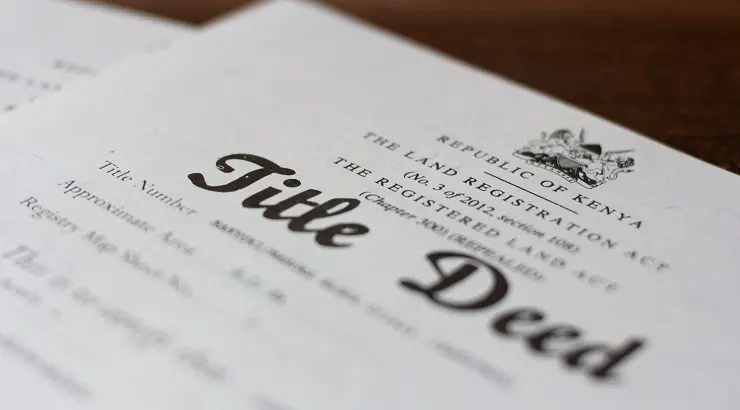
Transferring land in Kenya is a formal legal process managed by the Ministry of Lands and involves several verification, valuation, and registration steps. Whether you are buying, selling, inheriting, or gifting land, following the correct procedure protects you from fraud, disputes, or future invalidation of the title deed. This comprehensive guide explains how to legally transfer land ownership in Kenya using the most current 2026 laws and regulations.
Because land remains one of Kenya’s most valuable assets, the government requires strict documentation—such as Land Control Board (LCB) consent, stamp duty valuation, and official registration—to ensure transparency and protect both parties. This guide breaks down each step in detail and highlights important costs, timelines, and documents you need along the way.
1. Conduct an Official Land Search
The land search is the first and most important step because it confirms the true legal owner of the property. You can perform the search through:
- Ardhisasa (for digitized counties like Nairobi, Kiambu, Mombasa, and others)
- The local Lands Registry (for non-digitized counties such as Bungoma, Kakamega, Busia and many rural regions)
The search provides information such as:
- Name of the registered owner
- Parcel number and location
- Charges (loans attached to the land)
- Cautions or restrictions
- Court orders
Search fee: KSh 500
Processing time: 1–3 working days
If the search does not match the seller’s identity, the transfer must not proceed. For a deeper explanation of land verification steps, you can also read our detailed due diligence guide.
2. Verify the Seller’s Ownership Documents
Before signing or paying anything, the seller must provide:
- Original title deed
- Clear copy of national ID
- KRA PIN certificate
- Passport-sized photo
- Spousal consent (mandatory)
- RIM or mutation map
Spousal consent is required under the Matrimonial Property Act and the Land Registration Act to prevent secret land sales. If the seller is separated or widowed, documentary proof is required.
3. Draft and Sign a Sale Agreement
The sale agreement is a binding contract drafted by an advocate. It outlines the terms of the transfer and protects both parties from fraud or disagreements.
It must include:
- Full details of buyer and seller
- Land parcel number and location
- Agreed purchase price
- Payment schedule
- Completion date
- Penalties for breach of contract
Advocate fees: Approximately 1%–1.5% of the property value, as per the Advocates Remuneration Order.
If this is your first time handling land contracts, you may benefit from our resource library of real estate templates and checklists.
4. Apply for the Land Control Board (LCB) Consent
LCB approval is legally required for all agricultural land transfers in Kenya. The Land Control Act makes the approval mandatory to prevent illegal or exploitative land deals.
Types of LCB Approvals
- Ordinary LCB – KSh 1,000, held monthly
- Special LCB – KSh 5,000, held within a few days
The board issues an official consent letter, which must accompany the transfer documents during registration. Without this letter, the transfer is invalid in law.
5. Valuation by the Ministry of Lands
Once the sale agreement is signed, the Ministry of Lands must conduct a valuation to determine the property’s market value. This valuation determines the stamp duty payable.
A government valuer will:
- Inspect the land physically
- Assess market value based on similar properties
- Prepare a valuation report
Stamp Duty Rates in Kenya
- 4% – Urban land
- 2% – Rural land
The Kenyan government imposes stamp duty under the Stamp Duty Act, which can be reviewed through the Kenya Revenue Authority.
6. Payment of Stamp Duty
Once valuation is complete, the buyer receives a stamp duty assessment slip. Payment can be made through:
- KRA iTax
- Bank deposit
- Mobile money (supported in some counties)
The payment receipt must be attached to the transfer documents.
7. Completion and Signing of Transfer Forms
The seller must sign the Transfer of Land Form (Form 1), which officially transfers ownership to the buyer. This form is recognized under the Land Registration Act, 2012.
Documents required include:
- Form 1 transfer forms
- Spousal consent form
- ID and PIN copies of both parties
- Original title deed
- Stamp duty receipt
- Sale agreement
- LCB consent letter
This stage is best handled by an advocate to ensure accuracy and validity.
8. Submission to Lands Registry for Registration
All documents are submitted to the Ministry of Lands for registration. The registrar will:
- Verify authenticity of documents
- Confirm stamp duty payment
- Ensure LCB consent is valid
- Update the land register
- Issue a new title deed
Processing timelines:
- 2–4 weeks for freehold land
- 30–60 days for leasehold titles
For a checklist of documents to submit, see our property transfer checklist tool.
9. Issuance of the New Title Deed or Certificate of Lease
Once registration is complete, the new owner receives:
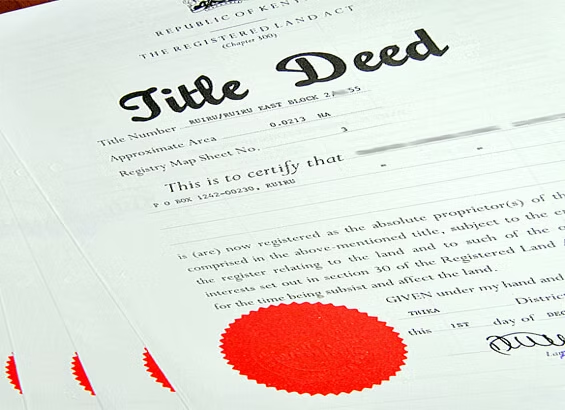
- A new Title Deed (for freehold land)
- A new Certificate of Lease (for leasehold property)
The new ownership details are permanently recorded in the national land register. For legal reference, regulations can be reviewed via the Ministry of Lands.
10. Post-Registration Steps
After receiving the new title, the owner must:
- Update county land rates records
- Pay any pending land rent (for leaseholds)
- Fence the land to protect boundaries
- Store all documents securely
This marks the complete and legal transfer of land ownership in Kenya.
Frequently Asked Questions
1. How long does land transfer take in Kenya?
On average, land transfer takes 3–6 weeks depending on valuation, stamp duty payment, and registry workload.
2. Is Land Control Board approval mandatory?
Yes. LCB approval is required for all agricultural land transactions under Kenyan law.
3. Can I transfer land without a lawyer?
You can, but it is highly risky. Advocates ensure the process is legal, documents are valid, and you are protected.
4. How much is stamp duty for land in Kenya?
Stamp duty is 4% for urban land and 2% for rural land, based on government valuation.
5. What documents are needed for land transfer?
You need IDs, PINs, title deed, sale agreement, LCB consent, valuation report, transfer forms, and stamp duty receipts.
6. Does Ardhisasa apply in all counties?
No. Only some counties are digitized. Others still use manual registries at the Ministry of Lands.