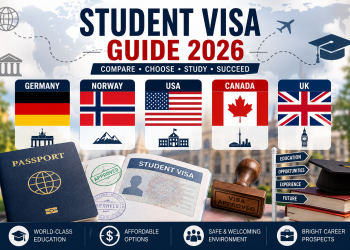
Germany remains one of the top destinations for international students seeking high-quality education without exorbitant costs. In 2026, the country offers numerous English-taught programs, cutting-edge research facilities, and a welcoming environment for global talent. This guide provides a complete roadmap for prospective students.
Why Study in Germany in 2026?
Germany boasts over 400 universities with strong rankings in engineering, medicine, computer science, business, and environmental studies. Public universities charge little to no tuition for most programs, making it significantly more affordable than the US, UK, or Australia.
Beyond academics, students benefit from a robust economy with post-study work visas, allowing up to 18 months to seek employment after graduation. The country’s central European location also makes travel easy and affordable.
A vibrant German university campus where international students pursue world-class education.
Popular Programs and Top Universities for 2026
Popular fields include mechanical engineering, data science, renewable energy, business administration, and artificial intelligence. Top institutions include:
- Technical University of Munich (TUM)
- Ludwig-Maximilians-Universität München (LMU)
- Heidelberg University
- RWTH Aachen University
- Freie Universität Berlin
Many programs are available in English, especially at master’s level. Check individual university websites for 2026 intake details.
Study in Germany Requirements
Meeting academic and language requirements forms the foundation of your application. For undergraduate programs, you typically need a secondary school qualification equivalent to the German Abitur. Master’s applicants require a relevant bachelor’s degree.
Use the Anabin database to verify if your qualifications are recognized. Many programs also require German language proficiency (DSH or TestDaF) or English scores (IELTS 6.0–6.5 or TOEFL equivalent).
Internal Link: For detailed information on study in Germany requirements, explore our dedicated guide.
Application Process for German Universities
Step 1: Research and Shortlist Programs
Begin 12–18 months in advance. Use platforms like DAAD, Study-in-Germany.de, and university portals. Note winter (October) and summer (April) intakes.
Step 2: Prepare Documents
- Academic transcripts and certificates
- CV/Resume
- Motivation letter or Statement of Purpose
- Letters of recommendation (for master’s/PhD)
- Language proficiency proof
- Passport copy
Step 3: Submit Applications
Many universities use Uni-Assist for evaluation. Application deadlines typically fall between May–July for winter semester and November–January for summer.
Germany Student Visa Process in 2026
After receiving an admission letter, apply for a student visa at the German embassy or consulate in your country.
Key Requirements:
- Valid passport
- University admission letter
- Proof of financial resources (blocked account with approx. €11,904 for the first year)
- Health insurance proof
- Motivation letter and CV
- Biometric passport photos
Processing times average 6–12 weeks, so apply early. Upon arrival, convert your visa to a residence permit at the local foreigners’ office.
Note: EU/EEA students generally do not need a visa.
Financing Your Studies: Costs and Scholarships
While tuition is free or low at public universities, monthly living expenses average €900–€1,200 depending on the city. Munich and Frankfurt are more expensive, while Leipzig or Dresden offer better value.
DAAD Scholarships remain highly competitive and cover tuition (where applicable), monthly stipends (€934+ for master’s), travel, and health insurance. Other options include university-specific scholarships and country-specific funding.
Student Life and Accommodation in Germany
Student dormitories (Studentenwohnheim) are affordable but competitive. Private rentals via WG-Gesucht or Immowelt are common. Part-time work (up to 20 hours/week) helps cover costs.
Germany offers excellent public transport with the Deutschlandticket and vibrant student cities with rich cultural scenes.

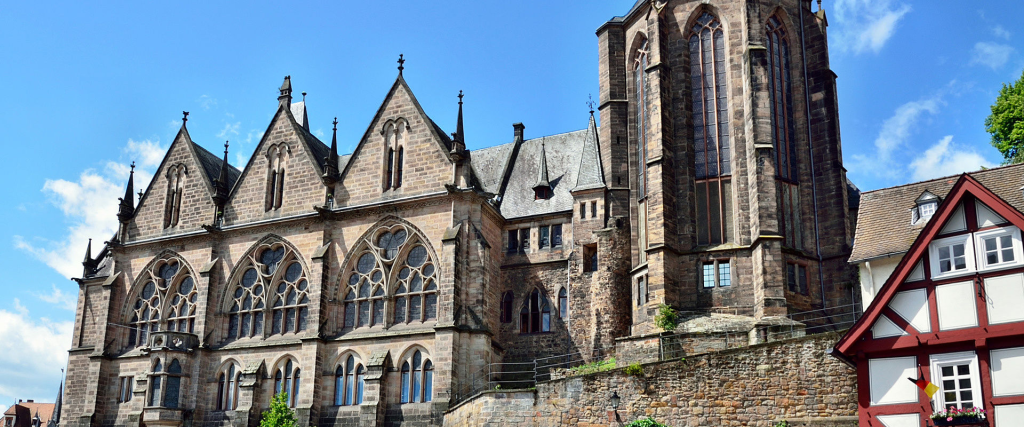
International students building friendships and exploring German culture during their studies.
Post-Study Opportunities
Graduates can stay for up to 18 months on a job-seeker visa. Strong industries in automotive, engineering, IT, and renewable energy provide excellent career prospects. Many transition to EU Blue Card for long-term residency.
Frequently Asked Questions
What are the main requirements to study in Germany in 2026?
You need recognized academic qualifications, language proficiency, and proof of financial resources. An admission letter from a recognized university is essential for the visa.
How much money do I need to show for a German student visa in 2026?
Approximately €11,904 for the first year, usually in a blocked account. This covers monthly living expenses of around €992.
Can I study in Germany without knowing German?
Yes, many English-taught programs exist, especially at master’s level. However, basic German helps with daily life and part-time jobs.
When should I start applying for 2026 intake?
Begin research and applications 12–15 months in advance. Winter semester deadlines often close in July.
Are there fully funded scholarships for international students?
Yes. DAAD and other organizations offer fully funded opportunities covering tuition, living costs, and travel for eligible candidates.
Is it easy to find part-time work as a student in Germany?
International students can work up to 140 full days or 280 half days per year. Popular sectors include hospitality, tutoring, and campus jobs.
Final Tips for Success
Start early, organize documents meticulously, and prepare for cultural adjustment. Germany values independence, punctuality, and practical skills. Connect with current students through forums and university international offices for insider advice.
With careful planning, studying in Germany in 2026 can be a transformative experience that boosts your career and broadens your worldview.