Germany continues to attract thousands of international students each year with its high-quality education and affordable tuition. However, obtaining the necessary student visa is a key requirement for non-EU/EEA nationals planning to study for more than 90 days. This guide outlines the complete Germany student visa requirements in 2026.
Types of German Student Visas
There are two main options:
- Student Visa (Visum zu Studienzwecken): For those who have already received a university admission letter.
- Applicant Visa (Visum zur Studienbewerbung): For those still applying to universities (valid for up to 9 months).
After arrival, you must convert your visa into a residence permit at the local foreigners’ office (Ausländerbehörde).

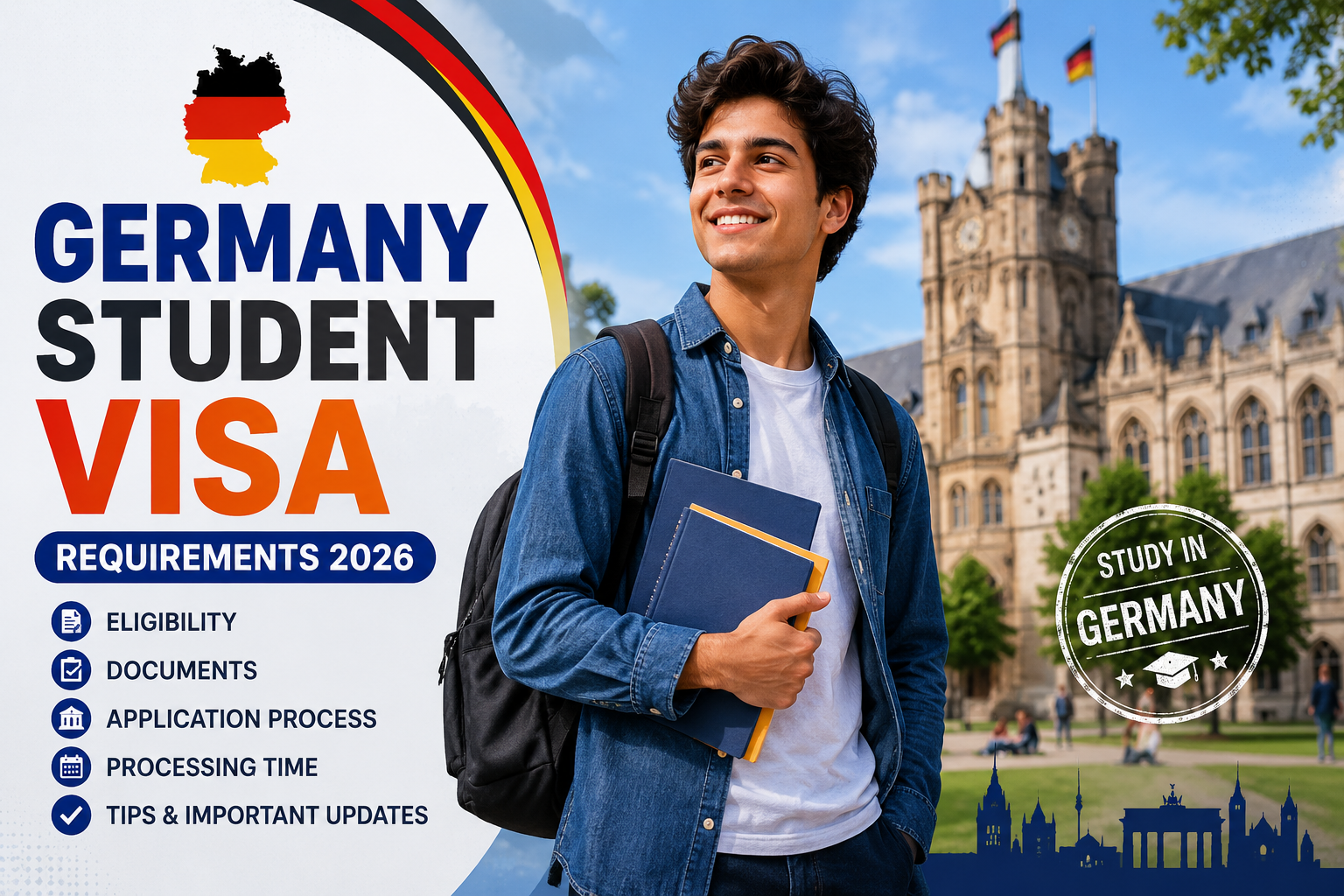
International students on a German university campus – proper visa planning makes this dream a reality.
Germany Student Visa Requirements in 2026: Key Documents
Prepare the following documents (original + two copies where required):
- Valid passport (valid for at least 6 months beyond your planned stay)
- Completed national visa application form
- Biometric passport photos (3 copies)
- University admission letter (Zulassungsbescheid)
- Proof of financial resources
- Health insurance proof
- Motivation letter / Statement of Purpose
- CV/Resume
- Academic transcripts and certificates
- Language proficiency proof (if required)
For Indian applicants, an APS certificate is mandatory.
Financial Requirements & Blocked Account
One of the most important Germany student visa requirements in 2026 is proof of sufficient funds. You must show you can support yourself with:
€11,904 per year (€992 per month).
The most common method is opening a blocked account (Sperrkonto) with providers like Expatrio, Fintiba, or Deutsche Bank. Funds are released monthly after arrival.
Alternative options include:
- Scholarship confirmation
- Formal obligation letter (Verpflichtungserklärung) from a sponsor in Germany
Step-by-Step Application Process
1. Receive University Admission
Secure your admission letter first.
2. Open Blocked Account
Deposit the required amount before applying.
3. Book Visa Appointment
Schedule an appointment at the German embassy/consulate in your country. Processing times average 6–12 weeks.
4. Submit Documents & Attend Interview
Pay the visa fee (€75) and attend the appointment.
5. Enter Germany & Apply for Residence Permit
Within 90 days of arrival, register your address and apply for the residence permit.
After Arrival: Residence Permit
You must apply for a student residence permit at the local Ausländerbehörde. Bring your visa, admission letter, proof of health insurance, and proof of accommodation.
The residence permit is usually issued for 1–2 years and is renewable.
Common Reasons for Visa Rejection & Tips
- Incomplete documents
- Insufficient funds
- Weak motivation letter
- Unclear study plans
Pro Tips: Apply early, ensure all documents are consistent, and prepare thoroughly for the visa interview.
Frequently Asked Questions
What is the blocked account amount for Germany student visa in 2026?
The required amount is €11,904 for one year (€992 per month). This must be deposited in a German blocked account.
How long does it take to get a German student visa in 2026?
Processing usually takes 6 to 12 weeks. Book your appointment as early as possible after receiving admission.
Can I work while studying on a German student visa?
Yes. International students can work up to 140 full days or 280 half days per year.
Do I need German language skills for the student visa?
Not always. Many English-taught programs accept IELTS/TOEFL. However, basic German helps with daily life and part-time jobs.
What health insurance is required for the German student visa?
You need valid German public or private health insurance (e.g., TK, AOK, or Barmer) covering your entire stay.
Is the German student visa easy to get in 2026?
With complete documents and strong academic plans, approval rates are high. Proper preparation is key to success.
Meeting all Germany student visa requirements in 2026 requires careful planning and organization. Start early, double-check requirements with your local German embassy, and stay updated through official sources.
Once approved, you’ll be on your way to an outstanding educational experience in Germany.