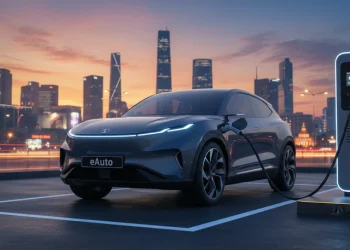
The EV charging infrastructure expansion is accelerating globally as electric vehicle adoption rises. Governments and private companies are investing heavily in fast-charging networks to meet growing demand, reduce charging times, and enhance accessibility.
This article examines the latest fast-charging technologies, costs, and country-specific developments, highlighting how different regions are approaching EV infrastructure. From Europe to Asia and North America, the growth of EV charging networks is reshaping the automotive and energy sectors.
Fast-Charging Networks: Speed and Accessibility
Fast-charging stations are critical to supporting EV adoption, as they allow drivers to recharge quickly during long trips. Currently, DC fast chargers can provide 80% battery capacity in 20–40 minutes, compared to several hours at standard AC chargers.
Europe leads in coverage, with networks like Ionity spanning Germany, France, and the UK. In the U.S., Tesla Superchargers and third-party providers such as Electrify America are expanding along highways to reduce range anxiety. Meanwhile, China boasts the world’s largest number of fast chargers, with State Grid and private operators deploying high-speed chargers in urban centers and along expressways.
Investing in fast-charging infrastructure remains expensive. Costs range from $20,000 to $150,000 per fast charger, depending on capacity, installation complexity, and grid access. Governments often subsidize installation to accelerate deployment, but private investment is equally critical to expanding networks efficiently.
Costs and Funding Models
The EV charging infrastructure expansion relies on multiple funding strategies. In Europe, the EU offers grants and incentives to reduce upfront installation costs for operators. In the U.S., federal programs under the Infrastructure Investment and Jobs Act provide funding to expand public EV chargers, targeting rural and underserved regions.
Private companies, such as BP Pulse, Shell Recharge, and Tesla, invest in fast-charging networks to attract EV users and generate revenue through subscription models or per-kWh pricing. In China, government-backed loans and grid company investments have reduced costs for operators while ensuring widespread coverage, particularly in metropolitan areas.
Overall, the combination of public subsidies and private investment accelerates deployment, making EV adoption more feasible for consumers globally.
Country-Specific Developments
- Europe: Germany and Norway are leaders in EV adoption and charging infrastructure. Norway’s incentives and dense network of chargers have resulted in the highest EV market share globally, while Germany focuses on connecting highways with high-power chargers for long-distance travel.
- United States: The Biden administration’s EV infrastructure program aims to build 500,000 public chargers by 2030. California, New York, and other states already have robust networks, with expansion underway in rural areas.
- China: Home to over 1.5 million public chargers, China prioritizes fast-charging networks along highways and in city centers, driven by both government planning and private operators.
- India: The EV market is emerging, with investment from both state-run and private operators to install fast chargers in metropolitan areas and along major highways, targeting a combination of two-wheelers, passenger cars, and commercial EVs.
These country-specific efforts highlight how infrastructure deployment strategies differ based on EV adoption rates, geography, and government support.
The Future of EV Charging Infrastructure
As the global EV market grows, EV charging infrastructure expansion will increasingly focus on ultra-fast charging, smart grids, and renewable energy integration. Emerging technologies like wireless charging, battery swapping, and solar-powered chargers promise to make EVs more convenient and sustainable.
Moreover, integration with smart apps and navigation systems helps drivers locate available chargers, check pricing, and even reserve charging slots. This level of connectivity ensures that fast-charging networks not only meet demand but also optimize energy usage and reduce congestion at stations.
Conclusion
The EV charging infrastructure expansion is essential for global electric vehicle adoption. Fast-charging networks, investment costs, and country-specific strategies shape how EVs integrate into daily life and long-distance travel.
From Europe’s well-connected highways to China’s urban and expressway chargers, and emerging networks in the U.S. and India, the world is rapidly building the backbone for a sustainable, electric mobility future. As technology advances and investment grows, EV charging will become faster, more accessible, and increasingly cost-effective.