Trump Travel Ban Expanded to 39 Countries: Full 2025 Details and Impacts
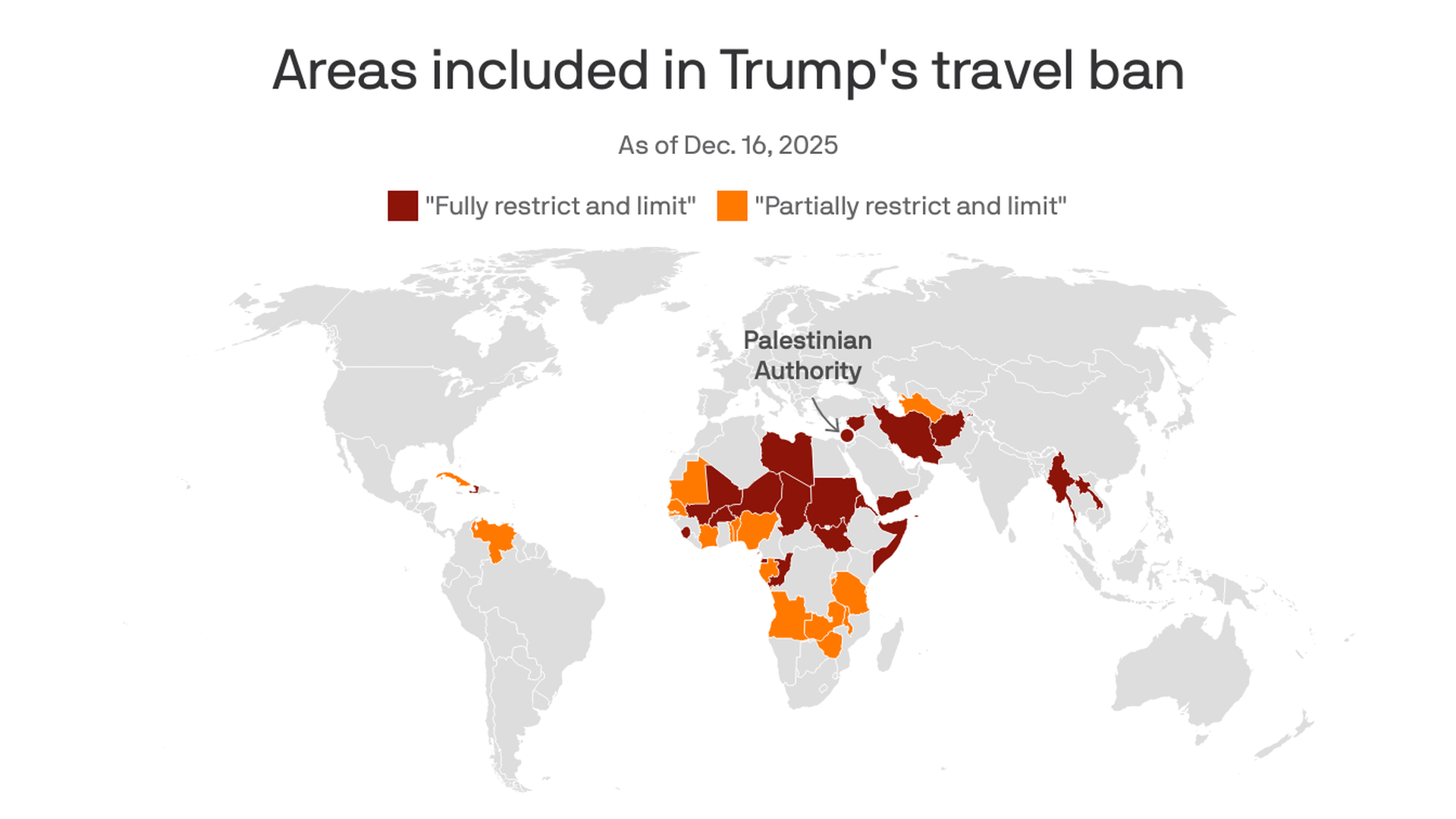
A visual representation of global regions impacted by the latest U.S. travel restrictions under the Trump administration.
The Trump travel ban expanded significantly in December 2025, increasing restrictions to cover nationals from 39 countries through full or partial visa and entry limitations. Announced on December 16, 2025, this policy builds on an earlier June proclamation and aims to address national security concerns related to vetting deficiencies in certain nations.
This expansion affects millions potentially seeking to visit, work, study, or immigrate to the United States. While the administration emphasizes protection from terrorism and public safety threats, critics argue it disproportionately impacts families, economies, and humanitarian efforts. This guide breaks down the changes, lists affected countries, and explains key implications.
Background: The Evolution of U.S. Travel Restrictions Under Trump
The Trump travel ban expanded roots trace back to the president’s first term, when initial executive orders in 2017 restricted entry from several Muslim-majority countries, sparking widespread debate and legal challenges.
The Supreme Court ultimately upheld a revised version in 2018. President Biden rescinded these restrictions upon taking office in 2021. However, following Trump’s return in 2025, the policy was reinstated and strengthened.
In June 2025, an initial proclamation imposed full bans on 12 countries and partial restrictions on 7 others, totaling 19 nations. This was justified by deficiencies in information-sharing, identity management, and high risks of terrorism or crime.
The December 16, 2025, proclamation dramatically scaled up these measures, doubling the scope to address ongoing concerns.
For historical context on U.S. immigration policies.
The December 2025 Expansion: Key Details
President Trump signed the new proclamation on December 16, 2025, effective partially immediately and fully by January 1, 2026 for certain provisions.
The Trump travel ban expanded from 19 to 39 countries, introducing full suspensions of immigrant and certain non-immigrant visas for some nations, while others face partial limits (e.g., restrictions on specific visa categories like tourist or diversity visas).
The administration cited persistent vetting deficiencies, including poor recordkeeping, corruption, unreliable documents, and terrorism risks. Additional factors included non-cooperation on deportations and public safety threats.
Notably, the policy also restricts entry for holders of Palestinian Authority-issued travel documents due to concerns over control in certain areas.
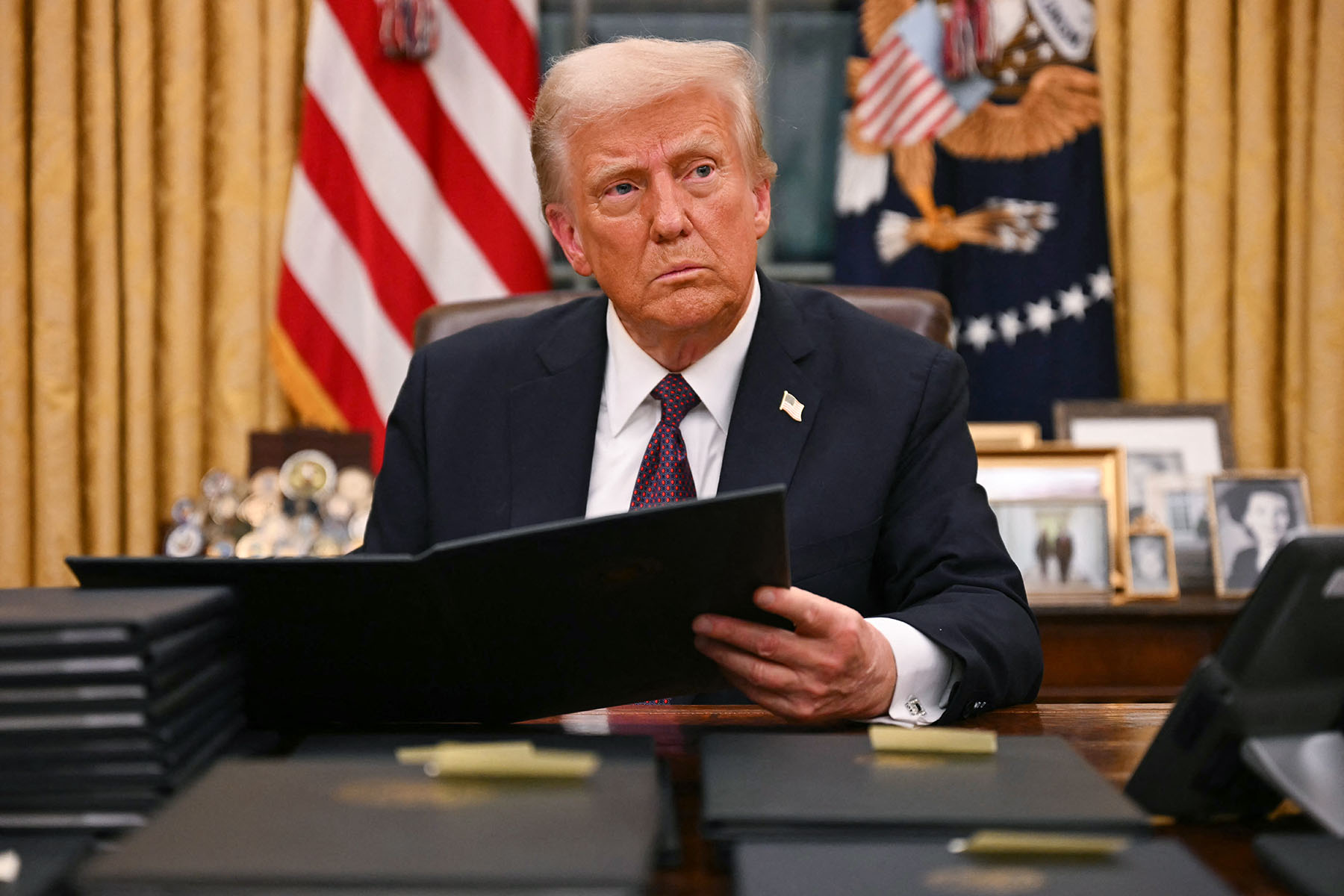
President Trump at the White House during a 2025 executive order signing ceremony.
List of Countries Affected by the Expanded Travel Ban
The expanded restrictions divide into full bans (complete suspension of most visa issuances) and partial bans (limited categories affected).
Countries under full restrictions (approximately 19, including originals and new additions):
- Afghanistan
- Burma (Myanmar)
- Chad
- Republic of the Congo
- Equatorial Guinea
- Eritrea
- Haiti
- Iran
- Libya
- Somalia
- Sudan
- Yemen
- Burkina Faso (new)
- Mali (new)
- Niger (new)
- South Sudan (new)
- Syria (new)
- Laos (shifted/new)
- Sierra Leone (shifted/new)
Countries under partial restrictions (remaining to total 39):
- Burundi
- Cuba
- Togo
- Venezuela
- Turkmenistan
- And additional nations such as Angola, Benin, Cote d’Ivoire, Gabon, and others added in the expansion.
The exact breakdown may vary; consult official sources for the complete, up-to-date list.
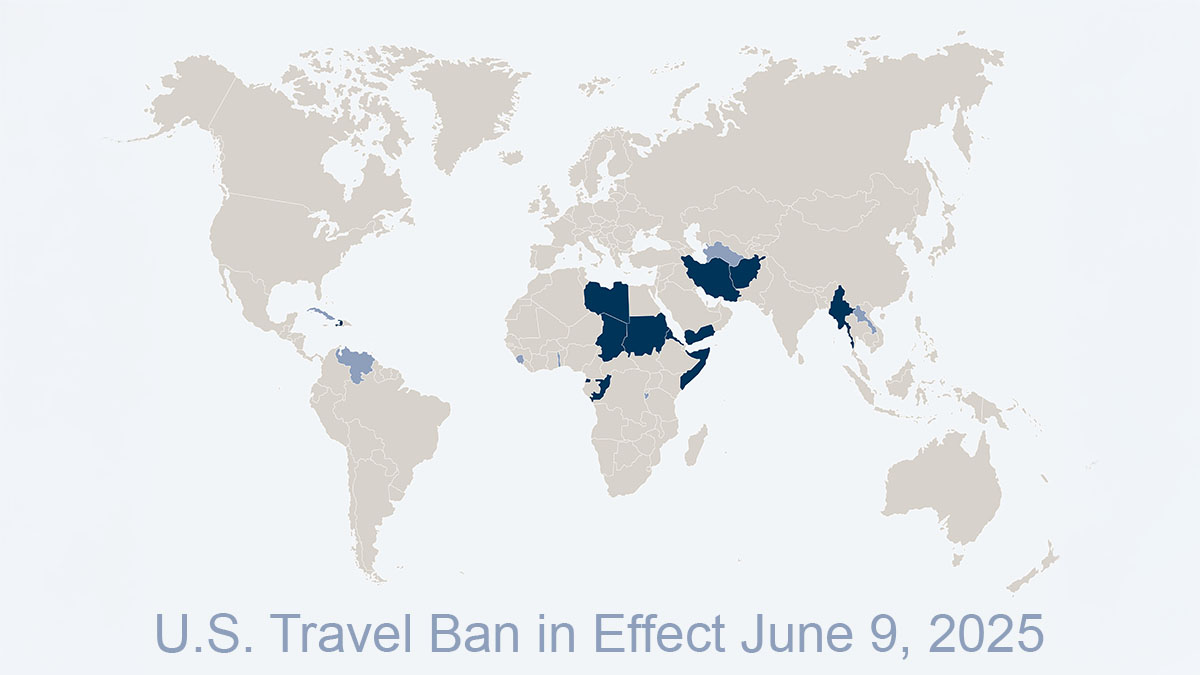
Geographic overview of nations facing U.S. entry limitations in 2025.
Impacts on Immigration, Travel, and Asylum Seekers
The Trump travel ban expanded significantly disrupts global mobility. Affected nationals face barriers to family reunification, business travel, education, and tourism.
Immigrant visas are heavily restricted, reducing legal permanent residency options. Non-immigrant visas like B-1/B-2 (tourist) and diversity lottery visas are suspended or limited in many cases.
Exceptions exist on a case-by-case basis, including for U.S. citizens’ immediate relatives, certain humanitarian cases, or national interest waivers.
For asylum seekers, the policy does not directly block claims at U.S. borders—individuals can still present themselves and request protection under international and U.S. law. However, visa restrictions make legal arrival nearly impossible, forcing riskier journeys.
Refugee resettlement programs face further cuts, compounding challenges for those fleeing persecution.
Economic effects include potential losses in tourism and labor shortages in sectors relying on international workers.
Learn more about asylum options in our asylum and refugee resources.
Criticisms, Legal Challenges, and Administration Defense
Critics, including human rights organizations and Democratic lawmakers, condemn the expansion as discriminatory, particularly toward African and Middle Eastern nations.
They argue it harms families, stifles economic contributions, and lacks evidence of enhanced security. Past versions faced accusations of religious bias.
The administration defends the measures as data-driven, focused on countries with verifiable deficiencies rather than religion or region.
Legal challenges are expected, though the Supreme Court’s 2018 ruling provides precedent for presidential authority under immigration law.
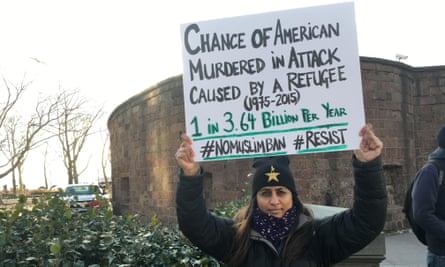
Public demonstrations highlighting opposition to U.S. travel ban policies.
For updates on immigration legal services.
Authoritative sources for more details:
- White House Proclamation (December 2025) – Official policy text.
- Washington Post: Countries Affected List – Detailed reporting.
- CNN: Expansion Coverage – Analysis of changes.
- Reuters: New Additions Announced – International perspective.
Related: Check our immigration news blog for ongoing updates.
What This Means for Travelers and Applicants
If you’re from an affected country:
- Check your visa eligibility via official U.S. embassy sites.
- Explore waiver options if applicable.
- Consider alternative destinations for travel or protection.
- Consult immigration experts early.
U.S. citizens with family abroad should review reunification pathways.
Policies evolve rapidly—monitor official channels.
For tools to navigate visa applications,
Frequently Asked Questions
Which countries are now included in the expanded Trump travel ban?
The ban covers 39 countries with full or partial restrictions, primarily in Africa, the Middle East, and parts of Asia/Caribbean. Key full-ban nations include Afghanistan, Iran, Syria, Burkina Faso, Mali, Niger, and others listed above.
Does the Trump travel ban expanded affect asylum claims?
No direct block—asylum can still be sought at U.S. borders. However, visa restrictions limit legal entry routes, complicating access for many.
Are there exceptions to the travel restrictions?
Yes, case-by-case waivers for national interest, humanitarian reasons, or certain family members of U.S. citizens.
When does the expanded ban take full effect?
Many provisions began immediately after the December 16, 2025, signing, with full implementation by January 1, 2026.
Why did the Trump administration expand the travel ban?
To address vetting deficiencies, terrorism risks, and non-cooperation on deportations in targeted countries.
Can the expanded travel ban be challenged legally?
Challenges are likely, though prior Supreme Court rulings support broad presidential authority on national security-based entry restrictions.