Taiwan’s Export Surge in 2026: Who Is Buying Its Chips, Machines, and Tech?
Taiwan export surge 2026 has captured global attention, with January shipments skyrocketing 69.9% year-on-year to a record US$65.77 billion, marking the strongest monthly performance in over 15 years. This explosive growth stems primarily from insatiable worldwide demand for advanced semiconductors, AI servers, and related high-tech machinery, solidifying Taiwan’s central role in the global technology supply chain.
Fueled by the ongoing AI boom, key products like integrated circuits and information/communication equipment have seen dramatic increases, while major buyers including the United States, China, Europe, and ASEAN nations drive the momentum. The recent U.S.-Taiwan trade agreement further accelerates shipments by lowering barriers and encouraging strategic investments.
Record-Breaking Start to 2026 Exports
Taiwan kicked off 2026 with unprecedented export performance. According to the Ministry of Finance, January exports reached US$65.77 billion, up 69.9% from the previous year. This surge outpaced expectations and highlighted the island’s dominance in high-value tech goods.
The growth builds on 2025’s record US$640.75 billion in total exports, a 34.9% increase driven largely by electronics and semiconductors. Early 2026 data shows the trend accelerating, with AI-related demand as the primary catalyst.
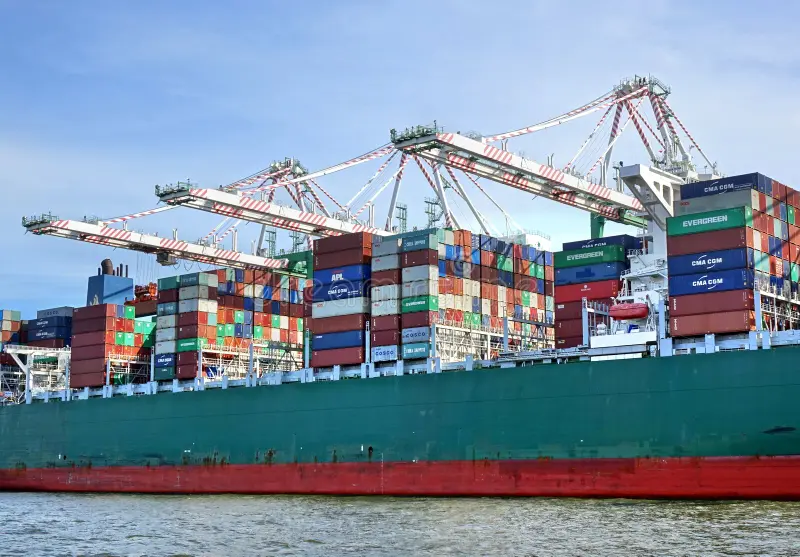
Taiwan’s ports handle record volumes of high-tech exports in early 2026, fueled by global AI demand.
Key categories leading the charge include information, communication, and audiovisual products (up 129.8%) and integrated circuits (up 61.3% to US$21.04 billion). These figures reflect mass adoption of next-generation AI platforms and the ramp-up of 2nm chip production.
Top Destinations: Shifting Dynamics in 2026
The United States emerged as Taiwan’s largest export market in January 2026, capturing 32.4% of total shipments. Exports to the U.S. jumped 151.8% to US$21.28 billion, boosted by the recent reciprocal trade deal capping tariffs at 15% on Taiwanese goods.
China (including Hong Kong) followed at 24.4%, with shipments rising 49.6% to US$16.03 billion. Despite geopolitical tensions, demand for components in electronics assembly remains strong.
ASEAN countries accounted for 20.4% of exports, growing 61.8%. Europe saw explosive 106% growth, while Japan and South Korea also posted solid gains of 37.2% and 96%, respectively.
Why the U.S. Leads the Surge
American cloud giants and AI leaders drive massive orders. Nvidia, Amazon, Microsoft, and others require advanced chips and servers for data centers. The trade agreement incentivizes Taiwanese firms to invest in U.S. facilities while securing favorable access.
Real-world impact shows in TSMC’s supply to U.S. clients. As the world’s leading foundry, TSMC benefits directly from this pull, with AI accelerators forming a growing share of output.
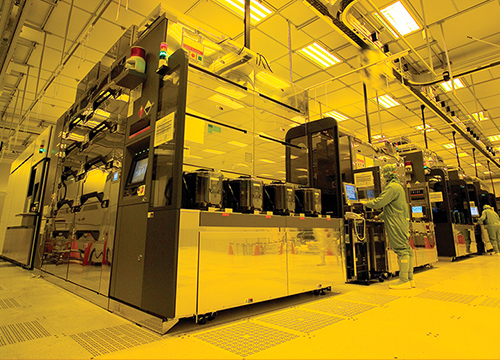
TSMC’s cutting-edge fabs produce chips fueling Taiwan’s export surge to global AI leaders in 2026.
Semiconductors and AI Chips: The Core Drivers
Semiconductors remain Taiwan’s flagship export, comprising a substantial portion of total shipments. TSMC alone supplies over 90% of the world’s most advanced chips, essential for AI training and inference.
Major buyers include U.S. firms like Nvidia (for GPUs), Apple (custom silicon), Broadcom, AMD, and Qualcomm. These companies rely on Taiwan for high-performance computing components critical to data centers and edge devices.
Step-by-step demand flow: Cloud providers expand AI infrastructure → order advanced servers → Taiwanese assemblers (Foxconn, Quanta) source chips → exports spike. This chain explains the 129.8% rise in server-related products.
Machinery and Related Tech Exports
Beyond chips, machinery and electrical equipment surged 86.2%. Precision instruments, machine tools, and manufacturing equipment support global factories upgrading for AI and automation.
Buyers in ASEAN and Europe import these for smart manufacturing. Japan sources specialized machinery for its robotics and automotive sectors, while South Korea integrates them into display and memory production.
Regional Breakdown and Emerging Markets
ASEAN’s rapid growth reflects supply chain diversification. Countries like Vietnam, Malaysia, and Singapore host assembly operations needing Taiwanese components and machinery.
Europe’s doubling of imports ties to data center expansions by hyperscalers and sovereign AI initiatives. Germany, Netherlands, and Ireland serve as entry points for EU markets.
China maintains volume through final assembly of consumer electronics, though percentage share declined as U.S. demand accelerated.
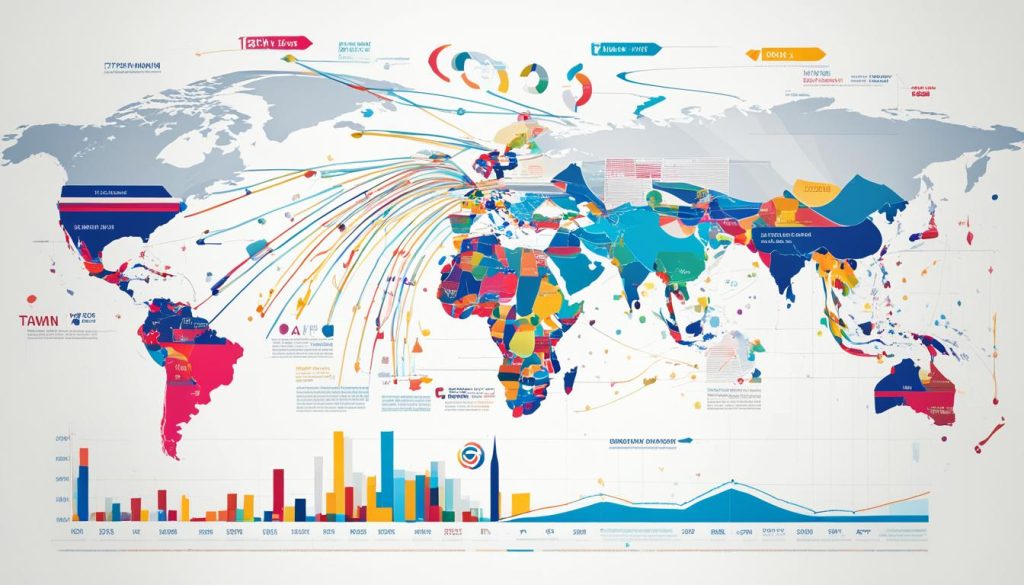
Map showing key buyers absorbing Taiwan’s tech exports during the 2026 surge.
Supporting Factors and Trade Agreements
The U.S.-Taiwan reciprocal trade pact removes uncertainties, encouraging front-loading of orders. Taiwan’s commitments to U.S. investments (over $250 billion pledged) ensure long-term access.
Global AI capex from cloud providers sustains momentum. Analysts expect continued strength as 2nm and future nodes enter mass production.
For detailed statistics, consult Taiwan’s Ministry of Finance or Directorate General of Budget, Accounting and Statistics. Coverage from Reuters provides ongoing analysis.
Outlook and Sustainability
Projections indicate exports growing 22.22% in 2026 overall, supporting revised GDP forecasts above 7%. Diversification reduces risks from single-market reliance.
Challenges include geopolitical factors and potential AI demand moderation, but structural advantages in advanced manufacturing position Taiwan favorably.
The surge demonstrates how specialized tech ecosystems can drive national economic performance in a connected world.
Frequently Asked Questions
What caused Taiwan’s export surge in early 2026?
Strong global demand for AI chips, servers, and semiconductors, amplified by U.S. trade deal benefits and cloud provider investments.
Who is Taiwan’s largest export buyer in 2026?
The United States took the top spot in January with 32.4% share and 151.8% growth, driven by AI infrastructure needs.
Which products lead Taiwan’s exports?
Integrated circuits, information/communication equipment, and machinery dominate, with semiconductors and AI-related items showing the fastest growth.
How has China’s role changed?
China remains significant at 24.4% but slipped to second place as U.S. demand surged, though shipments still rose 49.6%.
What role does Europe play?
Europe saw 106% growth, importing chips and tech for data centers and industrial applications.
Will the export surge continue?
Yes, with forecasts of 22.22% overall growth in 2026, supported by sustained AI adoption worldwide.