Overview of the Schengen Area in 2026
The Schengen Area includes 29 European countries with no internal border checks, enabling free movement for short-term visitors. Key destinations for Qatar-based travellers include Paris, Berlin, Rome, and Madrid, ideal for tourism, business, or family visits.
Qatar maintains a visa waiver agreement with the EU, allowing stays of up to 90 days within 180 days without a traditional visa. However, new digital systems—EES already active and ETIAS forthcoming—require compliance to prevent entry denials or fines.
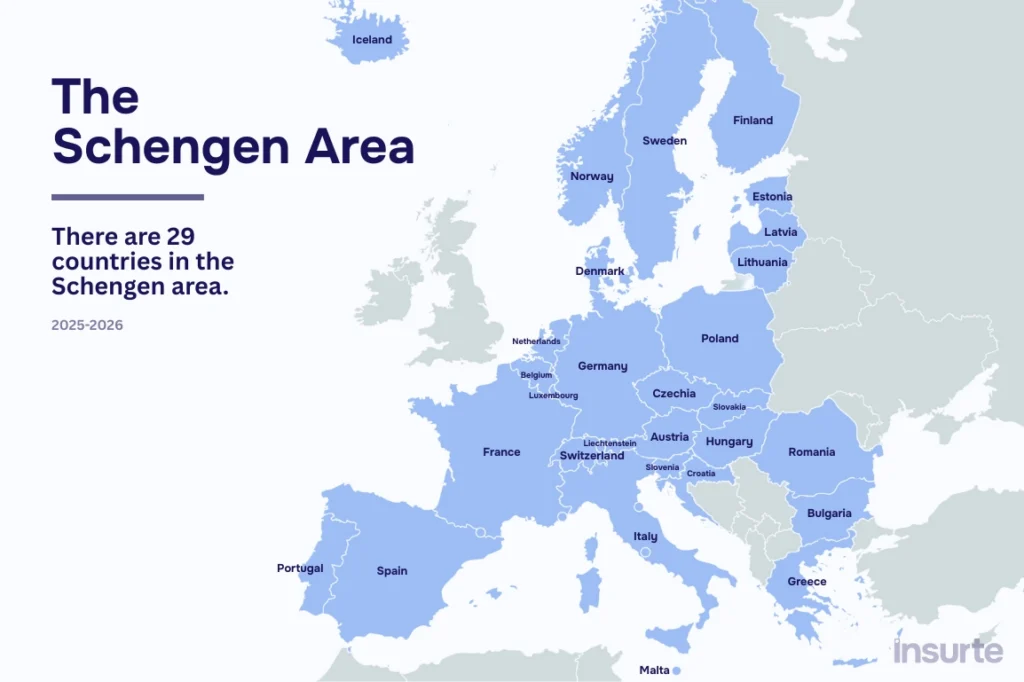
Visual representation of the Schengen Area borders and member states relevant to 2026 travel rules.
For those considering extended stays, such as pursuing higher education in Europe, separate requirements apply beyond short-term entry. Explore detailed pathways like study in Germany requirements for accurate planning.
What is the Entry/Exit System (EES)?
The Entry/Exit System (EES) is an automated EU border database that digitally records entries and exits of non-EU nationals, replacing traditional passport stamps. It began progressive rollout on October 12, 2025, with full mandatory implementation by April 10, 2026, though some flexibility exists for peak seasons.
EES captures biometrics (fingerprints and facial images), travel document details, and timestamps to track compliance with the 90/180-day rule and detect overstays. It applies to all non-EU travellers, including Qatari citizens, at external Schengen borders like airports and seaports.
How EES Works for Qatar-Based Travellers
At Schengen entry points, the process is quick but requires your first biometric enrollment:
- Present your passport at a border kiosk or to an officer.
- Provide four fingerprints from one hand and a facial photo (children under 12 only need facial images).
- The system verifies data, checks against records, and logs your entry/exit digitally—no stamp needed.
- Subsequent visits reuse stored biometrics for up to three years, speeding up future crossings.
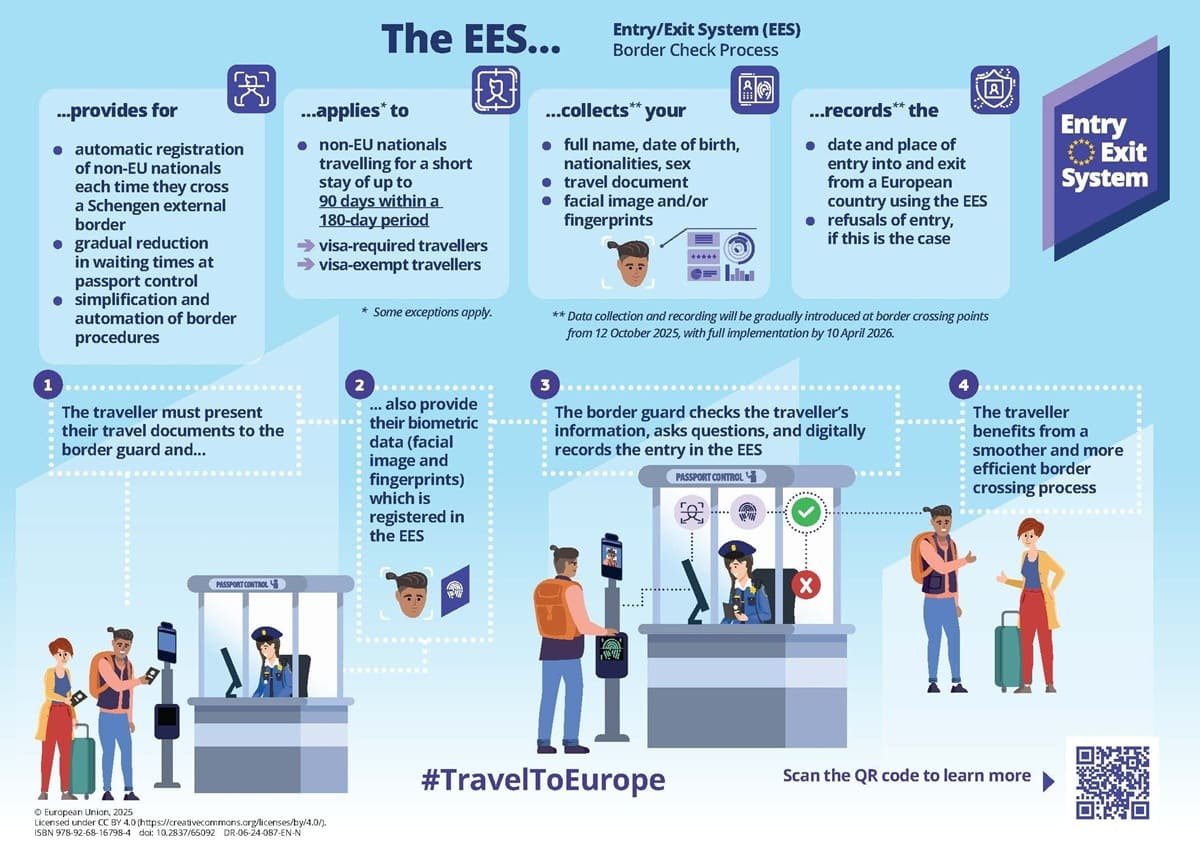
Step-by-step depiction of EES data collection at Schengen external borders.
For example, a Qatari business traveller arriving in Amsterdam in mid-2026 scans biometrics once, then enjoys faster processing on return trips within the validity period.
What is ETIAS and When Does It Start?
ETIAS, or European Travel Information and Authorisation System, is a pre-travel electronic authorisation for visa-exempt nationals entering the Schengen Area. It screens applicants against EU security, migration, and health databases to identify potential risks.
As of March 2026, ETIAS is scheduled to begin operations in the last quarter of 2026 (Q4), several months after full EES deployment. Qatar is included as a visa-exempt country, making ETIAS mandatory for short stays once launched—no action is needed yet, but monitor official updates.
Step-by-Step Guide to ETIAS Application for Qatari Residents
When ETIAS launches, apply online well in advance. Follow these steps:
- Gather Requirements: Hold a valid biometric passport (valid 3+ months beyond departure), email address, and credit/debit card.
- Visit the Official Site: Use the EU’s official ETIAS portal (avoid third-party sites charging extra fees).
- Complete the Form: Enter personal details, passport info, and answer security questions on criminal records, travel history, and health issues.
- Pay the Fee: €7–€20 (exact amount confirmed closer to launch; free for under 18 and over 70).
- Submit and Monitor: Most approvals arrive in minutes; complex cases may take up to 96 hours or 4 weeks for manual review.
- Receive Approval: Valid for 3 years or passport expiry—link it digitally to your passport for airline and border checks.
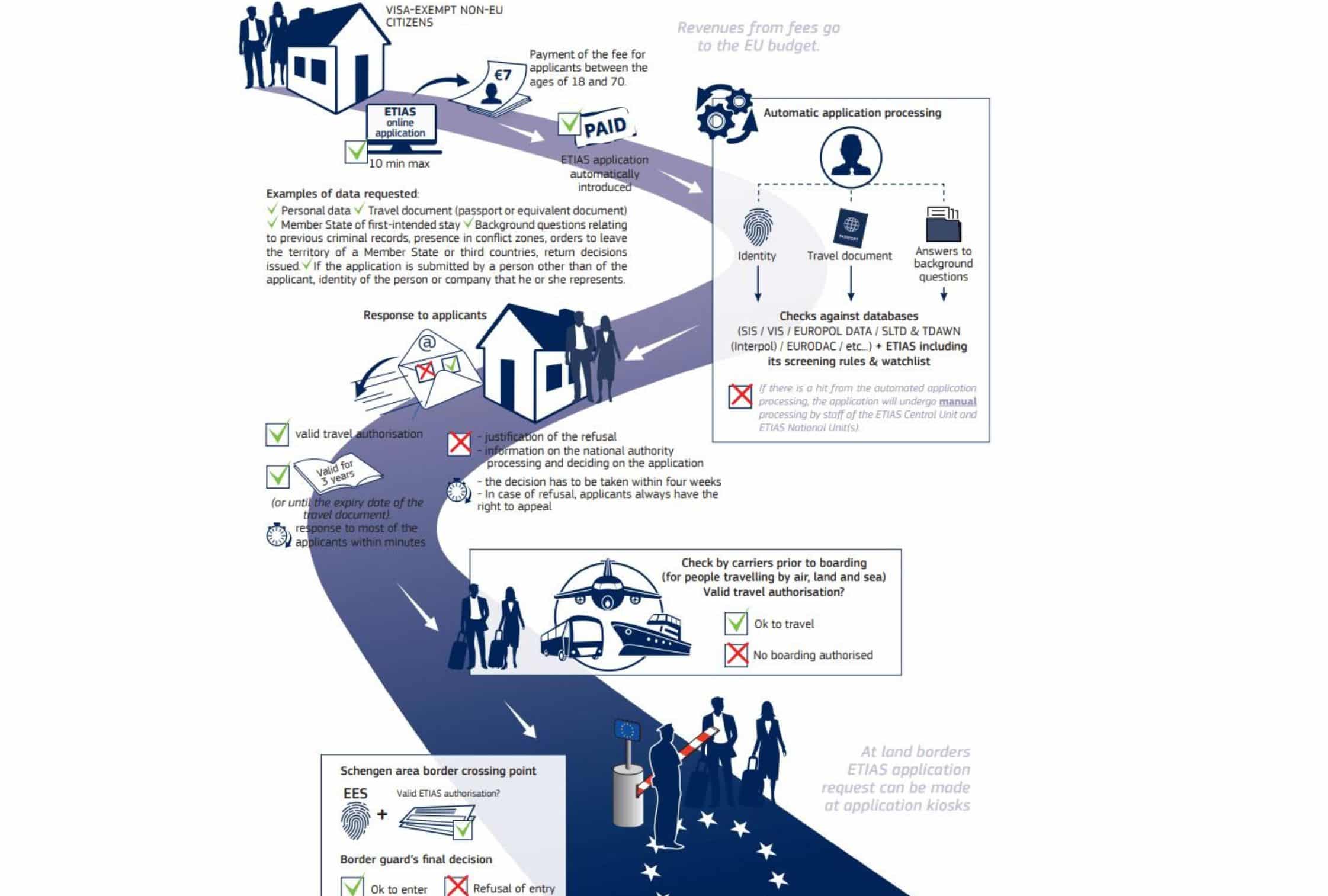
Illustrated guide to the straightforward ETIAS submission process.
A Doha resident planning a winter 2026 holiday to Barcelona applies early via the official app, receives instant approval, and boards their flight hassle-free from Hamad International Airport.
Key Differences Between EES and ETIAS
EES focuses on border registration and biometrics upon arrival/departure, while ETIAS is a pre-approval check before travel. Both enhance security but serve distinct purposes—ETIAS prevents risky entries, EES tracks actual movements.
Together, they modernize Schengen borders, reducing manual processes and improving overstay detection for travellers from Qatar and beyond.
Practical Tips for Qatar-Based Travellers in 2026
Apply for ETIAS as soon as applications open (likely mid-to-late 2026). Ensure your passport meets validity rules and carry proof of onward travel, accommodation, and funds—border officers may request these despite digital systems.
For families, each person (including minors) needs their own ETIAS. Biometric exemptions apply for very young children or those unable to provide prints. Monitor official sources for any transitional periods during rollout.
Stay updated via the official EU ETIAS website and the EES information page. If planning around events, follow relevant news like Liverpool transfer news for sports trips.
In rare cases involving protection needs, review foundational information on the asylum process basics.
Frequently Asked Questions
Do Qatari citizens need ETIAS for Schengen travel in 2026?
Yes, once operational in late 2026, Qatari passport holders (visa-exempt) must obtain ETIAS for short stays up to 90 days.
What is the current status of EES as of March 2026?
EES began progressive rollout in October 2025 and reaches full implementation by April 10, 2026, with possible flexibilities during busy periods.
How much will ETIAS cost for applicants from Qatar?
The fee is expected to be around €7–€20 for ages 18–70; exemptions apply for children and seniors (final amount confirmed near launch).
Will EES affect repeat visits from Qatar?
After initial biometric enrollment, subsequent entries use stored data for faster processing, valid for up to three years.
What if my ETIAS application is denied?
You’ll receive reasons and can appeal within weeks, providing additional evidence—most straightforward applications succeed quickly.
Are there any exemptions from EES biometrics?
Children under 12 provide only facial images; medical or physical inability exemptions may apply on a case-by-case basis.