One of the biggest decisions new traders face is understanding the true difference in a demo account vs live account environment. Practicing with virtual money feels safe and educational, yet many people switch too early and watch their first real deposits disappear.
This guide reveals the practical signs that show you are ready, the hidden psychological gaps between the two account types, and a clear checklist so you move from practice to real money with confidence instead of regret.
Why the Demo Account Exists
A demo account lets you trade with virtual funds in real market conditions. You see live prices, spreads, and chart movements without risking a single dollar of your own money.
Brokers provide these accounts so beginners can learn platform tools, test strategies, and experience order execution. Did you know that most successful traders spent weeks or months on demo before depositing real capital?

A demo account is the safest place to build skills before risking real money.
Key Differences: Demo Account vs Live Account
On the surface the two look identical. The charts, buttons, and price feeds are the same. Underneath, several important differences appear once real money is involved.
- Emotional pressure – Virtual losses feel abstract; real losses create stress and fear
- Execution quality – Some brokers fill demo orders more smoothly than live orders during fast markets
- Slippage and spreads – Live accounts can experience wider spreads and slippage that demo accounts rarely show
- Withdrawal reality – Only live profits can be withdrawn; demo profits stay virtual forever
The shocking truth is that many traders who perform well on demo struggle the moment real money is at risk. This gap is psychological more than technical.
The Hidden Psychology Gap
When the money is fake, it is easy to follow rules. You place the stop loss, stick to position size, and accept losses calmly. The moment real capital is on the line, emotions change.
Fear of loss can cause early exits. Greed can cause position sizes to grow. Revenge trading appears after a losing streak. These reactions are almost invisible on a demo account.
Understanding this emotional shift is one of the most important lessons in the entire demo account vs live account comparison.
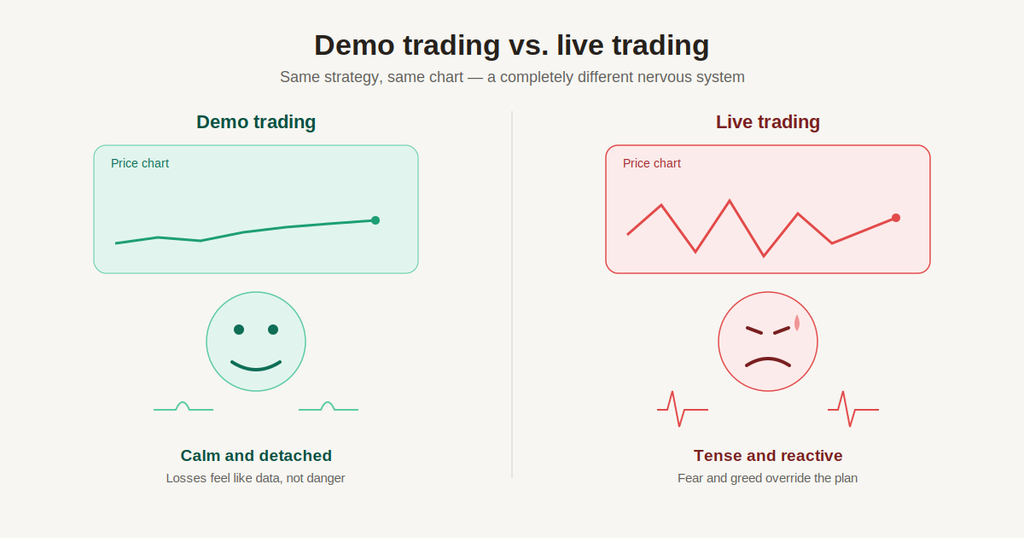
Emotions become the biggest difference once real money is involved.
Clear Signs You Are Ready to Go Live
Use this practical checklist before you fund a live account:
- You have followed a written trading plan on demo for at least 20–30 trading days
- Your risk per trade stays at or below 1% of the account without exception
- You accept losing trades without revenge trading or increasing size
- Your overall results are consistent (not perfect, but stable) across different market conditions
- You can explain exactly why you entered and exited every trade
- You feel mild excitement rather than intense anxiety when thinking about live trading
If most of these points are true, you are far closer to readiness than the average beginner who switches after a few lucky demo weeks.
Common Mistakes When Switching Too Early
Many new traders make the same errors:
- Switching after a short winning streak on demo
- Increasing position size immediately on the live account
- Ignoring the 1% risk rule because “it’s only a small account”
- Trading during news events they avoided on demo
- Expecting the same smooth fills they saw in the practice environment
The untold truth is that the first live month is often a psychological stress test more than a pure strategy test. Preparing for that stress is half the battle.
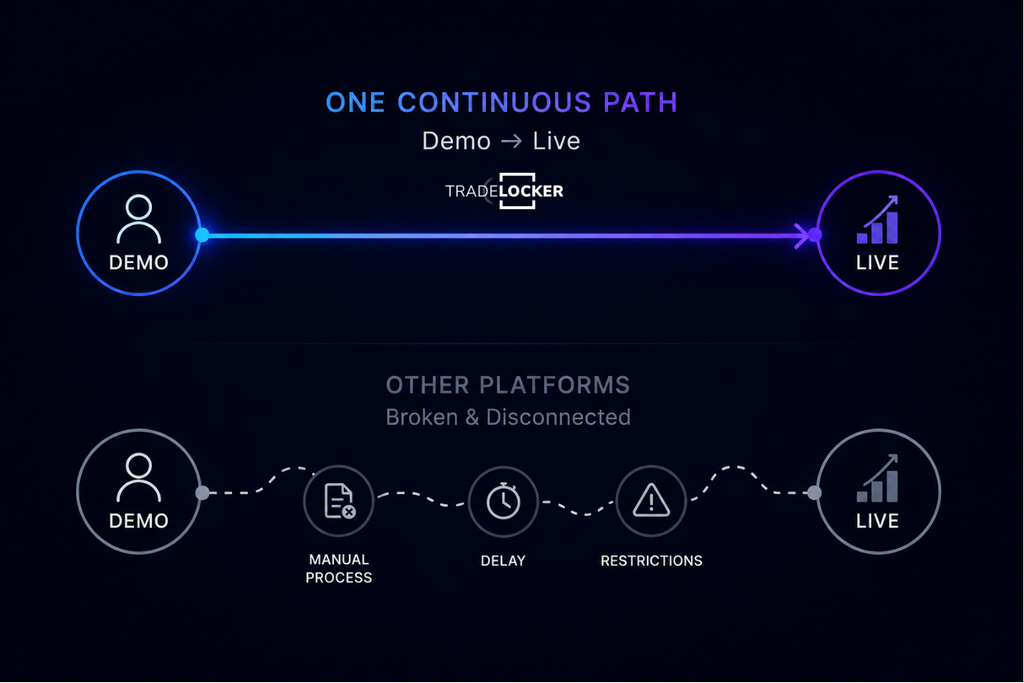
A structured transition from demo to live reduces costly early mistakes.
How Long Should You Stay on Demo?
There is no universal number of days. Some disciplined traders feel ready after four to six weeks of consistent practice. Others need three months or longer.
Focus on quality rather than calendar time. A trader who follows rules strictly for 30 sessions is usually better prepared than someone who trades randomly for 90 days.
Track your demo results in a simple journal. Note every trade, the reason for entry, the risk taken, and the emotional state. Patterns will reveal whether you are truly ready.
A Smart Transition Plan
When you decide to go live, follow these steps:
- Start with the smallest position size your broker allows
- Keep the exact same risk percentage you used on demo
- Trade only the pairs and sessions you practiced
- Withdraw a small portion of early profits to experience the real process
- Review performance after every 10–15 live trades and adjust only if necessary
This measured approach protects capital while you adapt to the emotional reality of live trading.]
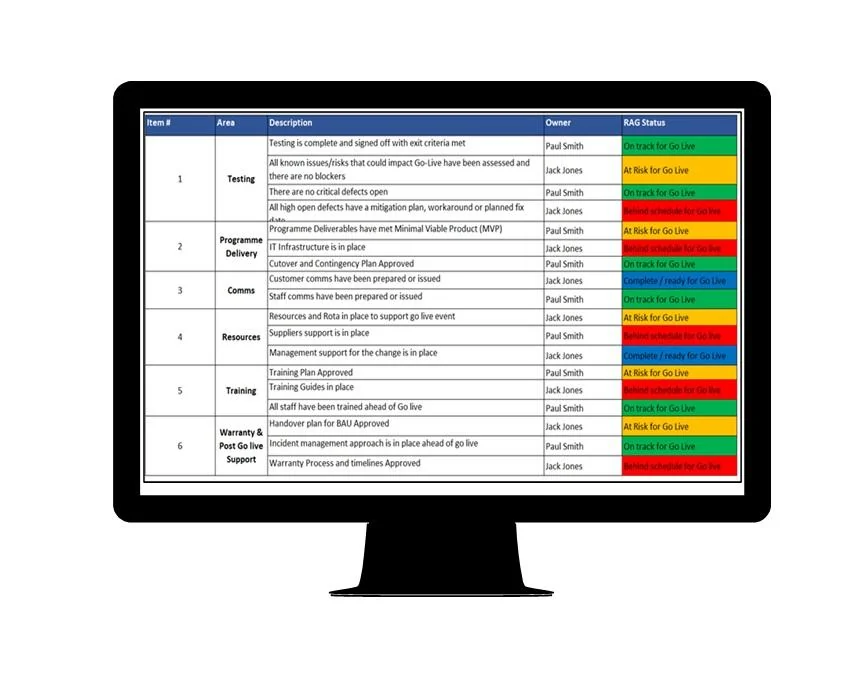
A written checklist keeps the transition disciplined and low-risk.
What Changes on the Live Account
Even when your strategy stays the same, a few practical differences appear:
- Spreads may widen during low-liquidity hours or major news
- Order fills can experience slight slippage in fast markets
- Overnight financing (swap) costs become real expenses
- The ability to withdraw profits creates both motivation and temptation
None of these issues should stop you from going live. They simply require awareness and slight adjustments to expectations.
Final Thoughts and Next Steps
The choice between a demo account vs live account is not about which one is better. It is about timing. Demo is for skill and discipline. Live is for applying those skills under real pressure.
Stay on demo until your rules feel automatic and your emotions stay stable. Then move to a live account with the smallest possible risk and the same disciplined process. Protecting capital while you adapt is the mark of a serious trader.
Ready to test your readiness? Open your demo journal, review the last 20 trades against the checklist above, and decide honestly whether you meet most of the signs. When the answer is yes, fund a small live account and begin the next stage of your journey with clear eyes.
Frequently Asked Questions
How long should I practice on a demo account?
Most traders benefit from at least several weeks of consistent, rule-based trading. Focus on following your plan rather than hitting a specific number of days.
Can I make real money on a demo account?
No. Demo profits are virtual and cannot be withdrawn. The purpose of demo is education and practice only.
Why do I lose money on live when I was profitable on demo?
The main reason is usually emotional. Real money triggers fear, greed, and rule-breaking that do not appear when the funds are virtual.
Should I start live with the same lot size I used on demo?
Yes, or even smaller. Matching or reducing size helps you adapt to the psychological difference without unnecessary risk.
Is it okay to go back to demo after starting live?
Absolutely. Many experienced traders return to demo to test new strategies or rebuild confidence after a difficult period.
What is the biggest sign I am not ready?
If you cannot follow your risk rules or feel intense anxiety at the thought of a live trade, stay on demo longer and keep practicing.
For further reading on trading psychology and risk management, explore educational resources from BabyPips and detailed guides on Investopedia.