New traders constantly search for forex trading strategies that actually work, especially in a fast-changing market like 2026. Countless methods promise quick riches, yet most fail once real money and real emotions enter the picture.
This guide focuses only on five practical, time-tested approaches that continue to deliver results when combined with strict risk management. You will see how each strategy works, when to use it, and the hidden pitfalls that still catch many traders by surprise.
Why Most Strategies Fail and These Survive
The forex market rewards consistency more than complexity. Did you know that the majority of retail traders lose money not because their strategy is wrong, but because they abandon it after a few losses or change the rules mid-trade?
The five strategies below share three common traits: clear rules, measurable risk, and adaptability across different market conditions. They are not secret systems. They are simply the ones that continue to work when applied with discipline.

Simple, rule-based strategies outperform complicated systems over time.
1. Trend-Following Strategy
Trend following remains one of the most reliable forex trading strategies that actually work. The idea is straightforward: identify the dominant direction of the market and trade in that direction.
Traders commonly use moving averages (such as the 50-period and 200-period) or higher-timeframe structure to define the trend. Entries occur on pullbacks, and stop losses sit beyond recent swing points.
This approach thrives in strong directional markets and struggles in sideways conditions. The key is patience and the willingness to sit out when no clear trend exists.
Practical Rules
- Trade only in the direction of the higher-timeframe trend
- Enter on pullbacks to key moving averages or support/resistance
- Risk no more than 1% of the account per trade
- Trail the stop once the trade moves in your favor

Trend following works best when traders respect the higher-timeframe direction.
2. Breakout Strategy
Breakout trading captures the moment price moves beyond a clear range or chart pattern. In 2026, volatility around major economic events still creates frequent breakout opportunities.
The strategy requires identification of well-defined support and resistance levels. A candle close beyond the level, preferably with rising volume or momentum, triggers the entry. Stop losses are placed just inside the broken level.
The shocking truth is that many false breakouts occur. Successful traders wait for confirmation and avoid chasing every spike.
When It Works Best
- During high-impact news releases
- After prolonged consolidation periods
- On major currency pairs with strong liquidity
3. Range Trading Strategy
When markets lack a clear trend, range trading becomes one of the forex trading strategies that actually work. Price oscillates between support and resistance, allowing traders to buy near the bottom of the range and sell near the top.
Oscillators such as the RSI or Stochastic help confirm overbought and oversold conditions inside the range. The strategy fails the moment a strong breakout occurs, so risk control is essential.
Did you know that many professional traders switch to range methods during quiet summer or holiday periods when directional moves slow down?

Range trading profits from sideways markets that frustrate trend followers.
4. Moving Average Crossover Strategy
This classic method uses two moving averages of different lengths. A common combination is the 20-period and 50-period simple or exponential moving averages.
A bullish signal appears when the faster average crosses above the slower one. A bearish signal appears on the opposite cross. Many traders add a higher-timeframe filter to avoid choppy conditions.
The strategy is easy to automate and remains popular because the rules leave little room for emotional interference. Its main weakness appears in ranging markets where frequent crossovers create losses.
Risk Management Tips
- Place stops beyond the recent swing high or low
- Avoid trading during major news if the averages are flat
- Consider the overall trend before taking every crossover signal
5. Price Action Strategy
Price action focuses on candlestick patterns, support and resistance, and market structure without heavy reliance on indicators. Pin bars, engulfing candles, and inside bars at key levels form the core signals.
This approach is highly flexible and works across all timeframes. The untold truth is that pure price action requires more screen time and practice than indicator-based methods, yet it often produces cleaner entries when mastered.
Successful price-action traders combine pattern recognition with a clear understanding of the broader market context.

Price action strategies rely on reading the market’s own language.
How to Choose and Combine Strategies
No single method works in every market condition. Many experienced traders keep two or three of these forex trading strategies that actually work in their toolkit and switch according to volatility and trend strength.
A practical approach is to define market regimes:
- Strong trend → Trend following or moving average crossover
- Clear range → Range trading
- High volatility after news → Breakout
- Key levels with clean candles → Price action
Always test any strategy on a demo account with the same risk rules you plan to use live.
The Real Secret Behind Strategies That Last
The strategy itself is only part of the equation. The hidden factor that separates lasting traders from those who quit is risk management and emotional control.
Even the best forex trading strategies that actually work will produce losing streaks. Position sizing, maximum daily loss limits, and the discipline to stop trading after a set number of losses protect capital during those periods.
Traders who treat their strategy as a business process rather than a gambling system survive long enough for the edge to appear.
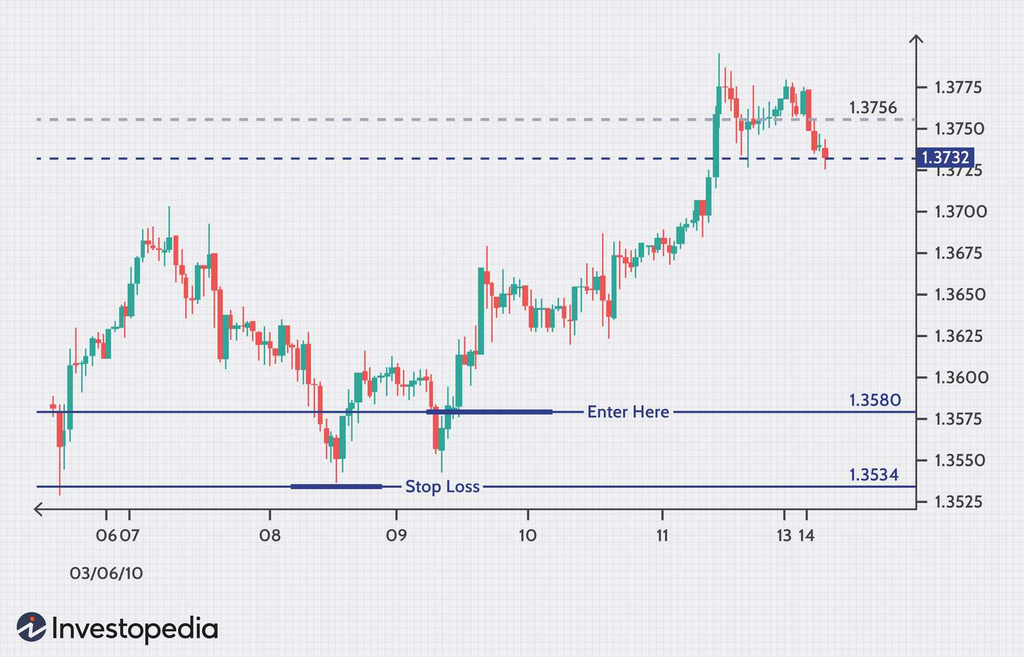
Strict risk rules turn a good strategy into a sustainable trading approach.
Final Thoughts and Next Steps
The five approaches outlined here remain among the most reliable forex trading strategies that actually work in 2026. None of them guarantee profits, but all of them provide a clear framework that can be tested, measured, and improved.
Pick one strategy that matches your personality and available screen time. Master it on a demo account, apply strict 1% risk, and only then move to a live account with small size. Consistency beats complexity every time.
Ready to put these strategies into practice? Choose one method from this list, write the exact entry and exit rules, and begin testing on a demo account this week. Track every trade and review your results after 20–30 positions.
Frequently Asked Questions
Which forex strategy is best for beginners in 2026?
Trend following and simple moving average crossovers are often the easiest starting points because the rules are clear and easy to follow.
Do these strategies still work with high-frequency algorithms in the market?
Yes. While algorithms dominate short-term noise, the larger directional moves and range boundaries that these strategies target remain driven by broader market forces.
How long should I test a strategy on demo?
Test until you have at least 20–30 trades under different market conditions while strictly following your risk rules. Consistency matters more than a short winning streak.
Can I combine two strategies at the same time?
Yes, many traders use one primary strategy and a secondary method for different market conditions. Keep the rules for each clearly separated.
What is the biggest reason strategies fail?
Most failures come from poor risk management, emotional rule-breaking, or abandoning the strategy after a normal losing period.
Should I change my strategy every year?
Not necessarily. Core principles such as trend following and price action remain effective. Adjust parameters or filters only when market behavior clearly changes.
For deeper study of technical methods and risk principles, review educational material from BabyPips and strategy explanations on Investopedia.