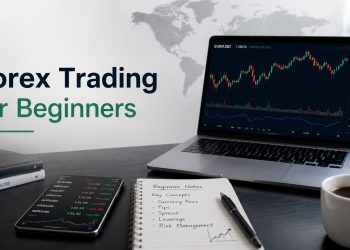


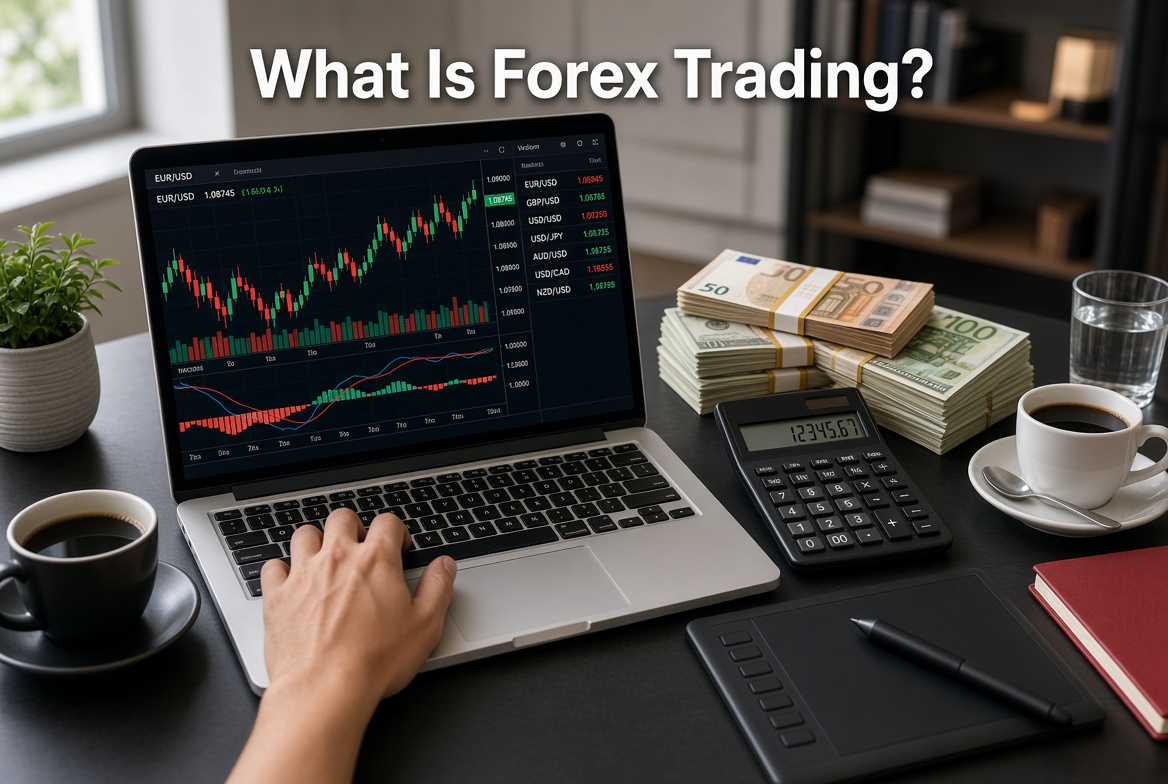
Forex trading is the buying and selling of currencies from different countries with the goal of making a profit from changes in their relative values. In simple terms, it is the global marketplace where the U.S. dollar, euro, British pound, Japanese yen, and dozens of other currencies are exchanged every day.
This market never sleeps during the week and handles more money than any other financial market on the planet. Whether you have exchanged money at an airport kiosk or wondered how international businesses manage currency risk, you have already brushed against the world of forex trading. This guide breaks everything down in plain English so you can understand how it works, what the risks really are, and why millions of people participate.
The Hidden Scale of the World’s Biggest Market
Did you know the foreign exchange market processes more than $7.5 trillion every single day? That figure dwarfs the daily volume of the New York Stock Exchange and every other stock market combined. The truth is that forex trading is the largest and most liquid financial market in existence.
Unlike stock markets that open and close at set hours, the forex market runs 24 hours a day, five days a week. Trading moves around the globe as the business day begins in Sydney and Tokyo, continues through London, and ends in New York. When one financial center closes, another is already open.
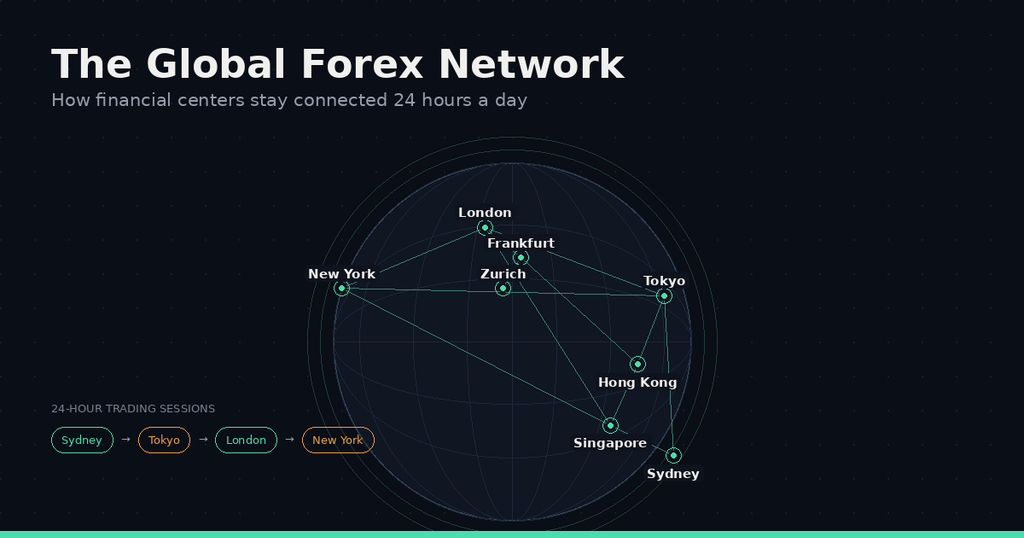
The forex market never sleeps on weekdays as trading shifts across continents.
How Forex Trading Actually Works
Currencies are always traded in pairs. You never buy or sell a single currency by itself. When you trade the EUR/USD pair, you are simultaneously buying euros and selling U.S. dollars (or the opposite). The first currency listed is called the base currency. The second is the quote currency.
If the EUR/USD rate is 1.0850, that means one euro costs 1.0850 U.S. dollars. If you believe the euro will strengthen against the dollar, you buy the pair (go long). If you believe the euro will weaken, you sell the pair (go short).
Major Currency Pairs You Will See Most Often
- EUR/USD – Euro versus U.S. dollar
- USD/JPY – U.S. dollar versus Japanese yen
- GBP/USD – British pound versus U.S. dollar
- USD/CHF – U.S. dollar versus Swiss franc
- AUD/USD – Australian dollar versus U.S. dollar
- USD/CAD – U.S. dollar versus Canadian dollar
These “major” pairs involve the most heavily traded currencies and usually offer the tightest spreads (the small difference between the buy and sell price).
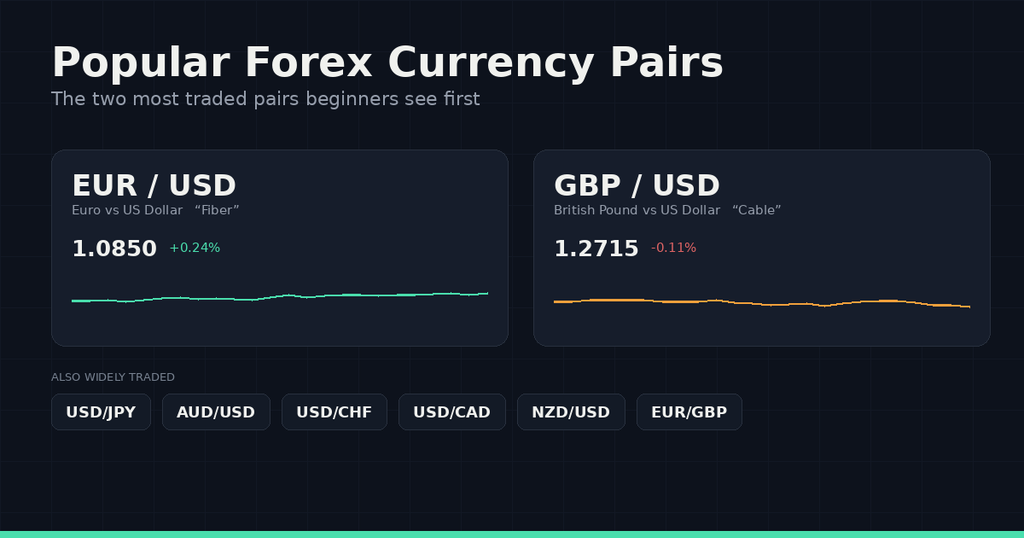
Major currency pairs dominate daily trading volume in the forex market.
Key Terms Every Beginner Must Understand
The language of forex trading can feel confusing at first, but only a handful of concepts matter when you start.
- Pip – The smallest standard price movement, usually the fourth decimal place (0.0001). A move from 1.0850 to 1.0851 is one pip.
- Lot size – The volume of a trade. A standard lot is 100,000 units of the base currency. Mini lots are 10,000 and micro lots are 1,000. Most beginners start with micro lots.
- Spread – The difference between the bid (sell) price and the ask (buy) price. Brokers earn money mainly from the spread.
- Leverage – Borrowed capital that lets you control a larger position with a smaller deposit. A 50:1 leverage ratio means $1,000 can control a $50,000 position. Leverage multiplies both gains and losses.
- Margin – The actual money you must deposit to open a leveraged trade.
Did you know that even a small 20-pip move on a standard lot can equal hundreds of dollars of profit or loss once leverage is applied? That is why risk management is non-negotiable.
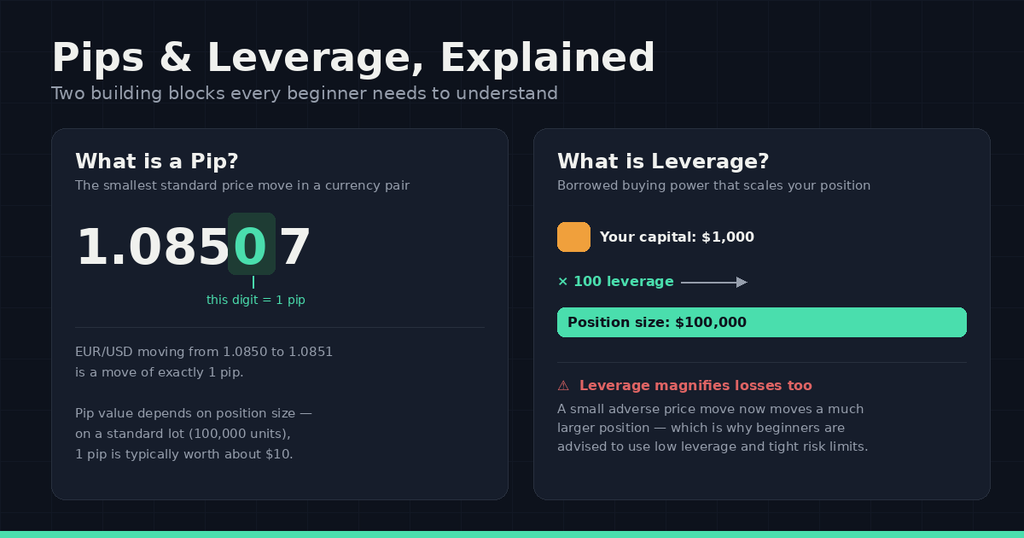
Understanding pips and leverage is essential before risking real capital.
Who Participates in Forex Trading?
The market is not limited to professional banks and hedge funds. Participants include:
- Central banks that manage national currency reserves and interest-rate policy
- Commercial banks and financial institutions that facilitate international trade
- Multinational companies that need to convert revenue earned in foreign currencies
- Hedge funds and institutional investors seeking returns or protection against currency moves
- Individual retail traders using online platforms offered by brokers
The shocking reality is that retail traders make up only a small percentage of total volume. The vast majority of daily activity still comes from banks and institutions.
The Untold Risks of Forex Trading
Forex trading carries substantial risk of loss. Because of leverage, it is possible to lose more than your initial deposit in a short time. Most retail traders lose money. Regulatory authorities in many countries require brokers to display risk warnings for this reason.
Price movements can be driven by unexpected economic data, central-bank decisions, geopolitical events, or sudden shifts in market sentiment. There is no guaranteed strategy that works every day. Successful participants treat forex trading as a skill that requires continuous education, disciplined risk management, and emotional control.
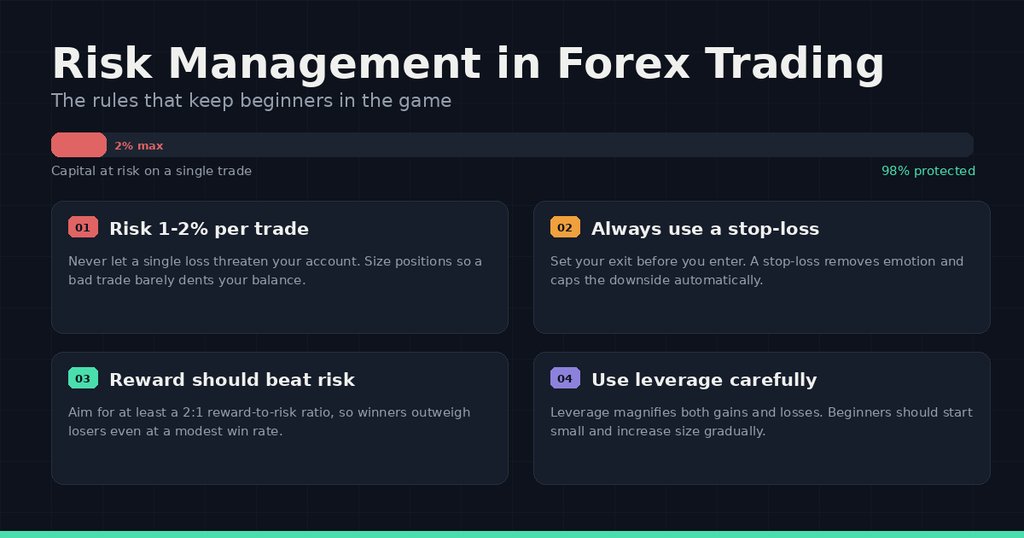
Proper risk management protects capital when markets move against a position.
How People Actually Make (or Lose) Money
Traders profit when their prediction about the direction of a currency pair is correct. If you buy EUR/USD at 1.0800 and later sell at 1.0900, the 100-pip gain translates into profit based on your lot size and leverage. The reverse produces a loss.
Two common approaches exist:
- Technical analysis – Studying price charts, patterns, and indicators to identify potential entry and exit points.
- Fundamental analysis – Examining economic indicators such as interest rates, inflation data, employment reports, and central-bank policy statements.
Many experienced traders combine both methods. Short-term traders may focus on technical signals during high-liquidity sessions, while longer-term participants watch macroeconomic trends.


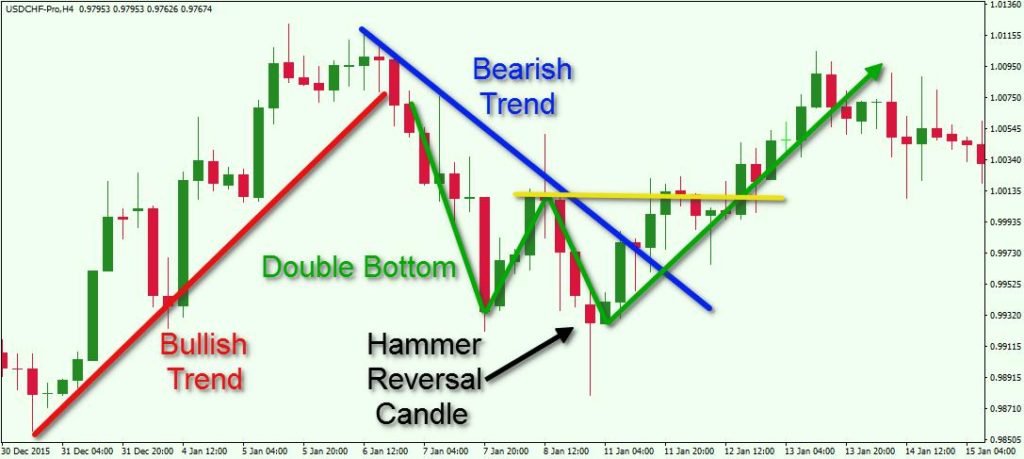
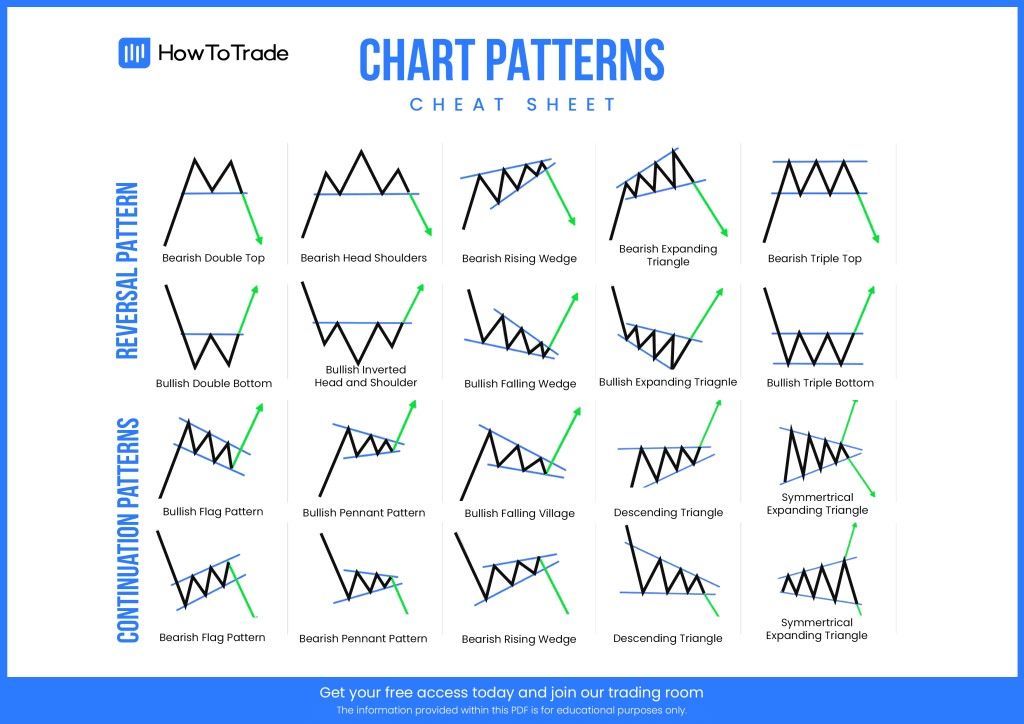
Both chart patterns and economic data influence currency prices.
Getting Started the Smart Way
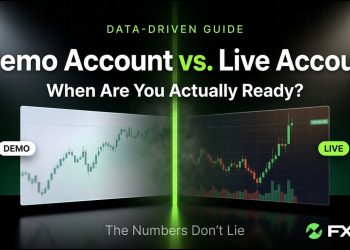
Anyone considering forex trading should begin with education, not capital. Open a demo account with a regulated broker and practice until you understand how orders, stops, and position sizing work. Only then consider a small live account.
Choose a broker regulated by a reputable authority such as the FCA (UK), ASIC (Australia), or CFTC/NFA (United States). Verify that client funds are held in segregated accounts. Read the full risk disclosure before depositing any money.
External resources that provide reliable background include the Investopedia overview of foreign exchange markets and the Charles Schwab explanation of how forex works.
Surprising Facts About Forex Trading
- The market is decentralized. There is no single exchange building where all trades happen.
- More than 85 percent of daily volume involves the U.S. dollar on one side of the pair.
- The London session often sees the highest liquidity because it overlaps with both Asian and New York hours.
- Currency values can move on a single tweet, a surprise election result, or an unexpected inflation print.
The secret many new participants overlook is that consistent profitability is rare. Most successful traders treat the activity as a serious business with written rules, strict position sizing, and continuous review of their results.
Final Thoughts and Next Steps
Forex trading offers access to the largest financial market in the world and the flexibility to trade almost any time of the day. It also demands respect for risk, continuous learning, and emotional discipline. Understanding the mechanics in plain English is the first and most important step.
If this explanation helped clarify the basics, explore further educational material from regulated sources and practice thoroughly on a demo account. Knowledge and risk control remain the only reliable foundations for anyone who decides to participate.
Frequently Asked Questions
What is the minimum amount needed to start forex trading?
Many brokers allow accounts to open with as little as $50–$100, especially when trading micro lots. The important factor is not the deposit size but the percentage of capital risked on any single trade—ideally 1 percent or less.
Is forex trading the same as gambling?
No. While both involve risk, professional forex trading relies on analysis, probability, and strict risk management. Gambling is based primarily on chance. That said, trading without a plan can quickly resemble gambling.
Can I lose more money than I deposit?
Yes, if you use high leverage and the market moves sharply against your position. Some brokers offer negative-balance protection, but this is not universal. Always check the broker’s policy and use stop-loss orders.
How many hours a day do successful traders spend?
It varies widely. Some day traders monitor charts for several hours during peak sessions. Others use longer-term strategies and check positions only a few times per week. Consistency matters more than total screen time.
Do I need a degree in finance to trade currencies?
No. Many successful retail traders come from non-finance backgrounds. What matters is continuous self-education, disciplined execution, and honest evaluation of results.
Is the forex market open on weekends?
No. Trading typically closes Friday afternoon (New York time) and reopens Sunday evening. Major holidays can also reduce liquidity or close the market early.