

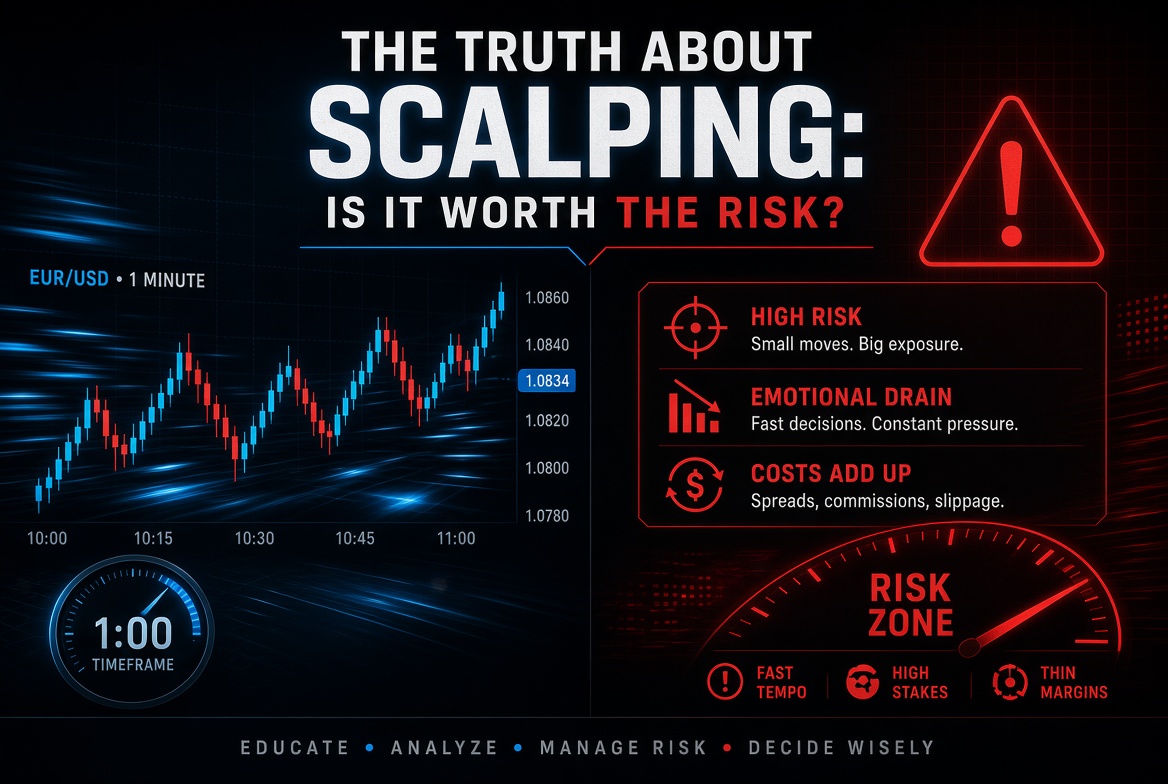
Many traders are drawn to fast profits and ask about the truth about scalping. The strategy promises quick wins from tiny price moves, yet the reality is far more demanding than most beginners expect.
This article reveals the real advantages, the shocking drawbacks, the hidden costs, and a clear framework so you can decide whether scalping is truly worth the risk for your personality, capital, and lifestyle.
What Scalping Really Means
Scalping is a short-term trading style that aims to capture small price movements, often just a few pips, multiple times throughout the day. Positions are held for seconds to a few minutes at most.
Traders rely on tight spreads, fast execution, and high leverage to make these tiny moves profitable. The goal is consistency through volume rather than large single wins.
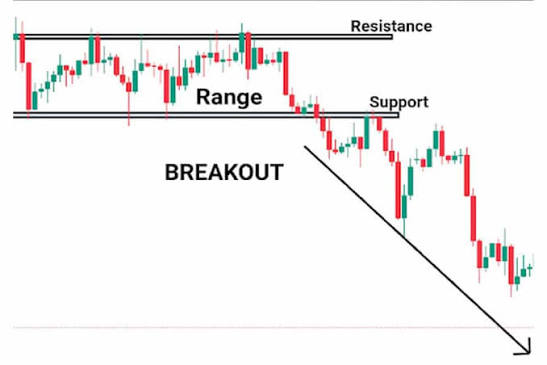
Scalping depends on rapid price movements and precise execution.
The Attractive Side of Scalping
When conditions are right, scalping offers several genuine advantages:
- Many trading opportunities every day
- Limited overnight risk because positions are closed quickly
- Potential for steady, small gains that compound
- Clear and rule-based entries on lower timeframes
Did you know that some professional scalpers execute dozens or even hundreds of trades in a single session? The frequency can feel exciting and productive.
The Shocking Reality Most Traders Discover
The truth about scalping becomes clear only after real money is involved. Transaction costs, emotional pressure, and execution quality quickly erode the theoretical edge.
Spreads and commissions that seem small on a single trade become significant when multiplied across 30–50 trades per day. Slippage during fast moves can turn a planned 3-pip win into a loss.
The untold truth is that many retail scalpers lose money not because their analysis is wrong, but because costs and emotions destroy the thin profit margins.

Key Risks That Make Scalping Difficult
1. Transaction Costs
Every entry and exit carries a spread or commission. On lower timeframes these costs represent a large percentage of the intended profit. Only brokers with extremely tight spreads and fast execution make the strategy viable.
2. Emotional and Mental Fatigue
Staring at one-minute or five-minute charts for hours creates intense concentration demands. Decision fatigue leads to rule-breaking, oversized positions, and revenge trading after a string of small losses.
3. Execution and Technology Requirements
Scalping needs reliable internet, low-latency platforms, and sometimes direct market access. Home connections and standard retail platforms often fall short during volatile periods.
4. Psychological Pressure
Because profits per trade are tiny, the pressure to stay perfect is high. One or two mistakes can wipe out an entire session of careful work.
Who Scalping Actually Suits
Scalping is not a universal strategy. It tends to fit traders who:
- Can dedicate focused screen time for several hours
- Have strong emotional control under rapid decision-making
- Use a broker with institutional-grade spreads and execution
- Possess enough capital to absorb normal losing streaks without panic
- Prefer process and repetition over big directional calls
For most part-time or beginner traders, the demands outweigh the potential rewards.
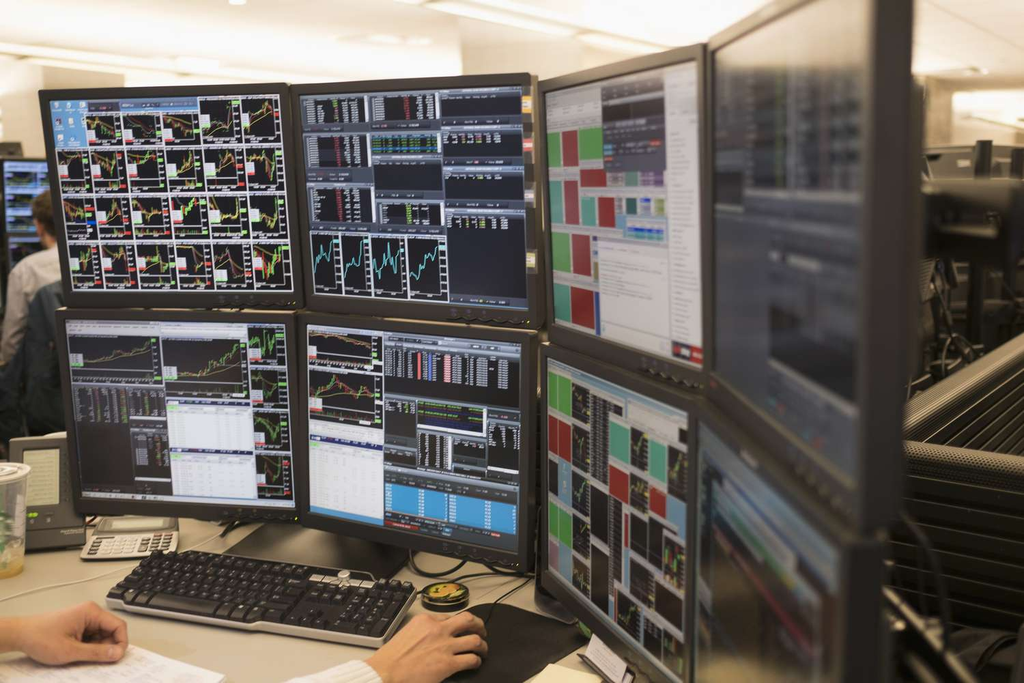
Successful scalping requires both the right personality and the right tools.
A Realistic Cost and Profit Example
Imagine a scalper targeting 4 pips per trade with a 1:1 risk-reward and a 55% win rate. After spreads and occasional slippage, the net edge shrinks dramatically.
On a standard lot the gross profit may look attractive, yet after costs the actual expectancy can turn negative. This is the hidden mathematical reality that many promotional materials never show.
Alternatives That Often Deliver Better Results
Traders who find scalping too stressful or costly frequently move to slightly longer styles:
- Intraday swing trading on 15-minute or 1-hour charts
- Trend following on higher timeframes
- Breakout strategies around key levels with clearer risk-reward
These approaches reduce the number of trades, lower total costs, and give more time for thoughtful decisions.
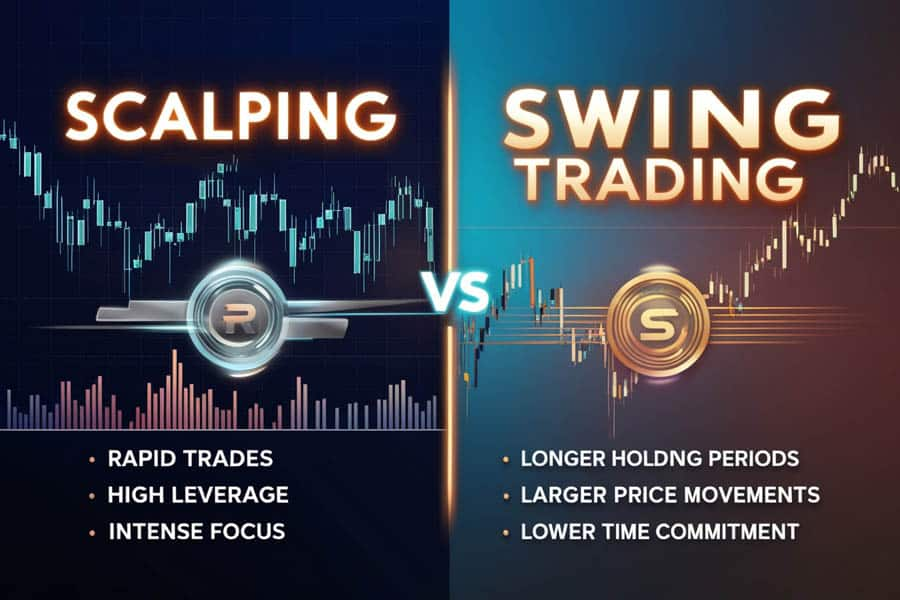
Longer timeframes often provide a more sustainable balance of risk and reward.
How to Test Scalping Properly Before Committing
If you still want to explore the strategy, follow a strict testing process:
- Practice on a demo account with the exact spreads your live broker offers
- Track every trade including spread cost and slippage
- Limit sessions to a set number of trades or hours to avoid fatigue
- Review results after at least 50–100 trades
- Only move to live capital with the smallest possible position size
Most traders who complete this process honestly discover whether the strategy fits them long before real money is at risk.
Final Thoughts and Next Steps
The truth about scalping is straightforward: it can work for a small group of highly disciplined, well-equipped traders, but it is rarely the easiest or most profitable path for the average person. The combination of costs, speed, and psychological pressure makes it one of the hardest styles to master.
Evaluate your available time, emotional temperament, and technology setup honestly. If the demands feel too high, choose a strategy with more breathing room. Capital preservation and consistency matter far more than the excitement of rapid trades.
Ready to decide? Open a demo account, apply strict cost tracking, and run a 50-trade sample of a simple scalping method. The numbers will reveal whether this style is worth the risk for you.
Frequently Asked Questions
Is scalping profitable for beginners?
Rarely. The combination of costs, speed, and emotional pressure makes it one of the most difficult styles for new traders to master.
What is the biggest cost in scalping?
Transaction costs (spreads and commissions) multiplied by high trade frequency. These can easily erase a theoretical edge.
How many trades do scalpers take per day?
It varies widely. Some take 10–20 carefully selected trades; others take 50 or more. Quality and cost control matter more than quantity.
Do I need a special broker for scalping?
Yes. Tight spreads, fast execution, and reliable platforms are essential. Standard retail conditions often make the strategy unviable.
Can scalping be automated?
Yes, many scalpers use expert advisors or algorithms. However, automation still requires robust risk controls and ongoing monitoring.
Is scalping riskier than swing trading?
In terms of emotional intensity and cost sensitivity, yes. Swing trading usually involves fewer decisions and lower total transaction costs.
For additional reading on short-term trading mechanics and risk, consult educational resources from BabyPips and detailed strategy discussions on Investopedia.