One of the most searched questions in trading is why most forex traders lose money. Studies and broker data consistently show that a large majority of retail traders end up in the red. The reasons are rarely about bad luck or secret indicators.
This article breaks down the real causes behind those losses and gives clear, actionable steps so you can avoid the same costly mistakes that trap so many others.
The Hard Numbers Behind Retail Trading
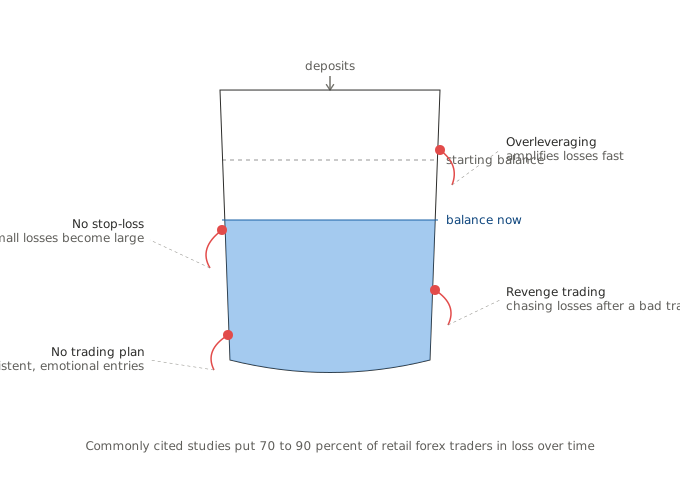
Multiple regulatory reports and broker disclosures reveal the same pattern: a significant percentage of retail forex accounts lose money over time. Did you know that some jurisdictions require brokers to publish the exact percentage of losing accounts?
The numbers are not hidden. They are a clear warning that the average approach does not work. Understanding why most forex traders lose money starts with accepting this statistical reality instead of assuming you will be the exception.
Mistake 1: Trading Without a Written Plan
Many traders open a chart and look for “something to trade.” Without predefined rules for entry, exit, and risk, every decision becomes emotional and inconsistent.
A written plan forces clarity. It defines exactly when you will take a trade, how much you will risk, and when you will exit. Traders who skip this step almost always join the group of those who lose money.
Mistake 2: Risking Too Much on Single Trades
One of the fastest ways to blow an account is oversized position sizing. Risking 5%, 10%, or more on a single idea turns normal losing streaks into account-destroying events.
The professional standard is simple: risk no more than 1% of the account on any one trade. This single rule dramatically improves survival odds.
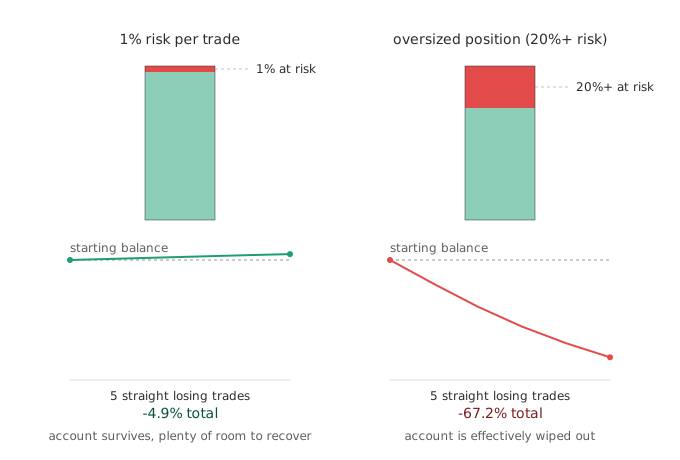
Small, consistent risk per trade is the foundation of long-term survival.
Mistake 3: Ignoring Risk-Reward Ratios
Many traders focus only on being right. They take trades with poor reward potential relative to the risk. Even a high win rate cannot overcome consistently bad risk-reward.
A minimum 1:2 risk-reward ratio (risking $1 to make $2) gives breathing room for normal losing periods. Ignoring this mathematical reality is a major reason why most forex traders lose money.
Mistake 4: Overtrading and Revenge Trading
After a loss, the urge to “make it back” leads to extra trades that were never part of the plan. Overtrading also increases transaction costs and emotional fatigue.
The hidden cost of overtrading is often larger than the losses from the original bad trade. Successful traders treat each session with strict limits on the number of trades or the maximum daily loss.
Mistake 5: Poor Emotional Control
Fear causes early exits from winning trades. Greed causes positions to stay open too long. Hope keeps losing trades alive far beyond the planned stop.
The shocking truth is that many traders have decent strategies but still lose because they cannot follow their own rules under pressure. Emotional discipline is not optional.
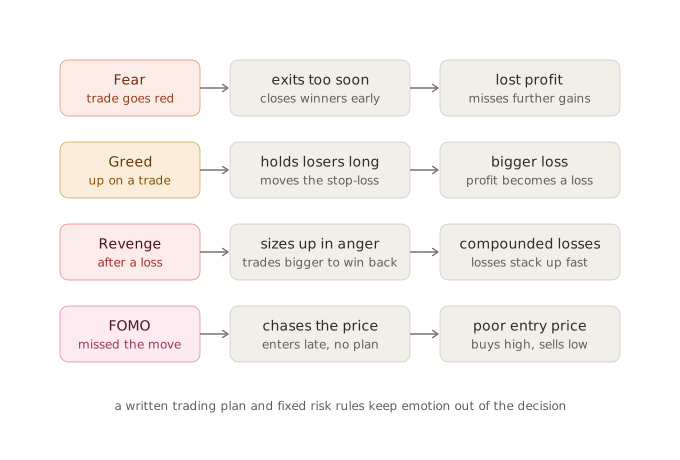
Emotions, not the market, destroy most retail trading accounts.
Mistake 6: Switching Strategies Too Often
After a few losses, many traders abandon their method and search for a new one. This constant switching prevents any strategy from being properly tested or mastered.
Every approach experiences drawdowns. The traders who survive are those who stick with a tested method long enough for the edge to appear.
Mistake 7: Neglecting Education and Record-Keeping
Jumping into live trading with minimal knowledge of risk, order types, and market structure is a common path to losses. Equally damaging is the failure to keep a detailed trading journal.
Without records, the same mistakes repeat endlessly. A simple journal that tracks entry reason, risk, emotion, and outcome turns experience into improvement.
How to Avoid These Mistakes – Practical Steps
- Write a clear trading plan and review it before every session
- Risk a maximum of 1% of your account on any single trade
- Only take setups that offer at least 1:2 risk-reward
- Set a daily loss limit and stop trading when it is reached
- Keep a detailed journal and review it weekly
- Master one strategy thoroughly before adding complexity
- Practice on a demo account until rule-following feels automatic
These habits directly counter the main reasons why most forex traders lose money
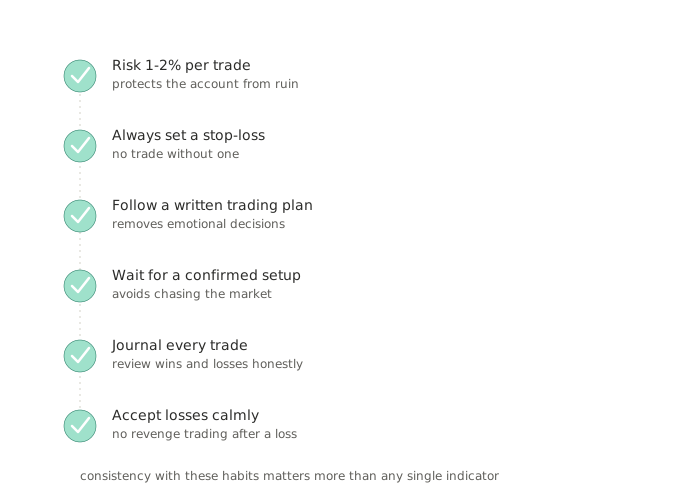
Consistent process beats prediction every time.
The Real Difference Between Winners and Losers
Winning traders are not smarter or luckier. They are more disciplined with risk, more honest with their emotions, and more patient with their process.
The untold truth is that avoiding large mistakes produces better results than searching for perfect entries. Capital preservation comes first. Growth comes second.
Final Thoughts and Next Steps
Understanding why most forex traders lose money is the first step toward joining the minority who do not. The causes are clear and the solutions are practical.
Focus on process over prediction. Protect your capital with strict risk rules. Build emotional control through deliberate practice. These habits compound over time.
Ready to change your results? Open your trading journal today, write down your exact risk rules, and commit to following them for the next 20 trades. Small, consistent improvements beat dramatic overhauls.
Frequently Asked Questions
What percentage of forex traders lose money?
Regulatory data from multiple regions typically shows that 70–80% or more of retail accounts lose money over time.
Is it possible to be consistently profitable in forex?
Yes, but it requires strict risk management, emotional discipline, and a tested process. Most people who achieve this treat trading like a business.
What is the single biggest reason traders lose?
Poor risk management combined with emotional decision-making. Oversized positions and rule-breaking after losses destroy more accounts than bad analysis.
How long does it take to become consistently profitable?
It varies widely. Many serious traders need 6–18 months of deliberate practice and small live trading before achieving stability.
Should beginners trade with real money immediately?
No. Master the process on a demo account first. Move to live capital only when you can follow your rules consistently.
Can a good strategy still lose money?
Yes. Even strong strategies experience drawdowns. Without proper risk control and emotional discipline, a good strategy can still produce large losses.
For further reading on trading psychology and risk principles, explore educational resources from BabyPips and detailed analysis on Investopedia.