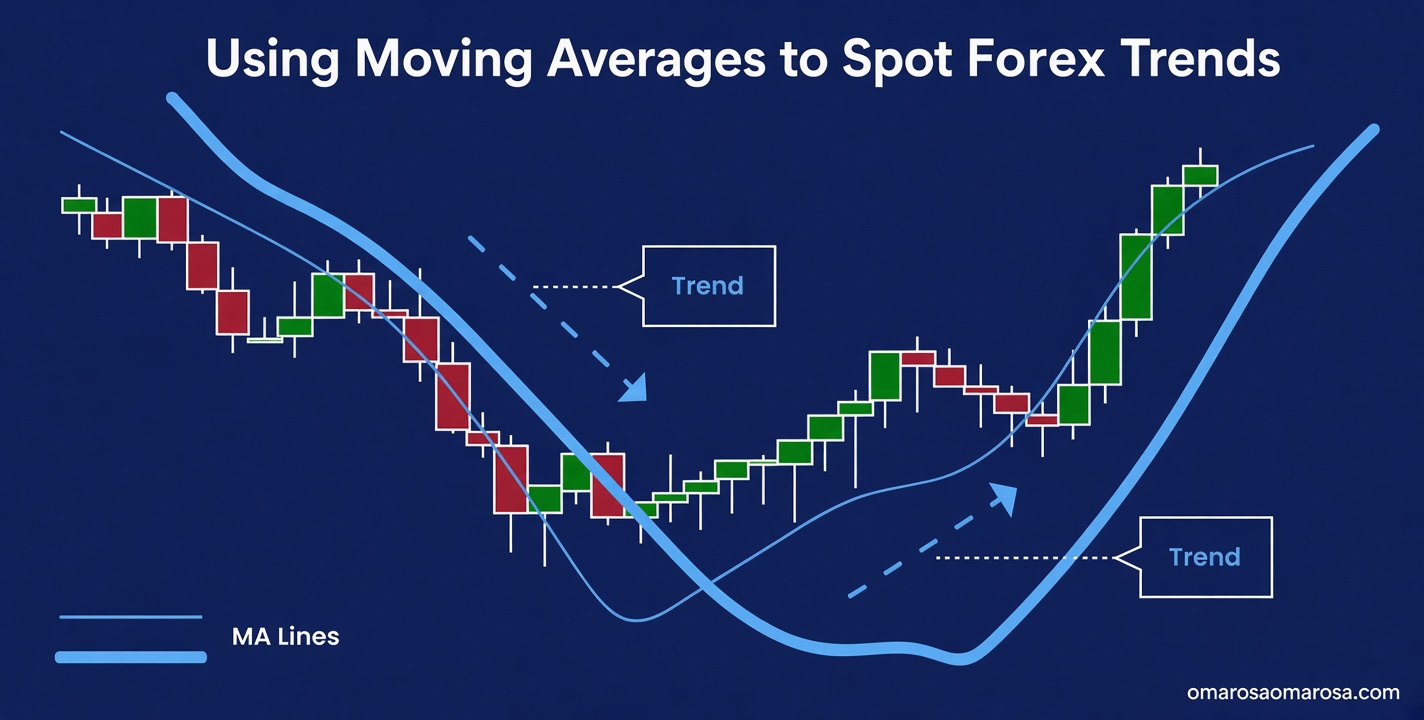
One of the most reliable skills in trading is using moving averages to spot forex trends. These simple lines smooth out price noise and help traders see the underlying direction that many miss when staring at raw candles.
This guide shows exactly how to apply moving averages for trend detection, which settings work best, and the hidden errors that turn a useful tool into a source of false signals.
Why Moving Averages Remain Essential in 2026
Moving averages are among the oldest and most widely used indicators in forex. They calculate the average price over a chosen number of periods and plot it as a continuous line.
Did you know that many institutional traders still rely heavily on moving averages for trend filters even while using more advanced tools? The reason is simple: they provide objective, visual confirmation of direction.
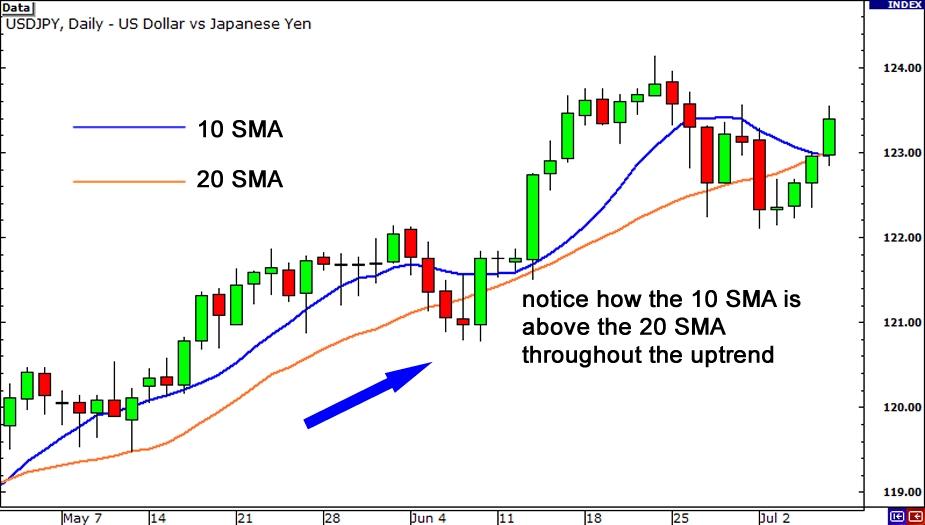
Moving averages help filter noise and reveal the true market direction.
Simple Moving Average vs Exponential Moving Average
Two main types dominate forex charts:
- Simple Moving Average (SMA) – treats every price in the period equally
- Exponential Moving Average (EMA) – gives more weight to recent prices and reacts faster
Most trend traders prefer EMAs for faster signals, while SMAs are often used for longer-term filters. The choice depends on your trading timeframe and tolerance for lag.
Core Methods for Spotting Trends
1. Price Relative to the Moving Average
When price stays consistently above a rising moving average, an uptrend is in force. When price stays below a falling moving average, a downtrend is active.
This is the simplest and often the most robust way of using moving averages to spot forex trends.
2. Moving Average Slope
A rising slope confirms bullish momentum. A falling slope confirms bearish momentum. A flat moving average usually signals a ranging or consolidating market.
3. Multiple Moving Average Alignment
Many traders plot two or three averages (for example 20, 50 and 200). When the faster averages are above the slower ones and all are sloping upward, the trend is strong.
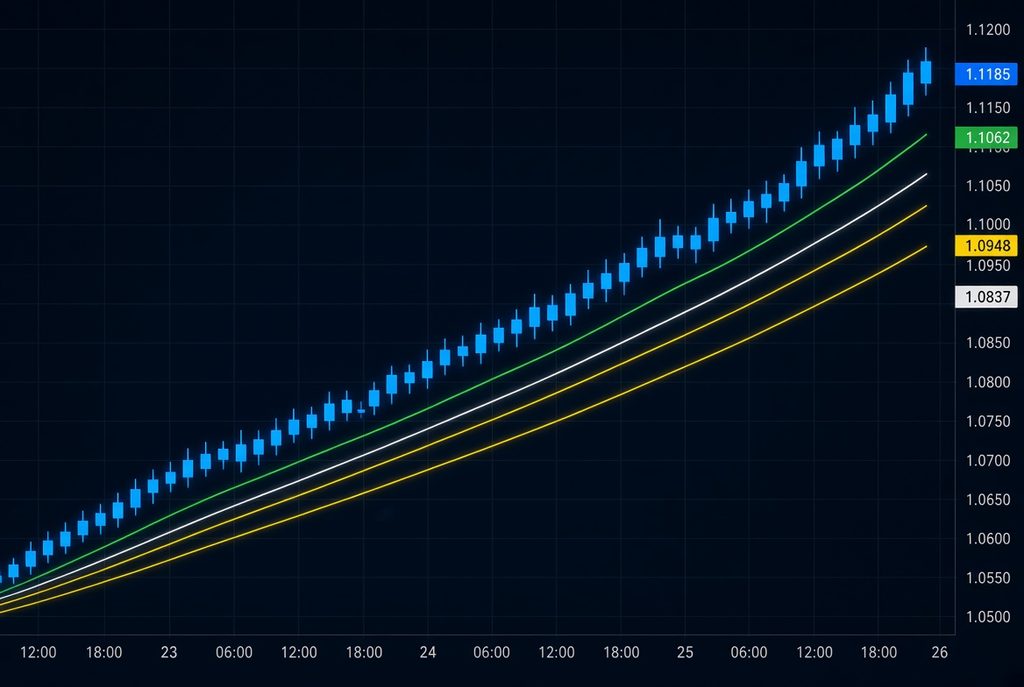
Aligned moving averages provide clear visual confirmation of trend strength.
Popular Moving Average Combinations
Common settings that continue to work well:
- 9 and 21 EMA – for short-term trend and momentum
- 20 and 50 EMA – balanced for intraday and swing trading
- 50 and 200 SMA – classic longer-term trend filter
- 100 and 200 EMA – used by many position traders
The shocking truth is that the exact numbers matter less than consistency. Changing settings constantly destroys the edge.
How to Use Moving Averages for Entries and Exits
Once the trend is identified, moving averages can also guide timing:
- Enter long on pullbacks to a rising moving average in an uptrend
- Enter short on rallies to a falling moving average in a downtrend
- Exit or tighten stops when price closes firmly against the average
This approach keeps trades aligned with the dominant direction and reduces counter-trend mistakes.
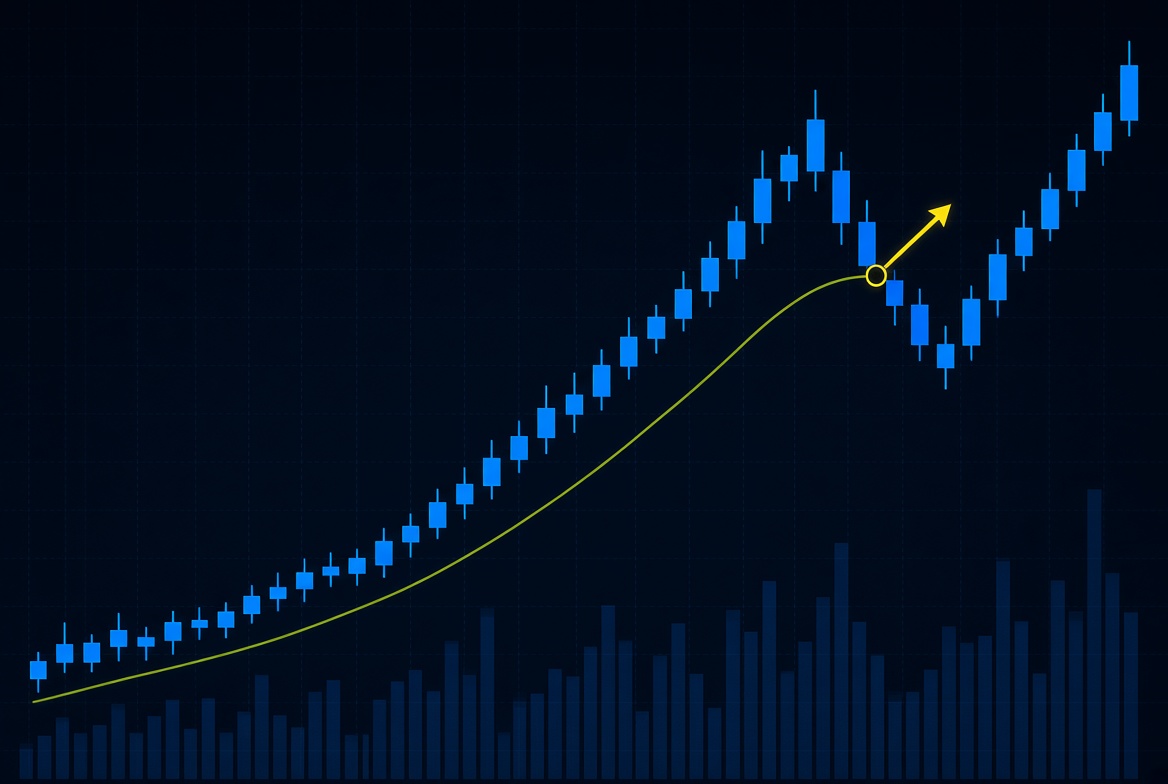
Pullbacks to a rising moving average often offer lower-risk entries.
Hidden Mistakes Traders Make with Moving Averages
Even experienced traders fall into these traps:
- Using moving averages alone in strong ranging markets
- Ignoring the higher-timeframe trend
- Chasing every crossover without confirmation
- Changing the period length after every losing trade
- Forgetting that moving averages lag price by nature
The untold truth is that moving averages work best as a filter and context tool rather than a standalone signal generator.
Combining Moving Averages with Other Tools
To improve accuracy, many traders add simple confirmation:
- Support and resistance levels
- Candlestick reversal patterns at the average
- Higher-timeframe structure
- Basic momentum indicators only as a secondary check
The goal is not complexity. The goal is higher-probability decisions while still using moving averages to spot forex trends clearly.
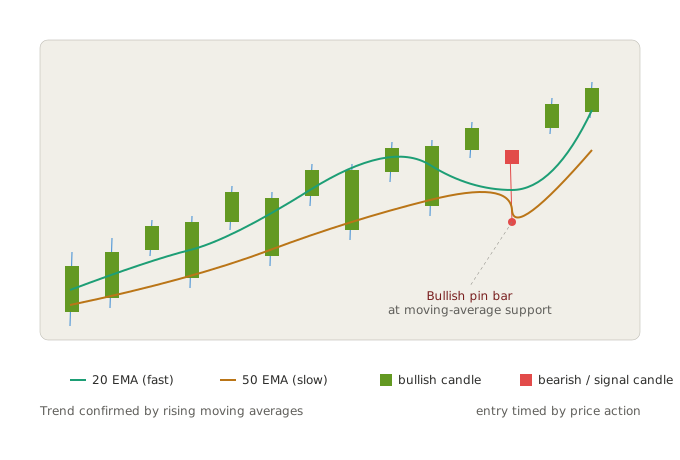
Price action at key moving averages creates higher-quality signals.
Practical Rules for Consistent Application
- Decide your trading timeframe first
- Choose one or two moving average settings and stick to them
- Always check the higher-timeframe direction
- Trade only in the direction of the dominant moving average slope
- Use proper position sizing and a fixed risk percentage
These rules turn a simple indicator into a structured trading approach.
Final Thoughts and Next Steps
Using moving averages to spot forex trends remains one of the most practical skills a trader can develop. The lines are objective, easy to read, and effective when applied with discipline.
Start with one clear combination on a demo account. Practice identifying the trend, waiting for pullbacks, and managing risk. Once the process feels natural, move to a live account with small size.
Ready to improve your trend detection? Open your charts, add a 20 and 50 EMA, and spend the next week simply labeling the direction on every major pair. Clarity comes from repetition.
Frequently Asked Questions
Which moving average is best for spotting forex trends?
There is no single best setting. Many traders find the 20 and 50 EMA combination effective for most intraday and swing timeframes.
Should I use SMA or EMA?
EMAs react faster and are popular for shorter-term trading. SMAs are smoother and often preferred for longer-term trend filters.
Can moving averages work on all timeframes?
Yes. The same principles apply from the 5-minute chart to the weekly chart. Always align with the higher timeframe.
Do moving averages work in ranging markets?
They produce many false signals in ranges. It is better to stand aside or switch to range-trading methods when averages are flat.
How many moving averages should I use?
Two is usually enough. Three can help confirm strength, but more than that often creates confusion.
Are moving averages still effective with algorithmic trading?
Yes. Algorithms also use averages and trend filters. The edge for retail traders comes from disciplined application and risk control rather than the indicator itself.
For further study of technical indicators and trend methods, explore educational resources from BabyPips and detailed explanations on Investopedia.