

Every forex trader eventually faces the same crossroads: should decisions be built on charts and price action, or on economic data and global events? The debate over technical vs fundamental analysis forex strategies has shaped trading philosophy for decades, and there is no single universal answer. Some traders swear by candlestick patterns and moving averages, while others track interest rate decisions and employment reports to anticipate currency swings. Understanding the strengths and limitations of each approach is essential before committing capital to any strategy.
This article breaks down technical vs fundamental analysis forex methods in detail, compares their practical applications, and offers guidance on how traders can combine them for a more balanced, informed trading style. Whether you are a beginner building your first strategy or an experienced trader refining your edge, knowing when to lean on charts versus economic fundamentals can significantly influence your long-term profitability.
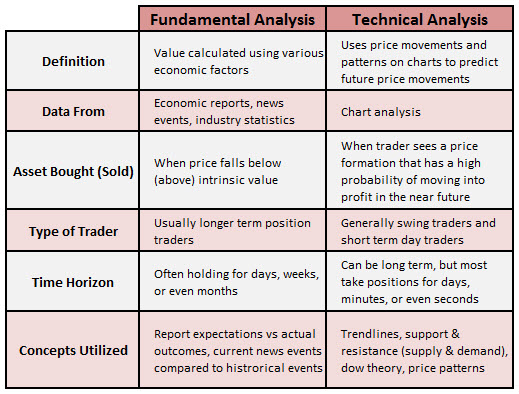
A visual breakdown of technical vs fundamental analysis forex strategies used by professional currency traders.
Technical vs Fundamental Analysis Forex: The Basics
Before choosing a strategy, it helps to understand what separates these two disciplines and how each one interprets market behavior differently.
What Is Technical Analysis in Forex?
Technical analysis focuses on historical price movements and trading volume to forecast future currency behavior. It assumes that all relevant market information is already reflected in the price itself.
- Candlestick and bar charts for identifying trends
- Moving averages to smooth out price volatility
- Support and resistance levels to predict reversals
- Indicators such as RSI, MACD, and Bollinger Bands
Traders who favor this method believe that patterns repeat over time due to consistent human psychology—fear, greed, and herd behavior create recognizable formations on charts, regardless of the currency pair.
What Is Fundamental Analysis in Forex?
Fundamental analysis examines the economic, political, and social forces that influence currency value. It looks beyond price charts to the underlying health of an economy.
- Interest rate decisions from central banks
- Gross Domestic Product (GDP) growth rates
- Employment and unemployment data
- Inflation reports and consumer price indexes
- Political stability and trade policies
For example, when the U.S. Federal Reserve raises interest rates, the U.S. dollar often strengthens because higher rates attract foreign investment seeking better returns. Traders who understand these relationships can anticipate longer-term currency trends before they fully materialize on the charts.
Technical vs Fundamental Analysis Forex: Key Differences
Time Horizon Differences
In the technical vs fundamental analysis forex debate, time horizon is often the deciding factor. Technical analysis is generally favored by short-term traders, including day traders and scalpers, who need fast, actionable signals. Fundamental analysis tends to suit swing traders and long-term investors who can wait for macroeconomic trends to unfold over weeks or months.
Data Interpretation Differences
Technical traders rely on objective, quantifiable data—price and volume—making their strategies easier to backtest. Fundamental traders must interpret qualitative and often unpredictable factors, such as geopolitical tension or unexpected policy shifts, which can be harder to model precisely.
Reaction to News Events
Major economic announcements, such as those released by the U.S. Bureau of Labor Statistics, can cause sharp volatility that technical patterns alone may fail to predict. Fundamental analysis helps traders prepare for these shocks in advance, while technical analysis helps manage the immediate price reaction once it occurs.
Technical vs Fundamental Analysis Forex: Which Should You Prioritize?
The honest answer is that neither method is inherently superior—it depends on trading style, time commitment, and risk appetite.
When to Prioritize Technical Analysis
- You trade frequently and need precise entry/exit points
- You prefer objective, rule-based decision-making
- You trade highly liquid pairs like EUR/USD or GBP/USD
When to Prioritize Fundamental Analysis
- You hold positions for weeks or months
- You want to understand the “why” behind major trends
- You trade emerging market currencies sensitive to policy shifts
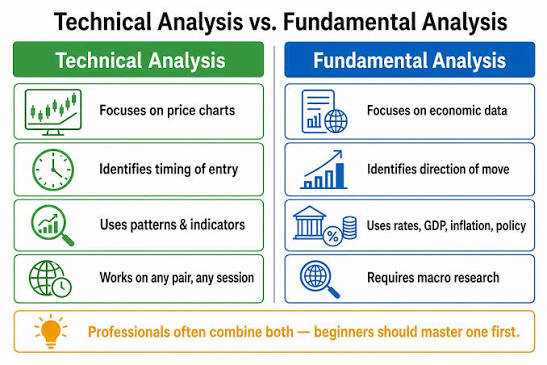
Side-by-side comparison of chart-based signals and economic policy announcements influencing currency prices.
Combining Technical and Fundamental Analysis in Forex
Many professional traders avoid choosing one method exclusively. Instead, they use fundamental analysis to determine the broader market direction and technical analysis to fine-tune entry and exit points. This hybrid approach to technical vs fundamental analysis forex trading often produces more consistent results than relying on either method alone.
For instance, a trader might identify that the European Central Bank is likely to cut interest rates based on fundamental data, then use technical indicators to time the exact moment to short the euro. This strategy reduces the weaknesses of relying on a single method, according to research published by the International Monetary Fund.
Common Mistakes in Technical vs Fundamental Analysis Forex Trading
Ignoring the Bigger Picture
Purely technical traders sometimes get caught off guard by unexpected news events that override chart patterns entirely, leading to significant losses.
Overanalyzing Economic Data
Fundamental traders can fall into “analysis paralysis,” waiting too long for confirmation while missing profitable entry points that technical signals would have caught earlier.
Failing to Manage Risk
Regardless of which side of the technical vs fundamental analysis forex debate you favor, inadequate risk management—such as ignoring stop-loss orders—remains one of the leading causes of trading account failures.
Building a Balanced Forex Trading Strategy
- Define your trading timeframe (scalping, day trading, swing trading, or long-term investing)
- Study upcoming economic calendars to anticipate volatility
- Use technical indicators to confirm entry and exit signals
- Backtest your combined strategy using historical data
- Continuously review and adjust based on performance
Consistent success rarely comes from mastering just one discipline. Traders who understand both sides of the technical vs fundamental analysis forex approach tend to develop a more resilient understanding of the market, better preparing them for both predictable trends and sudden shocks.
Frequently Asked Questions
Is technical analysis more reliable than fundamental analysis in forex?
Neither is universally more reliable. Technical analysis works well for short-term price movements, while fundamental analysis is better suited for understanding long-term currency trends driven by economic conditions.
Can beginners use both technical and fundamental analysis together?
Yes. Beginners often start with technical analysis due to its clear visual signals, then gradually incorporate fundamental factors like interest rates and economic reports as their understanding deepens.
How often should I check economic news as a forex trader?
Most traders review an economic calendar daily, paying close attention to high-impact events such as central bank announcements, GDP releases, and employment data.
Does fundamental analysis work for short-term trading?
It can, particularly around scheduled news releases, but it is generally less precise than technical analysis for very short timeframes like scalping.
What is the biggest risk of relying only on technical analysis?
The biggest risk is being blindsided by unexpected fundamental events, such as surprise interest rate changes or geopolitical developments, which can invalidate technical patterns instantly.
Which analysis method do professional forex traders prefer?
Most professional traders use a hybrid approach, applying fundamental analysis to identify overall market direction and technical analysis to refine timing and execution.