Most new traders focus on finding winning entries, yet the real foundation of lasting success is risk management 101. In volatile markets, price can move sharply against you within minutes. Without clear rules to protect capital, even good analysis leads to large and sometimes irreversible losses.
This guide covers the essential principles of risk management so you can limit damage, stay in the game longer, and give your strategy the time it needs to work.
Why Risk Management Comes First
Markets will always have periods of high volatility. News events, economic data, and sudden shifts in sentiment can create large swings in minutes. Traders who ignore risk rules often experience account-damaging drawdowns during these times.
Did you know that many professional traders consider capital preservation more important than finding high-probability setups? Without capital, no strategy can be executed.

Protecting capital is the first responsibility of every serious trader.
The 1% Rule – The Foundation of Risk Management 101
The most widely recommended guideline is to risk no more than 1% of your total account equity on any single trade. Some conservative traders use 0.5%.
This rule ensures that a string of losses does not destroy the account. Even after 10 consecutive losing trades at 1% risk, more than 90% of the capital remains.
The shocking truth is that many retail traders risk 5% or more per trade and then wonder why their accounts disappear after a normal losing streak.
Position Sizing – Turning the Rule into Action
Once you decide the percentage of risk, the next step is calculating the correct position size. The formula is straightforward:
- Determine the dollar amount you are willing to lose (1% of account)
- Measure the distance from entry to stop loss in pips
- Calculate the lot size that matches the allowed risk
Correct position sizing is one of the most practical skills in risk management 101. It removes guesswork and emotional decisions about trade size.
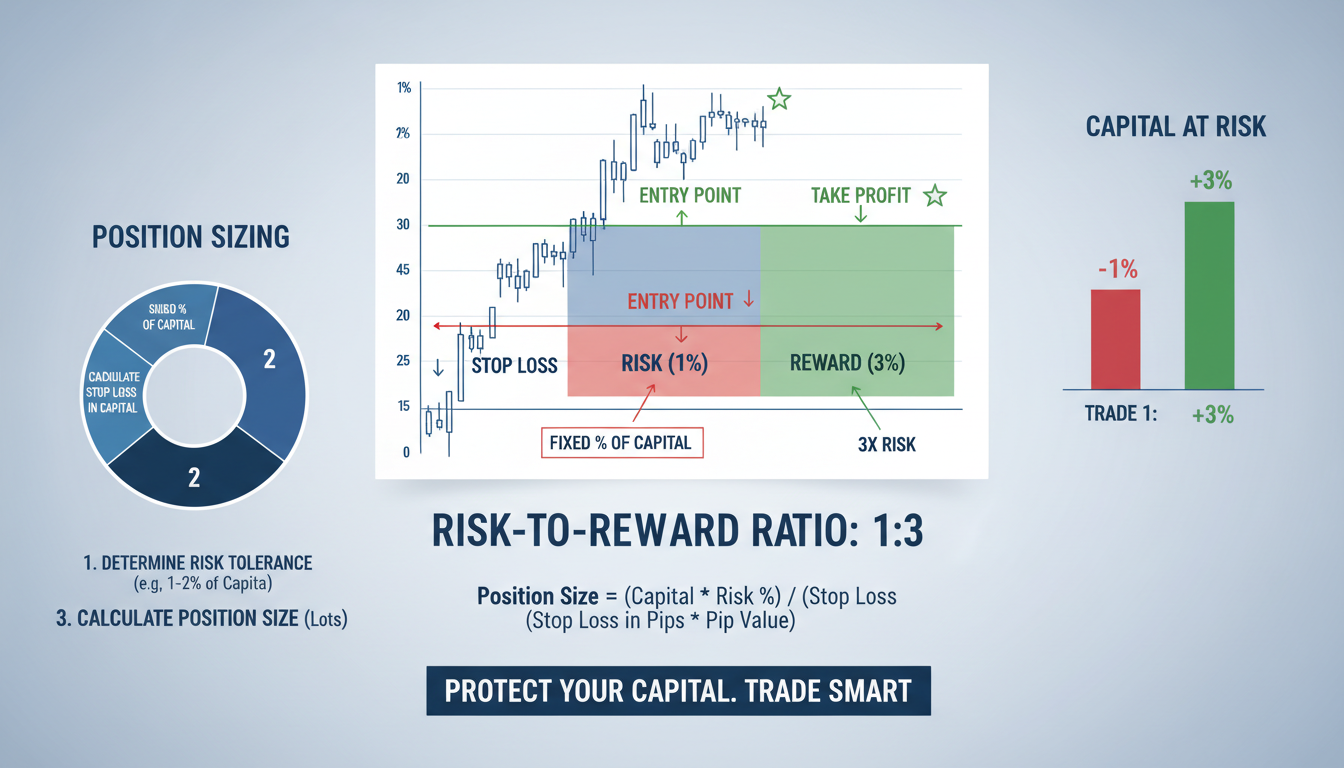
Accurate position sizing turns the 1% rule into consistent protection.
Always Use a Stop Loss
A stop loss is a predefined exit point that limits the loss on a trade. Trading without one is one of the fastest ways to experience large drawdowns in volatile markets.
Place the stop based on market structure (beyond a recent swing high or low) rather than an arbitrary pip distance. Once placed, avoid moving it farther away to “give the trade more room.”
Risk-Reward Ratio Matters
Even with good risk control per trade, poor reward potential can still lead to overall losses. Aim for a minimum risk-reward ratio of 1:2. This means risking $1 to potentially make $2.
With a positive risk-reward ratio, you can be profitable even if fewer than half of your trades are winners.
Daily and Weekly Loss Limits
Set a maximum loss for the day and for the week. When that limit is reached, stop trading. This rule prevents emotional spiral trading after a series of losses.
Many experienced traders walk away after two or three consecutive losses, regardless of how attractive the next setup appears.

Daily loss limits protect both capital and emotional balance.
Special Considerations for Volatile Markets
During high-volatility periods, additional caution is required:
- Reduce position size below the normal 1% if spreads are widening
- Avoid trading immediately before and after major news releases unless you have a specific news strategy
- Be prepared for slippage — the difference between expected and actual fill price
- Consider wider stops only if position size is reduced accordingly
The hidden danger in volatile conditions is that normal risk parameters can suddenly become much larger than intended.
Common Risk Management Mistakes
- Moving stop losses farther away after the trade is open
- Increasing position size after a winning streak
- Risking different percentages on different trades without a clear reason
- Ignoring correlation between open positions
- Trading without calculating position size in advance
Avoiding these errors is a core part of risk management 101.
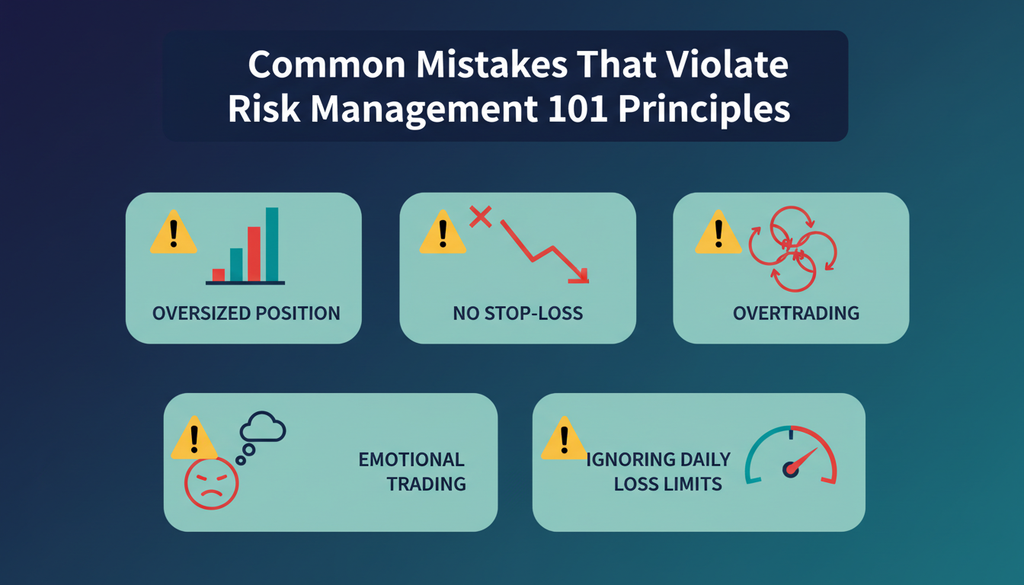
Small rule violations compound into large capital losses over time.
Building the Habit of Capital Protection
Risk management only works when it is applied consistently. Treat it as a non-negotiable part of every trade, just like checking the higher timeframe or confirming an entry signal.
Review your risk metrics weekly. Track the average risk per trade, maximum drawdown, and adherence to daily limits. Improvement comes from measurement and adjustment.
Final Thoughts and Next Steps
Risk management 101 is not complicated, but it requires discipline. Protecting capital allows you to survive the inevitable losing periods and stay in the market long enough for your edge to appear.
Start with the 1% rule, calculate position size correctly, use hard stop losses, and respect daily loss limits. These simple practices form the foundation of professional trading.
Ready to protect your capital? Open your trading platform, calculate the correct position size for a 1% risk on your next setup, and commit to following the rule for the next 20 trades.
Frequently Asked Questions
What is the most important rule in risk management?
Never risk more than a small fixed percentage of your account (typically 1% or less) on any single trade.
Should I risk the same percentage on every trade?
Yes, consistency in risk percentage is one of the simplest and most effective habits.
How do I calculate position size?
Divide the dollar amount you are willing to risk by the pip value of the stop-loss distance. Most platforms and online calculators can do this quickly.
Is it okay to trade without a stop loss?
No. Trading without a predefined exit for losses exposes the account to unlimited downside, especially in volatile markets.
What should I do after hitting my daily loss limit?
Stop trading for the rest of the day. Review the trades, restore emotional balance, and return only the next session.
Does risk management guarantee profits?
No. It guarantees that losses stay controlled so you can continue trading. Profits still depend on having a valid edge and executing it consistently.
For additional study of risk principles and position sizing, review educational material from BabyPips and risk management resources on Investopedia.