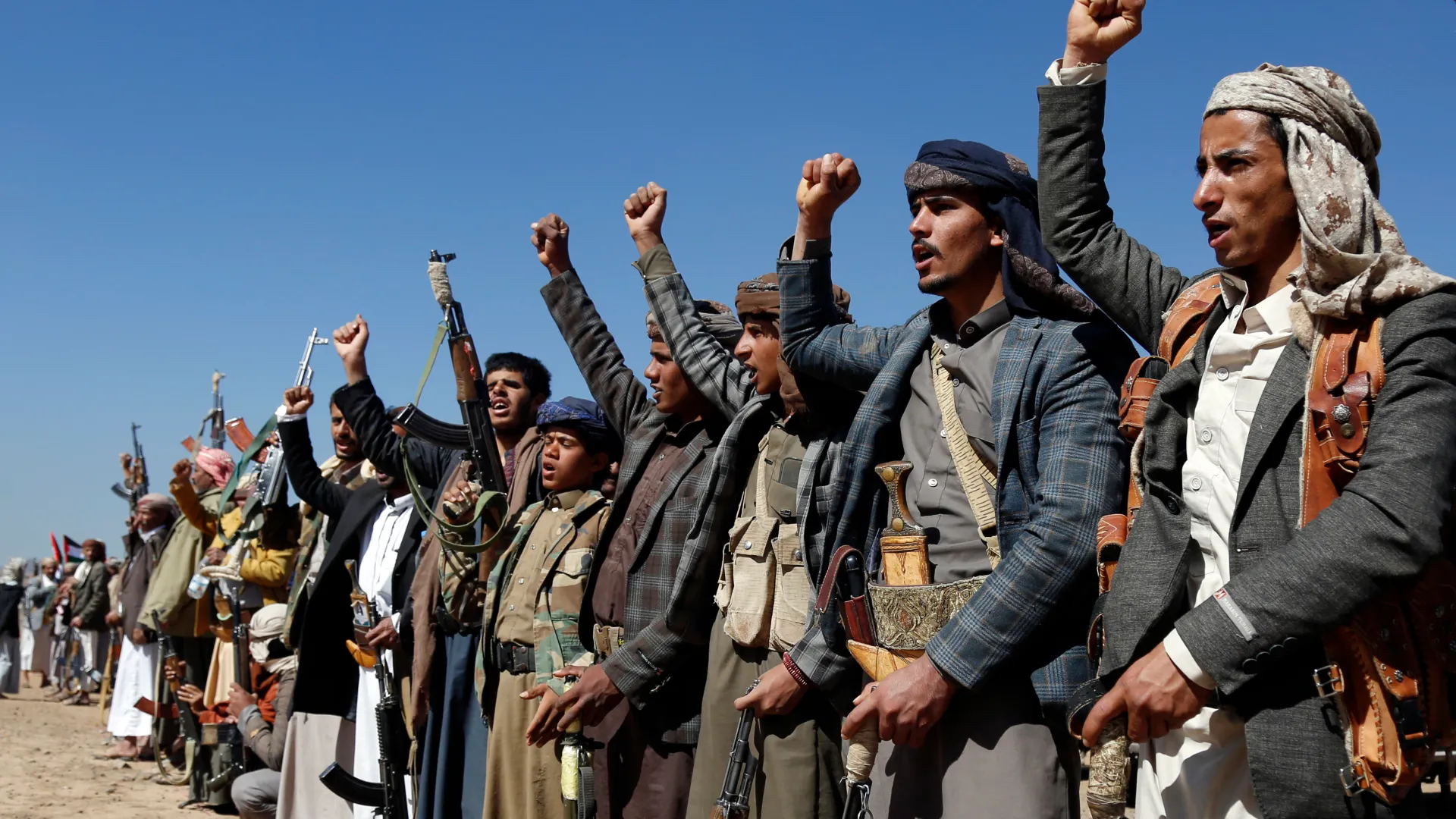
The Houthis (Ansar Allah) have transformed from a little-known rebel movement in Yemen’s mountains into one of the most consequential forces in the Middle East. Emerging in the 1990s among the Zaydi Shia community of northern Yemen, they were initially dismissed as religious revivalists. Yet over three decades of war, shifting alliances, and foreign interventions, the Houthis have grown into a movement capable of defying Saudi Arabia, striking at the UAE, disrupting global shipping, and even drawing direct retaliation from Israel, the United States, and the United Kingdom.
Their journey—from the rugged valleys of Saada to the shipping lanes of the Red Sea—is a story of persistence, adaptation, and regional power politics.
Seeds of Rebellion
The Houthis’ roots can be traced to the Saada governorate in Yemen’s far north. Founded by charismatic cleric Hussein Badreddin al-Houthi, the movement began in the early 1990s as a campaign to defend Zaydi identity, a Shi’a branch that once ruled much of Yemen but had been marginalized by waves of Sunni influence.
At the time, Saudi-backed Salafi schools spread aggressively in Zaydi regions, inflaming tensions. Hussein and his followers framed their struggle not just as a defense of religious identity but also as resistance to foreign domination. Their slogans—“Death to America, Death to Israel”—captured anger at U.S. policies in the Middle East, Israeli actions in Palestine, and Saudi influence in Yemen.
For disaffected tribes and youth in the north, the Houthis offered both ideological clarity and a rallying banner.
Six Wars in Saada
In 2004, their simmering conflict with President Ali Abdullah Saleh exploded into open war. Hussein al-Houthi was killed by Yemeni forces, but his death transformed him into a martyr, cementing the group’s identity.
Between 2004 and 2010, the Houthis fought six brutal wars against the Yemeni government. Entire villages were destroyed, tens of thousands displaced, and northern Yemen left scarred. Yet the movement endured.
Each round of war hardened the Houthis’ military capacity. They mastered guerrilla warfare, built networks among local tribes, and developed resilience in the face of state and foreign-backed campaigns. By the time the Arab Spring shook the Arab world, the Houthis were no longer just rebels—they were a battle-tested power.
The Arab Spring and the March on Sanaa
Yemen’s 2011 uprising toppled Saleh, ushering in Abdrabbuh Mansur Hadi as transitional president. But Hadi’s government was fragile, riven by corruption and factionalism. The Houthis seized the opportunity.
Expanding beyond Saada, they swept south, capitalizing on alliances with disaffected tribes and eventually, in a twist of irony, reconciling with Saleh’s loyalists.
In September 2014, they stunned the world by capturing Sanaa, Yemen’s capital. Saleh—the man they had once fought against—now stood alongside them. For the first time, the Houthis were no longer outsiders but central actors in Yemeni politics.
Saudi Arabia Strikes Back
The fall of Sanaa alarmed Saudi Arabia, which viewed a Houthi-controlled Yemen as an Iranian foothold on its southern border. In March 2015, Riyadh launched a massive military intervention, backed by the United Arab Emirates and supported logistically by the United States and the United Kingdom.
The coalition expected a swift victory. Instead, it found itself bogged down in a war of attrition. The Houthis, now benefiting from Iranian military advice and technology, proved resilient.
By 2017, their uneasy alliance with Saleh collapsed in blood—culminating in his death at Houthi hands. Despite losing their one-time ally, the Houthis tightened their grip on northern Yemen.
Meanwhile, the humanitarian toll spiraled: Yemen faced famine, epidemics, and what the United Nations called the world’s worst humanitarian crisis.
Expanding the Battlefield
Unable to dislodge the Houthis militarily, Saudi Arabia found itself under attack at home. The Houthis unveiled long-range drones and ballistic missiles, striking airports, oil facilities, and even the heart of Riyadh. The UAE was also targeted, showcasing the Houthis’ growing regional reach.
By 2022, the conflict had settled into a stalemate: the Houthis ruled much of the north, while southern Yemen was divided among Saudi and Emirati-backed factions.
But the Houthis were no longer content with national dominance. They had discovered a new theater of influence: the Red Sea.
A New Front: The Red Sea
In late 2023, as war erupted in Gaza, the Houthis aligned themselves openly with Iran’s “Axis of Resistance.” They began targeting international shipping in the Red Sea, claiming solidarity with Palestinians.
What began as symbolic actions soon escalated into a global trade crisis. Shipping companies diverted around Africa’s Cape of Good Hope, adding weeks to voyages and billions in costs. The Houthis, from their bases in Yemen, had inserted themselves into the global economy’s bloodstream.
The United States and the United Kingdom responded with airstrikes in early 2024. But the Houthis—battle-hardened after two decades—absorbed the attacks and continued to disrupt shipping lanes, demonstrating their resilience and determination.
2025: Escalation with Israel
On 30 August 2025, the conflict reached a dramatic new level when Israel launched an airstrike in Sanaa, killing the Houthi prime minister and several senior officials. It was one of the most significant blows to the movement’s leadership to date and signaled that the Houthis were no longer just a Yemeni insurgency—they were a recognized actor in the regional confrontation with Israel.
This moment has placed the Houthis at a crossroads: a governing authority in northern Yemen, a disruptive regional proxy, and now a direct adversary of Israel.
What Comes Next?
Analysts outline three possible futures for the Houthis:
- Consolidation of Power – They stabilize governance in northern Yemen, negotiate with Saudi Arabia and the United Nations, and seek recognition as Yemen’s legitimate rulers.
- Regional Expansion – They deepen ties with Iran, evolving into a regional proxy akin to Hezbollah, shaping conflicts across the Red Sea and Gulf.
- Escalation and Retaliation – Their Red Sea strikes and confrontations with Israel draw heavier Western and regional reprisals, risking wider war.
Internally, however, the Houthis face economic collapse, food insecurity, and growing frustration among Yemenis under their rule. Legitimacy gained through defiance abroad may erode if domestic suffering continues unchecked.
Conclusion: From Margins to the World Stage
The Houthis’ rise—from Zaydi revivalists in Saada’s mountains to regional disruptors challenging world powers—reflects how local grievances can transform into global crises. They are insurgents, rulers, proxies, and disruptors all at once.
In 2025, the central question is no longer whether the Houthis will shape the Middle East—they already do. The question is whether they will evolve into a recognized authority, a permanent proxy, or a destabilizing force that drags the region into deeper chaos.
Their future trajectory will influence not only Yemen but also global trade routes, oil markets, and the balance of power in the Middle East.