

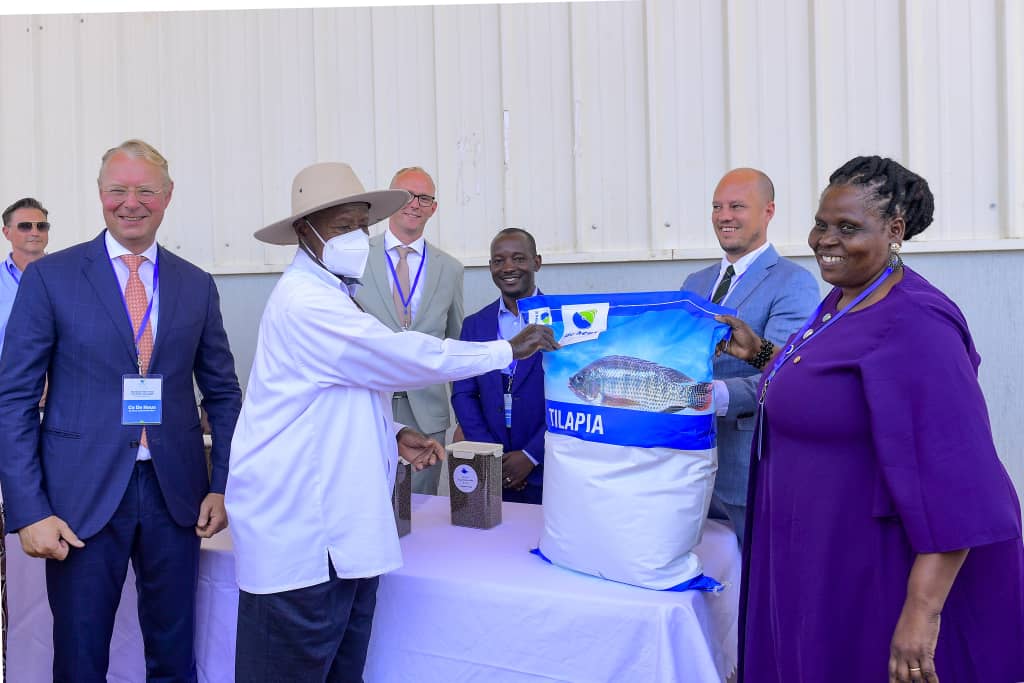
On September 2, 2025, De Heus, a leader in animal nutrition, inaugurated its fish feed factory in Njeru, Buikwe District, Uganda. The event, attended by President Yoweri Kaguta Museveni, marked a major milestone for Uganda’s aquaculture sector. The new facility will help reduce feed imports and strengthen local food security.
Located near Jinja, a key aquaculture hub, the factory will supply high-quality fish feed to Uganda and surrounding East African countries, boosting the local fish farming industry.
De Heus Fish Feed Factory: A Game Changer for Uganda’s Aquaculture Industry
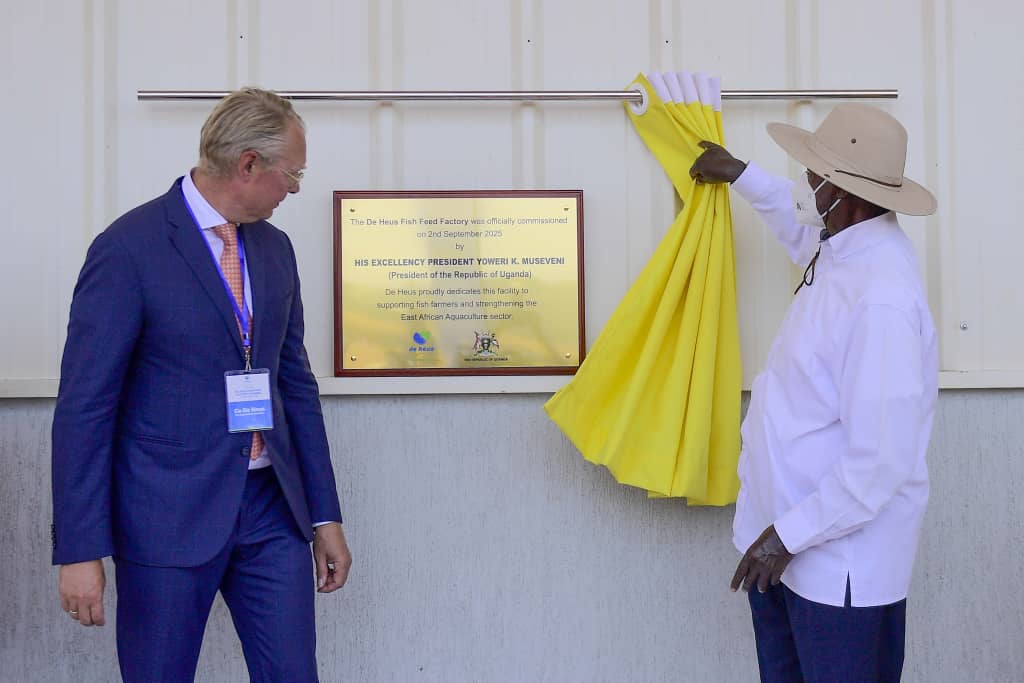
The opening of the De Heus fish feed factory in Njeru marks a turning point for Uganda’s aquaculture sector. The factory’s annual production capacity of 100,000 metric tons will help meet the growing demand for feed. This local production will reduce Uganda’s dependence on imported fish feed, benefiting local farmers and boosting aquaculture productivity.
President Museveni highlighted the factory’s importance in his speech: “This factory fills a vital gap in the fish feed supply chain.” His words emphasized the role of private-sector investment in supporting Uganda’s agriculture and creating jobs.
Strategic Location and Sustainability
Njeru’s location near Jinja makes it an ideal spot to serve both local and regional markets. The factory will also source ingredients like maize, soybeans, and cassava from local farmers, strengthening agricultural value chains. Moreover, the factory’s use of energy-efficient technology, including a biomass boiler, ensures sustainability, reducing environmental impact.
This focus on local sourcing aligns with Uganda’s strategy to boost domestic food production. It supports the growth of local agriculture while helping the country reduce its reliance on imported products.
Employment and Economic Impact
The De Heus factory is expected to create 10,000 jobs in the fish farming sector once it reaches full capacity. These jobs will benefit workers on fish farms, feed production staff, and those in the supply chain. The factory will also purchase crops from about 15,000 smallholder farmers, helping to diversify their income and boost their livelihoods.
In addition, the factory’s presence will foster economic growth by encouraging local farmers to produce more maize and soybeans. This partnership between De Heus and local farmers ensures a more sustainable, self-sufficient production process.
Supporting Uganda’s Development Goals
The opening of the De Heus fish feed factory aligns with Uganda’s broader goals of agricultural self-sufficiency and sustainable development. President Museveni has long championed the shift from rice farming in swamps to fish farming. He believes this will protect vital water resources like the Nile. Additionally, he encouraged farmers to grow crops such as maize, sunflower, and soybeans to support the factory’s production needs.
This factory is a vital step toward reducing imports and increasing local production. It will also support job creation, contributing to Uganda’s long-term agricultural goals.
A Legacy of Agricultural Innovation
De Heus brings over a century of experience in animal nutrition. The company entered the Ugandan market in 2015, and since then, it has built trust with local farmers by providing quality feed and offering hands-on support. De Heus’ expertise will continue to play a key role in improving farming practices and promoting sustainable agriculture.
With the opening of the Njeru factory, De Heus reaffirms its commitment to boosting Uganda’s aquaculture sector and strengthening the local economy.
Conclusion
The De Heus fish feed factory in Njeru is a game-changer for Uganda’s aquaculture industry. It will help reduce reliance on imported feed, create thousands of jobs, and support local farmers. By focusing on sustainability and local sourcing, the factory aligns with Uganda’s development goals. This is a major step toward ensuring food security, fostering economic growth, and supporting the growth of the aquaculture industry in East Africa.