


Kenya’s diaspora remittances remain a lifeline, with January 2026 inflows at approximately US$411 million according to the Central Bank of Kenya. Yet many senders unintentionally reduce the amount received through preventable errors.
Learning how to avoid costly mistakes when sending money to Kenya protects your hard-earned funds and ensures your support reaches loved ones intact.
1. Ignoring Hidden Fees and Exchange Rate Markups
The biggest hidden cost comes from providers advertising “zero fees” while padding the exchange rate 3–8% above the mid-market rate. This markup often exceeds visible transfer fees.
Always compare the total amount the recipient will receive, not just the headline fee. Services like Wise, Remitly, WorldRemit and Taptap Send frequently offer closer-to-mid-market rates and transparent pricing in 2026.
2. Not Comparing Providers Before Every Transfer
Sticking to one familiar service without shopping around can cost you dearly as rates and fees fluctuate daily. What was cheapest last month may now rank poorly.
Use comparison tools or check multiple apps for the same amount (e.g., US$500 to M-Pesa). In early 2026, providers like Taptap Send and Sendwave often lead for zero-fee M-Pesa transfers from the US and Europe.
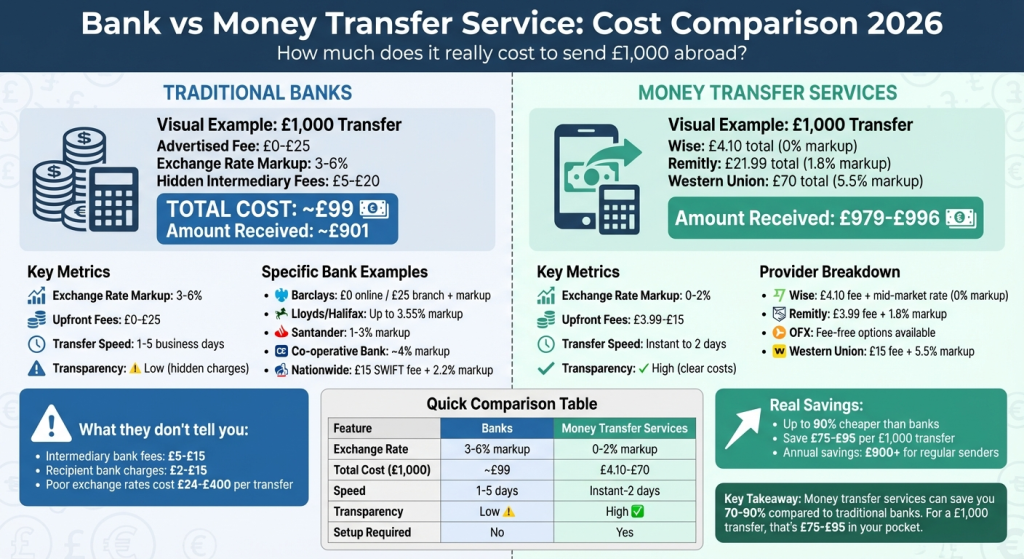
Comparing total payout across providers helps avoid costly mistakes when sending money to Kenya.
3. Entering Incorrect Recipient Details
A single typo in the recipient’s name, phone number or bank account can delay transfers by days or weeks—or result in lost funds requiring refunds that eat into future sends.
Double-check every detail before confirming. For M-Pesa, verify the registered phone number exactly matches. For bank transfers, include correct branch code and account name spelling.
4. Using Informal or Unregulated Channels (Hawala)
Informal hawala systems promise speed and low cost but carry high fraud risk, no traceability and potential legal issues since only licensed providers comply with Central Bank of Kenya rules.
Stick to regulated services licensed by authorities in both sending and receiving countries. This ensures consumer protection, dispute resolution and anti-fraud measures.
5. Sending at the Wrong Time or Ignoring Market Volatility
Exchange rates shift hourly. Sending immediately after a dip or during high volatility (e.g., after major economic news) means less KSh for the same USD or GBP.
Monitor rates via apps and consider locking in with providers offering rate alerts or hold features. Avoid weekend or holiday transfers when markets close and spreads widen.
6. Overlooking Recipient-Side Fees and Delivery Method Charges
Some bank deposits incur receiving fees, while cash pickups may add withdrawal charges. Choosing the wrong method (e.g., bank instead of M-Pesa) can reduce the net amount.
Ask your recipient about preferred method and any local fees. In 2026, mobile money like M-Pesa remains fastest and often cheapest for most Kenyan households.
7. Falling for Scams or Fraudulent Requests
Urgent “emergency” requests from unknown numbers, promises of huge returns or QR codes asking for approval are classic scams targeting diaspora senders.
Verify requests through established family channels. Never send to unverified accounts or share login details. Use two-factor authentication on transfer apps.

Trusted apps provide security features that help avoid fraud when remitting to Kenya.
8. Not Factoring in New Taxes or Regulatory Changes
In 2026, changes like the US 1% excise tax on outbound remittances increased costs for American senders, contributing to slight monthly dips in early-year flows.
Stay informed via official sources like the Central Bank of Kenya or your provider’s updates. Factor potential taxes into your budgeting to avoid shortfalls.
Step-by-Step: How to Send Safely and Cost-Effectively in 2026
- Determine the exact purpose and preferred receipt method (M-Pesa, bank, cash pickup).
- Compare 3–5 licensed providers using total recipient amount as the key metric.
- Check current mid-market rate (e.g., via Google or XE.com) against offered rate.
- Verify recipient details twice with your family member.
- Transfer during business hours on weekdays when rates are stable.
- Save confirmation and track the transfer until receipt.
- Review periodically—switch providers if better options appear.
Recommended Providers for Kenyans Abroad in 2026
Wise — Transparent mid-market rates, low fees, ideal for larger or regular transfers.
Remitly / WorldRemit / Taptap Send — Excellent for fast M-Pesa deposits with promotional rates.
Western Union / MoneyGram — Wide cash pickup network, useful in rural areas.
Choose based on your corridor (US, UK, Gulf, Europe) and amount frequency.
Frequently Asked Questions
What is the biggest mistake when sending money to Kenya?
Not comparing total payout including exchange rate markups—many “free” services hide costs here, reducing what your family receives by 5–10% or more.
How can I avoid hidden fees in 2026?
Use providers showing full breakdown upfront (e.g., Wise, Remitly). Always calculate recipient amount against mid-market rate to spot markups.
Is it safe to use informal channels for faster transfers?
No—hawala and unregulated services risk fraud, loss and lack legal protection. Stick to CBK-licensed or internationally regulated options.
Do recipient banks charge fees for incoming remittances?
Some do, especially for international wire transfers. Mobile money (M-Pesa) usually has minimal or no receiving fees—confirm with your family.
Has the US remittance tax affected transfers to Kenya?
Yes—the 1% excise tax introduced in 2026 slightly raised costs from the US, Kenya’s largest source. Factor it in and compare providers accordingly.
Which is the cheapest way to send money to Kenya right now?
In 2026, apps like Taptap Send, Sendwave and Wise often lead for low or zero fees plus competitive rates to M-Pesa or bank accounts—always compare for your amount and origin country.

Avoiding common mistakes ensures more of your remittance supports your family effectively.
By staying vigilant and informed, you can avoid costly mistakes when sending money to Kenya and make every dollar count toward your family’s well-being. Review your next transfer using these steps—small changes deliver big savings over time.