On 18 March 2026 the European Commission presented its proposal for “EU Inc.” – the long-awaited 28th company-law regime that delivers fast 48-hour EU incorporation to entrepreneurs and innovative businesses. President Ursula von der Leyen stated: “Any entrepreneur will be able to create a company within 48 hours, from anywhere in the European Union, and fully online.”
The initiative forms part of the EU’s broader competitiveness drive, responding directly to the Draghi Report and the Competitiveness Compass. It aims to position Europe as the best place to start and scale a company by 2028.
What Is EU Inc. and Why Does It Matter?
EU Inc. is an optional, fully digital corporate form that sits alongside – but does not replace – existing national company structures. Once registered, an EU Inc. entity operates under one harmonised set of EU rules while retaining full access to the single market. This eliminates the need to set up separate subsidiaries in each country.
Key innovations include:
- Registration in less than 48 hours
- Maximum cost of €100
- Zero minimum share capital
- No requirement for a physical bank account or notary at incorporation
- Digital-by-default operations for the entire company lifecycle
The Commission expects up to 300,000 companies to adopt EU Inc. in the first decade, dramatically boosting innovation and job creation.
How the Fast 48-Hour EU Incorporation Process Works
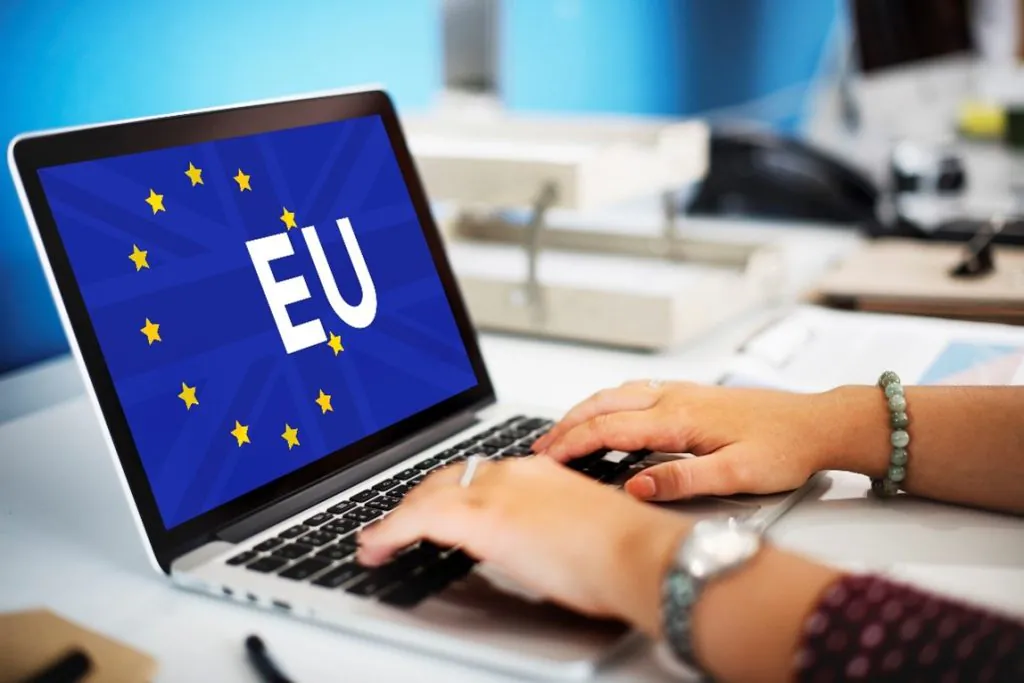
Illustration of the fully online registration flow that makes fast 48-hour EU incorporation possible under the new EU Inc. regime.
The process is designed for speed and simplicity:
- Choose incorporation state – any of the 27 EU member states.
- Submit data once via the new EU-level interface that connects national business registers.
- Receive confirmation within 48 hours, including tax ID and VAT number.
- Access central EU register for all future filings and updates.
Founders can complete the entire procedure from a laptop anywhere in the world. No physical presence, no intermediaries and no repeated paperwork across borders.
Real-World Benefits for Startups and Scale-Ups
Consider a Berlin-based fintech founder who previously needed weeks to incorporate in Germany, then additional months and costly legal advice to expand into France and Spain. With fast 48-hour EU incorporation, the same founder registers an EU Inc. entity in one sitting and immediately sells services across all 27 countries under identical corporate rules.
Additional advantages include:
- Attracting talent: Harmonised EU-wide employee stock-option plans taxed only on realised gains.
- Attracting investment: Simplified share transfers, digital financing procedures and optional stock-exchange access.
- Easier exit or restart: Fully digital liquidation and simplified insolvency rules tailored for innovative companies.
- Protection features: Flexible share classes to deter hostile takeovers while respecting national co-determination rules.
National employment, social security and tax laws of the chosen registration state continue to apply, ensuring legal certainty.
Comparison with Current EU and Global Systems
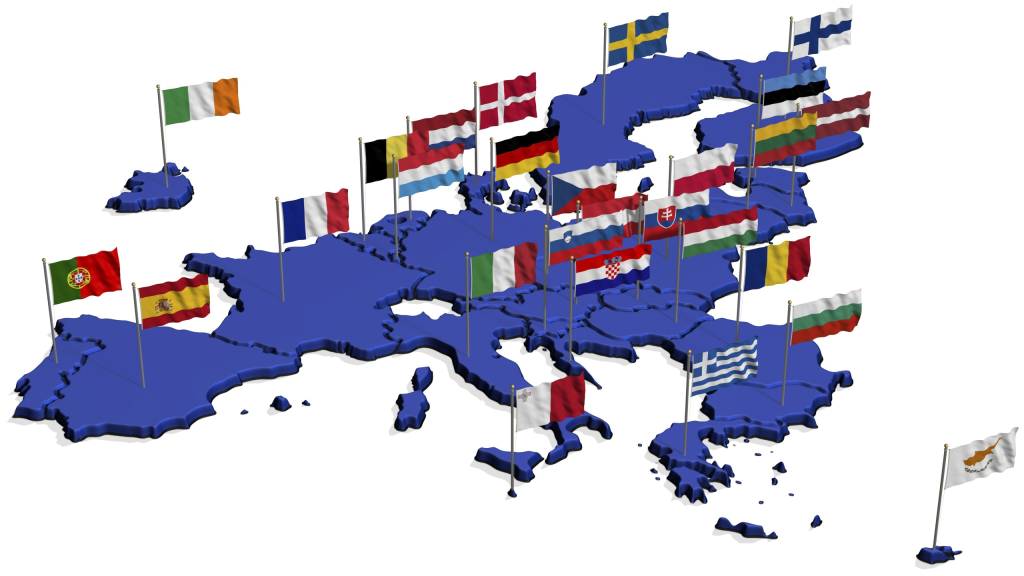
Map of the European Union showing seamless single-market operations enabled by the new fast 48-hour EU incorporation regime.
Today, entrepreneurs face 27 legal systems and more than 60 national company forms. Even the fastest national routes – such as Estonia’s e-residency – still require separate compliance when expanding. The proposed EU Inc. removes these barriers entirely.
Compared with the United States, where Delaware’s single corporate law has supported hundreds of unicorns, Europe currently lags with only 110 unicorns versus 687 in the US. Fast 48-hour EU incorporation aims to close that gap by creating a true “Delaware of Europe”.
Timeline and Next Steps for Implementation
The proposal now enters negotiations in the European Parliament and Council. The Commission has set an ambitious target: political agreement by the end of 2026 and full operability by 2028 as part of the “one Europe – one market” vision.
Parallel measures include the Savings and Investment Union, Head Office Tax for SMEs, and an upcoming Omnibus simplification package to further reduce red tape.
Who Can Benefit and How to Prepare
While targeted at innovative startups and scale-ups, the regime is open to any European business. Founders should:
- Monitor the official EU Inc. factsheet and proposal documents.
- Review the recommended definition of “innovative enterprise” published alongside the proposal.
- Prepare digital identity documents and basic company information in advance.
Once live, the European Business Wallet will further streamline interactions between companies and public authorities.
Frequently Asked Questions
What exactly is fast 48-hour EU incorporation?
Fast 48-hour EU incorporation refers to the new EU Inc. regime that allows any entrepreneur to register a company fully online in less than 48 hours for a maximum cost of €100, with no minimum share capital required.
Is EU Inc. replacing national company laws?
No. EU Inc. is an optional additional regime. National company forms remain available; EU Inc. simply adds a harmonised EU-wide option.
Which countries can I operate in after registering?
Once incorporated, your EU Inc. company can operate seamlessly across all 27 EU member states under one set of corporate rules.
When will the fast 48-hour EU incorporation actually be available?
The Commission aims for political agreement by the end of 2026, with full implementation targeted for 2028.
Do I still need a local bank account or notary?
No. The proposal explicitly removes these requirements at the registration stage, making the process fully digital.
How does this compare to registering in the United States?
EU Inc. creates a single-rulebook equivalent to Delaware for the entire European single market, giving European founders the same scaling advantages previously enjoyed mainly by US startups.
The European Startup Law in 2026 and its fast 48-hour EU incorporation mechanism represent the most significant simplification of EU business rules in decades. Entrepreneurs who prepare now will be perfectly positioned to take advantage of this once-in-a-generation opportunity to build and scale across Europe faster and more cost-effectively than ever before.