The U.S. boycott of G20 South Africa has sent shockwaves across global diplomacy as the world’s largest economy and founding G20 member stand aside from the summit hosted in Johannesburg. Africa’s first-ever G20 gathering was positioned as a milestone for global inclusion — but Washington’s absence raises deeper questions about leadership, trust, and shifting power.
This article explores what you’re not being told about the boycott: the underlying U.S.–South Africa tensions, the strategic implications for multilateral governance, how other powers are responding, and what it means for Africa’s role in global decision-making.
Why the U.S. Chose to Stay Away
Human Rights and Political Grievances
The U.S. cited alleged human-rights abuses in South Africa, including contentious claims of persecution of white Afrikaners and concerns around land reform — issues South Africa disputes.
Geopolitical Realignment
South Africa’s foreign-policy posture — including critical stances toward Western actions — may have prompted the U.S. to withhold participation in the Johannesburg summit.
Internal U.S. Politics
Domestic dynamics, especially among conservative constituencies, may have encouraged a more confrontational posture toward global forums perceived as diluting U.S. leadership.
A Signal—Not Just a Snub
The boycott is calculated: no government-official attendance instead of formal withdrawal. It signals displeasure while preserving institutional ties.
Africa’s First G20: Expectations and Reality
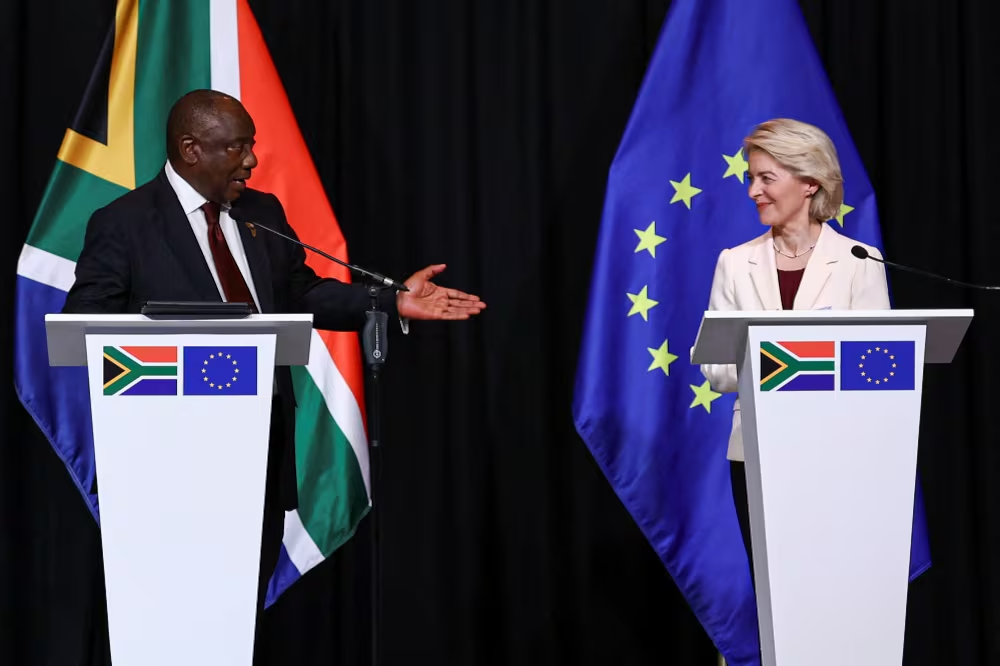
Hosting the G20 in Africa was intended to mark a shift in global inclusion. It focused on development finance, climate resilience, infrastructure, and Africa’s voice in global arenas. However, the absence of the U.S. complicates the narrative.
Without Washington’s input, the summit faces reduced influence and increased risk of perceived legitimacy shortfall. At the same time, other powers are seizing the moment to advance alternative global governance agendas.
What You’re Not Being Told
Behind-the-Scenes Maneuvering
Reports suggest U.S. diplomats attempted side-meetings to preserve participation but found the host non-compliant with preconditions. Some African states interpret the boycott as power politics manifesting in multilateral settings.
Commercial and Governance Implications
The incident highlights how geopolitics can trump economics in emerging markets. For African firms and foreign investors, it underscores the importance of political alignment when engaging global forums.
Long-Term Strategic Message
The U.S. is essentially communicating: “We will engage globally, but only under terms we define.” For future African bids to host major forums, this sets a cautionary precedent.
Global and Regional Responses
China & India
With Washington absent, China and India view Johannesburg as a leadership opportunity. China has hinted at increased development finance to Africa; India emphasises digital infrastructure leadership.
African Union & Regional Bodies
While participants welcomed the summit, some leaders expressed concern about the precedent of major-power absences undermining multilateral credibility.
South Africa’s Dilemma
President Ramaphosa must balance national prestige with diplomatic fallout. The success of the G20 now depends on outcomes, not just optics.
What This Means for Investors and Business
The boycott signals heightened geo-political risk for investors in Africa. Market entry, large-scale infrastructure deals, and sovereign financing may increasingly require navigation of strategic alignments. For business, the message is clear: politics matters as much as fundamentals.
Looking Ahead: Aftermath and 2026 Implications
The next G20 presidency returns to the U.S. in 2026. Washington may seek to reassert leadership—but the ripple effects of its South Africa absence may persist. African nations hosting future global forums will consider this a cautionary playbook.
The U.S. boycott of G20 South Africa is more than a diplomatic headline. It represents a strategic shift in the power dynamics of global forums and underlines Africa’s evolving role in that space. The summit will proceed, and deals will be made, but the question remains: who sets the agenda when major powers step aside?
For more insight, follow official sources at g20.org and news outlets such as Reuters and Politico.