



The G20 Summit South Africa has taken global diplomacy by storm as leaders gather in Johannesburg to address climate finance, debt restructuring, and Africa’s rising influence despite the unprecedented absence of the United States. Africa’s first G20 summit marks a defining moment in global governance, spotlighting the continent’s priorities and newfound leadership voice.
This article breaks down what the world needs to know: why the U.S. boycotted the summit, the breakthroughs in climate and debt negotiations, and how shifting alliances are redefining global power.
Africa’s First G20 Summit: A Diplomatic Turning Point
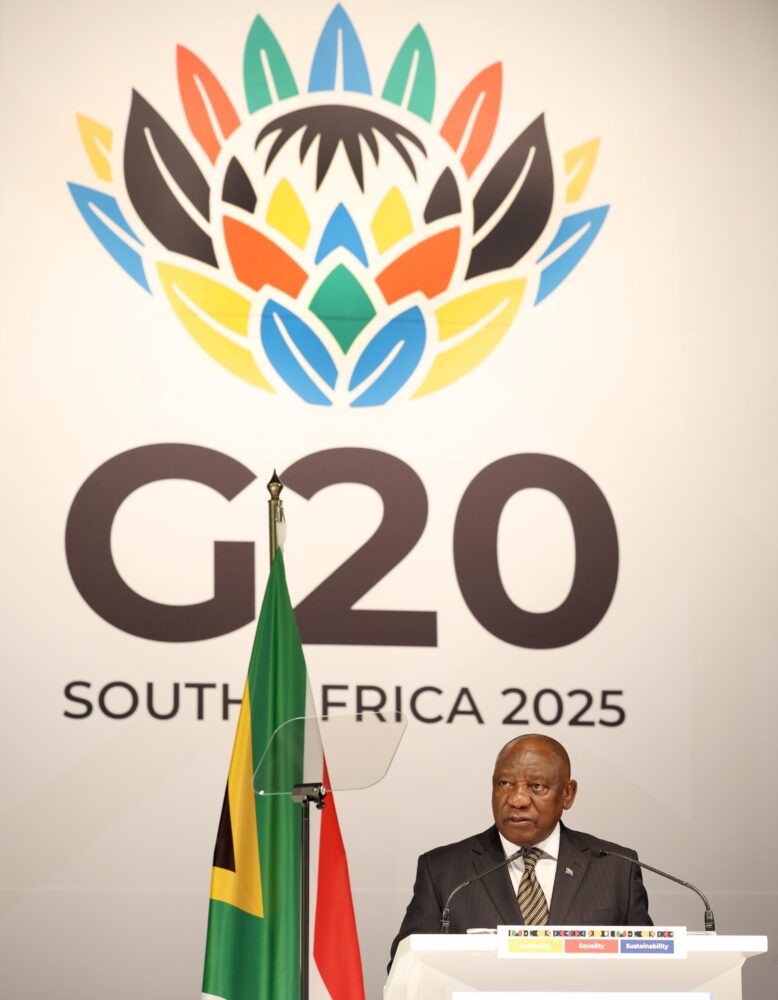
Hosting the G20 for the first time positions Africa as a central actor in global economic and environmental negotiations. African leaders emphasized climate adaptation, debt relief, and fairer development financing, cementing the continent’s evolving influence.
Climate Finance Takes Center Stage
Key priorities included establishing a new climate-finance framework, mobilizing investment for renewable energy, and expanding loss-and-damage financing. African states also called for World Bank and IMF reforms to improve accessibility and reduce conditionalities.
Debt Relief: A Critical African Priority
With many African countries facing debt distress, leaders pushed for debt restructuring, lower interest rates, and a new “Debt-for-Climate Swap” mechanism. A Global Debt Coordination Platform was proposed to streamline negotiations.
The U.S. Boycott: A Diplomatic Shock
The absence of the U.S. reshaped summit dynamics, reducing Washington’s influence and allowing China, India, and other Global South actors to take leading roles. The boycott highlighted growing tensions in U.S.–Africa relations and raised questions about multilateral commitment.
Global Power Shifts
China expanded development-finance promises, India pushed digital transformation strategies, and Middle Eastern nations pursued green-energy collaborations. The EU maintained support for reforms while urging greater governance transparency.
African Leadership Strengthens
Africa asserted itself through united policy positions, renewable-energy innovation, and active diplomacy. With the African Union now a permanent G20 member, Africa’s voice is becoming central in global decision-making.
Implications for Investors
- Renewable energy and infrastructure will likely attract greater investment.
- Digital and fintech sectors are gaining prominence.
- Debt restructuring clarity could support sovereign-debt markets.
- Political and regulatory risk will remain key considerations.
The G20 Summit South Africa delivered bold commitments on climate finance, debt relief, and African leadership—despite geopolitical friction from the U.S. boycott. Africa’s presence on the global stage is stronger than ever, shaping policies that will influence the world for years to come.
For updates, visit G20.org, Reuters, and Al Jazeera.